Christèle Simeoni
9 min min read
Virtual reality, an alternative to animal dissection for medical students
CS
Christèle Simeoni
Co-founder & CMO, VRAI Learning
Animal dissection has been a century-old pedagogical practice in medicine, biology and life science curricula. For decades, it was the only way for students to observe and understand the internal anatomy of living organisms. Yet this method now raises major ethical questions and has practical limitations that virtual reality can overcome.
What are the ethical and practical limitations of traditional dissection?
Animal dissection presents three major problems in higher education. First, it requires the sacrifice of millions of animals each year — frogs, rats, pigs, cats — generating an ethical impact that is increasingly challenged by students and society. Second, it incurs high logistical costs: specimen preservation, specialised equipment, biological waste management and instructor training. Third, it is irreversible by nature: a handling error permanently destroys the specimen, preventing any repetition or exploration from a different angle. Many students experience anxiety around dissection, which undermines the quality of their learning. These three dimensions — ethical, economic and pedagogical — make traditional dissection a model whose limitations are now well documented.
Every year, millions of animals — frogs, rats, pigs, cats — are sacrificed for educational purposes in higher education institutions. Beyond the impact on animal welfare, this practice generates significant logistical costs: specimen preservation, specialised equipment, biological waste management and instructor training.
For students, exposure to dissection can trigger emotional, even traumatic stress in some individuals. Certain aspiring healthcare professionals forgo essential learning out of ethical or psychological reluctance. This barrier directly undermines the quality of medical education.
Finally, dissection is a one-off, irreversible exercise: a handling error destroys the specimen. The student cannot start over, observe a step from a different angle, or slow down time to better understand a complex mechanism.
Why is virtual reality a pedagogically superior alternative to dissection?
Virtual reality surpasses traditional dissection on several essential pedagogical dimensions. It allows students to repeat the same procedure as many times as needed, undo mistakes, change viewing angle and zoom in on microscopic structures impossible to observe on a physical specimen. According to a 2020 PwC study, learners trained in virtual reality are 4 times faster at mastering their skills than those trained in traditional classroom settings, with a 275% higher confidence level. VR anatomical simulators also offer layered anatomical cross-sections, detailed circulatory systems and contextual audio guides that replicate the presence of a tutor. Finally, VR provides access to the anatomy of species that could never be dissected in practice — protected species, large mammals, marine animals — considerably broadening the scope of possible learning.
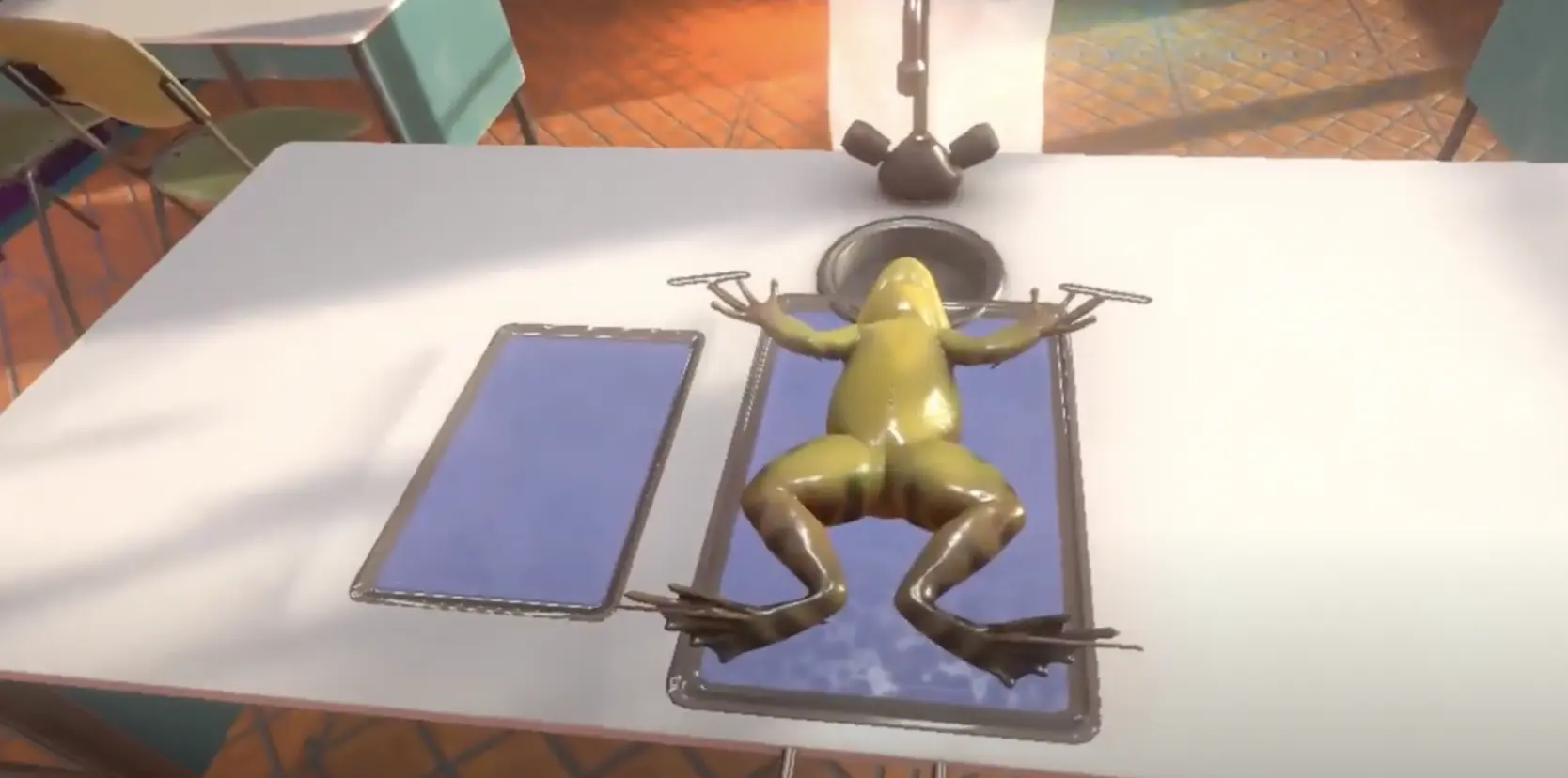
VR anatomical simulators address these limitations point by point. Solutions such as those developed by VictoryXR offer immersive environments in which students can explore the anatomy of a mammal, an amphibian or a bird with millimetre precision, without any animal being sacrificed.
Unlimited repetition
In virtual reality, students can perform the same procedure as many times as necessary. They can undo a mistake, rewind a step, change perspective or switch to an X-ray view to understand the relationship between organs. This ability to freely repeat movements is one of the most powerful factors in anatomical memorisation.
According to a study published by PwC in 2020, learners trained in virtual reality are 4 times faster at mastering their skills than those trained in traditional classroom settings, and display a confidence level 275% higher. These figures, measured on professional training programmes, apply directly to practical learning such as anatomy.
Visual quality and interactivity
Modern VR simulators deliver highly realistic image quality, with faithful organic textures, detailed circulatory systems and layered anatomical cross-sections. Students can isolate a nervous system, rotate an organ 360 degrees or zoom in on a microscopic structure — manipulations impossible with a physical specimen.
Interactivity goes further: some platforms integrate audio guides and contextual indicators that orient the student in real time, effectively replicating the presence of a tutor without requiring a teacher at every session.
Access to rare or protected species
Virtual reality also makes it possible to study the anatomy of species that could never be dissected in practice: protected species, large mammals, marine animals. This opening considerably broadens the scope of possible learning, particularly for students in evolutionary biology or specialist veterinary medicine.
Why replacing animal dissection is both an ethical and a pedagogical imperative
Replacing animal dissection with virtual alternatives simultaneously addresses two distinct but complementary imperatives. Ethically, new generations of students are increasingly sensitive to animal welfare, and several European countries have already legislated to encourage or mandate the use of non-lethal alternatives in higher education. Pedagogically, studies demonstrate that VR simulators improve memorisation, reduce anxiety related to practical work and allow unlimited repetition of procedures. Adopting virtual reality in medical curricula sends a strong signal to students: academic excellence is achievable without compromising fundamental ethical principles. This message contributes to training healthcare professionals who are more aware of their responsibility towards living beings.
Beyond effectiveness, replacing animal dissection with virtual alternatives responds to a growing social demand. New generations of students are increasingly sensitive to animal welfare. Several European countries have already legislated to encourage or mandate the use of non-lethal alternatives in higher education.
Adopting virtual reality in medical curricula sends a strong signal: academic excellence is achievable without compromising ethical principles. This message contributes to training healthcare professionals who are more aware of their responsibility towards living beings.
Curriculum integration: challenges and conditions for success
The transition to virtual dissection does not happen overnight. It requires appropriate equipment (VR headsets, dedicated spaces), teacher training on new tools and a revision of pedagogical frameworks. The initial acquisition cost can be a barrier for some institutions, but the return on investment proves rapidly favourable: no recurring specimen costs, no biological waste management, total scalability.
Institutions that have made the transition report increased student engagement, better retention of anatomical knowledge and a significant reduction in anxiety related to practical work. Immersive training does not replace contact with reality at the end of a curriculum — it prepares students for it better than ever.
The role of avatars and simulated environments
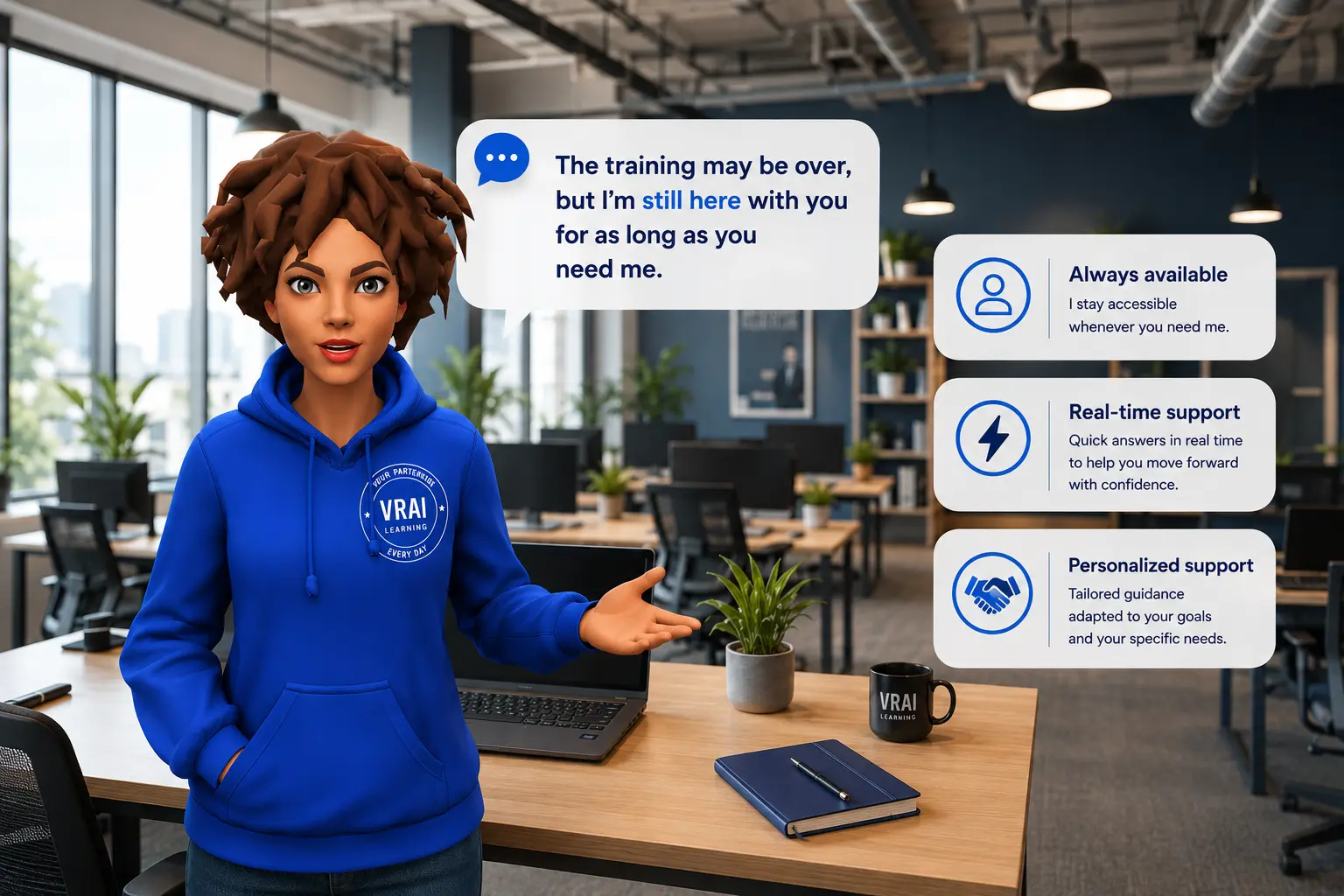
Some solutions go further by combining virtual dissection with pedagogical avatars: a digital tutor accompanies the student through their procedures, corrects their posture, flags errors and provides contextual explanations. This layer of pedagogical intelligence transforms the anatomical simulator into a genuine learning companion.
The tracking platform also allows teachers to visualise the progress of each student, identify recurring sticking points and adapt the programme accordingly — a level of pedagogical granularity impossible to achieve with traditional dissection.
Virtual reality: a lever for the future of medicine
Animal dissection has played an irreplaceable role in the history of medical education. But the tools available today make it possible to train practitioners who are more competent, more confident and more ethical — without sacrificing either animals or pedagogical quality. Virtual reality is not a stopgap: it is a natural and necessary evolution of life science education.
The measurable benefits of virtual reality in medical education are now documented by numerous scientific studies. This is no longer an experimental technology but a mature solution, ready to be deployed at scale in medical schools, veterinary colleges and science high schools.
Would you like to explore how to integrate virtual reality into your medical or scientific training programme? Contact our team for tailored support.
Frequently asked questions
Can virtual reality truly replace animal dissection in medical studies?
Yes, virtual reality is now a credible and pedagogically validated alternative to animal dissection in medical studies. VR anatomical simulators allow students to explore internal anatomy with millimetre precision, repeat procedures without limit and interact with layered anatomical cross-sections impossible to observe on a physical specimen. Scientific studies, including one published by PwC in 2020, demonstrate that VR-trained learners master their skills 4 times faster and display a confidence level 275% higher than those trained in traditional classroom settings. VR does not entirely replace contact with reality at the end of a curriculum, but it prepares students more effectively, more ethically and more scalably than traditional dissection, which remains irreversible and costly to organise.
What are the advantages of virtual dissection over physical dissection?
Virtual dissection presents six major advantages over physical dissection. First, it is infinitely repeatable: students can restart the same procedure with no specimen constraints. Second, it is fully reversible, allowing errors to be undone and steps revisited at any time. Third, it offers capabilities impossible on a real specimen: X-ray view, 360-degree rotation, zoom on microscopic structures. Fourth, it eliminates recurring costs related to specimens, biosecurity equipment and biological waste management. Fifth, it reduces anxiety in sensitive students, thereby increasing overall engagement. Sixth, it enables the study of protected or rare species inaccessible through physical dissection. These combined advantages make it a pedagogically superior tool for learning anatomy in higher education.
What equipment is needed to integrate VR dissection into a medical curriculum?
Integrating VR dissection into a medical curriculum requires three main components. First, appropriate hardware: standalone virtual reality headsets (such as Meta Quest) or PC-connected headsets, haptic controllers to simulate dissection gestures, and a dedicated space of at least 2 m² per student. Second, certified anatomical simulation software offering high-fidelity 3D models, pedagogical guides and a teacher dashboard for tracking progress. Third, teacher training on the new tools, which is essential for fully exploiting the pedagogical features of the simulator. The initial investment cost is quickly offset by the absence of recurring costs related to biological specimens. Institutions such as the faculty partners of VictoryXR have carried out this deployment at scale, with positive feedback on engagement and retention of anatomical knowledge.
Does European legislation regulate the use of animal dissection in education?
Yes, European legislation is moving towards a progressive reduction in the use of animal dissection in education. European Directive 2010/63/EU on the protection of animals used for scientific purposes establishes the "3R" principle — Replace, Reduce, Refine — and applies to higher education institutions using vertebrate animals for educational purposes. Several member states, including the Netherlands and the United Kingdom, have already tightened their national regulations to mandate or actively encourage the use of non-lethal alternatives where they exist. In France, regulations strictly govern the use of live animals but leave institutions some discretion regarding dead specimens. The emergence of professional-quality VR simulators is precisely the missing condition that enables institutions to fully comply with the spirit of this directive without compromising the quality of training.
Read also
Virtual reality training in the company: the complete guide →Methods, costs, use cases and results for deploying VR in your organisation.

Christèle Simeoni
Co-founder VRAI Learning (2023) · CMO
Co-fondatrice de VRAI Learning, spécialiste de la formation immersive VR et des avatars IA conversationnels.
See immersive training in action
Personalised demo, no commitment. We show you what it looks like for your context.
Book a demoExplore our solutions