Immersive simulation & AI avatar
Simulate to care better.In healthcare, practice cannot wait for the first real patients. Clinical skills are learned through repetition, not observation. Immersive simulation reproduces hospital environments and complex clinical situations. The AI avatar embodies patients with their emotional and reactive profiles. Together, they make it possible to practise the impossible without real risk.
Simulation where placements fall short
Repeat the gesture until mastery
A nursing student can only practise inserting an IV line on real patients, rarely available, always under pressure. The simulation reproduces the arm, the veins, the tissue resistance. They repeat as many times as needed, receive immediate feedback on every gesture, and arrive at placement with the reflexes already in place.
- IV insertion, dressings and routine care in 3D simulation
- Cardiopulmonary resuscitation (CPR) procedures
- Patient handling and positioning
- Medication preparation and administration
Sophie practises inserting a peripheral IV for the 12th time this evening. No real patient, no stress of an irreversible mistake.
The simulation gives her immediate feedback: incorrect insertion angle, bevel misaligned. She tries again.
After 20 repetitions, the gesture is automatic. Her precision score is visible in her training record.
She arrives at placement with the reflexes already in place. Her supervisor can focus on the patient relationship, not the technical gesture.
The intern enters the room. The avatar plays a 52-year-old patient awaiting biopsy results. Still hoping.
The intern delivers the diagnosis. The avatar reacts: denial, anger, collapse, profile defined by the instructor.
They must stay present, answer impossible questions, neither flee the emotion nor be overwhelmed by it.
Relational quality score, replay of clumsy formulations. No real patient experienced this session.
What cannot be learned from a book
Delivering a serious diagnosis, accompanying end of life, managing a family in distress, these situations require skills that neither courses nor placements teach sufficiently. The AI avatar plays the patient or family, with their emotions, resistances and impossible questions. The care professional learns to hold the framework, choose their words, manage their own emotions.
- Delivering a serious diagnosis or bad news
- End-of-life support and dialogue with the family
- Managing an agitated, in-denial or crisis patient
- First-line consultation and assessment interview
Coordinate under pressure before the real emergency
A cardiac arrest, a polytrauma, acute respiratory distress, emergencies do not give notice. The simulation reproduces these situations with real time pressure, noise and urgency. Teams train to coordinate, communicate and prioritise, without a life at stake.
- Team CPR and defibrillation
- Polytrauma management (ABCDE)
- Team coordination in crisis situations
- Emergency protocols and SBAR communication
The alarm sounds. The patient deteriorates. The team has 30 seconds to organise, just like in real life.
Each role is assigned in real time: team lead, compressions, IV access, defibrillator.
The simulation records every action, every timing, every communication. Coordination errors are visible.
Immediate debrief after the simulation. The team replays the critical sequences to embed the right reflexes.
From training room to clinical ward
Clinical needs analysis
We work with your teaching leads to identify priority gestures, situations and competencies. Each scenario is validated by a clinical expert before production.
Production & validation
3D modelling of clinical environments, configuration of patient avatars and protocols. Scientific and pedagogical validation at every stage.
Integration & traceability
Compatible with your institutional LMS (Moodle, Canvas) via xAPI/SCORM. Scores and competencies are traceable and exportable to student placement portfolios.
Go deeper
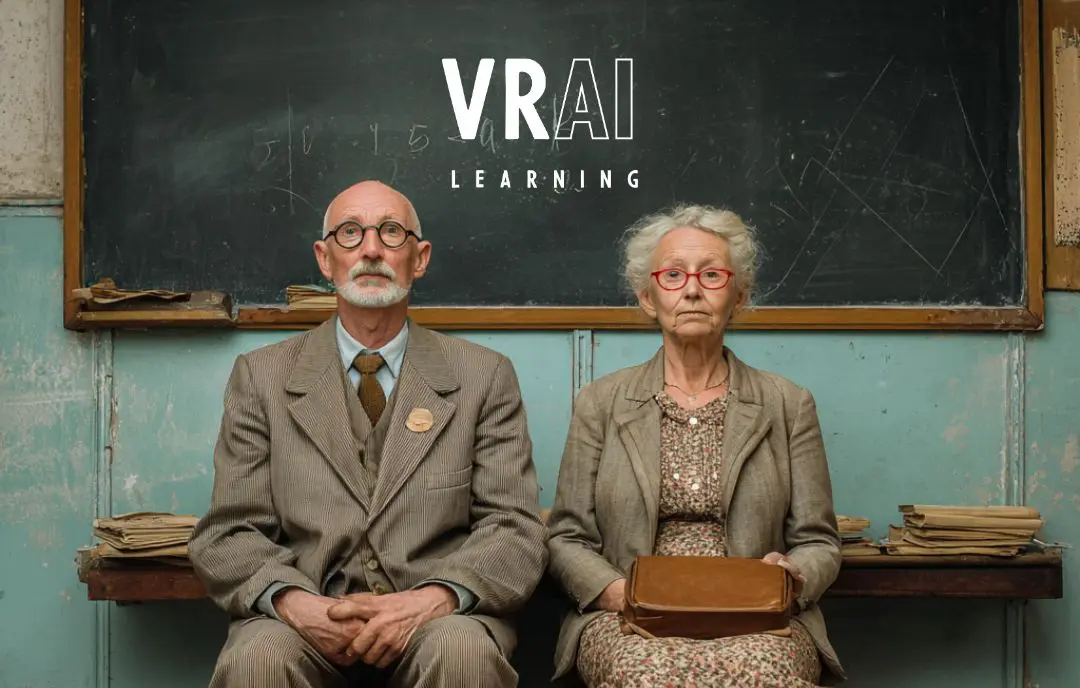
Train seniors: VR and AI avatars to boost skills
Virtual reality and AI avatars transform senior training into a human, immersive experience. Discover how inclusive innovation breaks down digital barriers and strengthens intergenerational exchange.
Read article →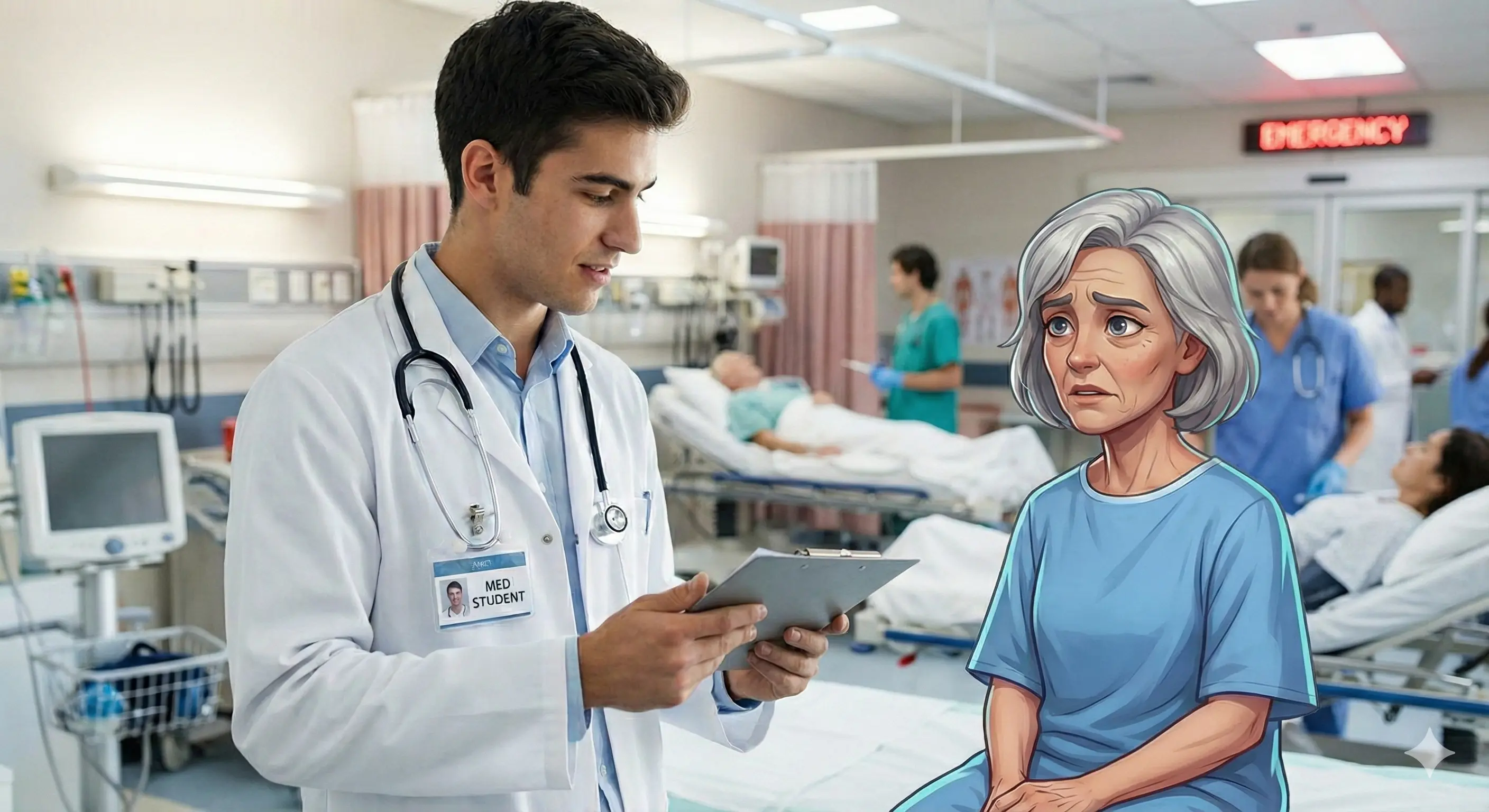
Mental health caregivers: AI avatars change the game
AI & mental health: train caregivers thanks to AI avatars Mental health is under strain, and so are the teams. Faced with the increase in psychological disorders and the lack of time for professionals, AI avatars offer an immersive training ground to prepare caregivers, secure care, and better detect weak signals, without ever replacing humans.
Read article →Inclusive Training: How VR and AI Avatars Adapt to Employee Neurodiversity
1 in 5 employees has an atypical cognitive profile. Discover how the duo of Virtual Reality and AI Avatar transforms corporate training into an adaptive, inclusive, and measurable experience — without compromising operational efficiency.
Read article →Questions about healthcare simulation training
Are the simulations scientifically validated?
Each scenario is designed with clinical and educational experts from your institution or specialty. Reproduced protocols follow current guidelines (HAS, learned societies). Final validation always belongs to your educational team.
Can these trainings be integrated into initial training programmes?
Yes. Modules integrate into curricula via xAPI/SCORM for nursing schools, medical faculties and paramedical schools. Skills acquired in simulation are traceable in the student's digital portfolio.
Can the patient avatar simulate different pathologies or profiles?
Yes. Each scenario defines the clinical and behavioural profile of the avatar: age, pathology, anxiety level, type of resistance. You can create as many profiles as needed to cover the diversity of real situations.
Do these tools replace clinical placements?
No, they prepare and complement them. VR and avatar simulation enables intensive practice before contact with real patients. Placements remain irreplaceable for the relational dimension and integration into the care team.
Which institutions can use these solutions?
CHUs, private clinics, nursing schools, medical faculties, paramedical schools, care homes, outpatient structures. The solution adapts to the size and constraints of each institution.
Ready to train with no patient risk?
Personalised demo for your institution.
We gave our AI avatars the floor.
Now it's your turn to challenge them.
45 minutes live to understand, test, and decide if AI avatars belong in your company. Free, online, limited seats.
More infoWith your consent, we use audience measurement cookies (Google Analytics 4) to improve the site. Your data is never sold.
Cookie settings
Choose which cookies you accept. You can change your choice at any time via “Manage cookies” at the bottom of the page.