CS
Christèle Simeoni
Co-founder & CMO, VRAI Learning
AI and mental health: training caregivers with AI avatars
Mental health is under pressure — and so are the teams. Faced with rising psychiatric disorders and the time constraints of professionals, AI avatars offer an immersive training ground to prepare caregivers, secure patient care, and better detect early warning signs, without ever replacing the human dimension.
Today in France, 13 million people are affected each year by a mental disorder according to Santé publique France, and the WHO confirms that depression has become the leading cause of disability worldwide. In care settings, professionals report a continuous increase in demand, while anxiety and depressive disorders among young people have risen by more than 50% in recent years. Demand is growing, and situations are becoming more complex.
Faced with this reality, training future caregivers is more strategic than ever. Yet nearly 70% of mental health students say they lack real practical experience before their first clinical immersion (ENSP — French National School of Public Health), and many say they do not feel ready to handle a crisis situation. Added to this is a lack of time within teams: DREES studies show that mental health professionals are among the occupations most exposed to psychological burnout, with anxiety and emotional fatigue levels higher than those seen in the general working population.
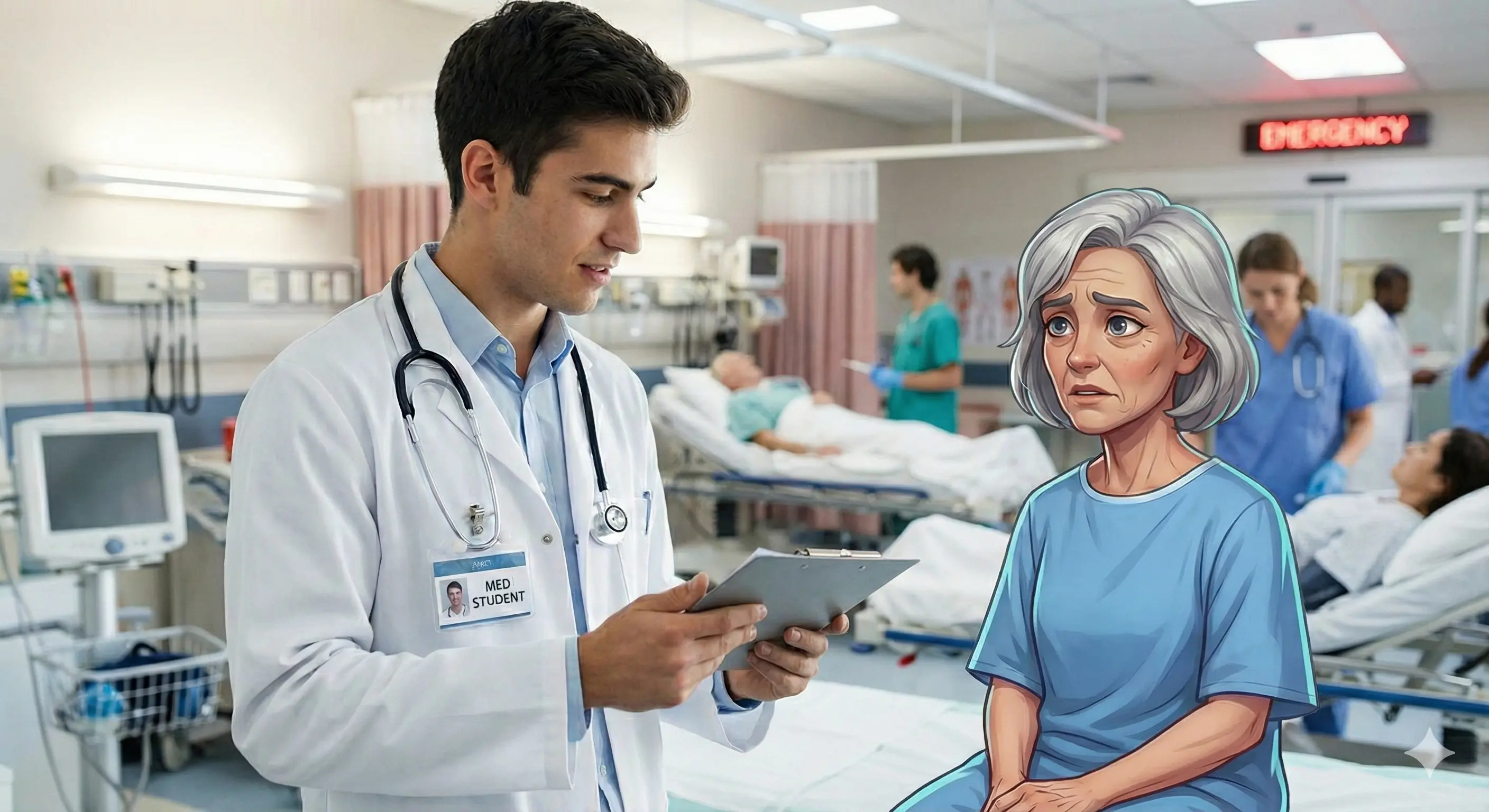
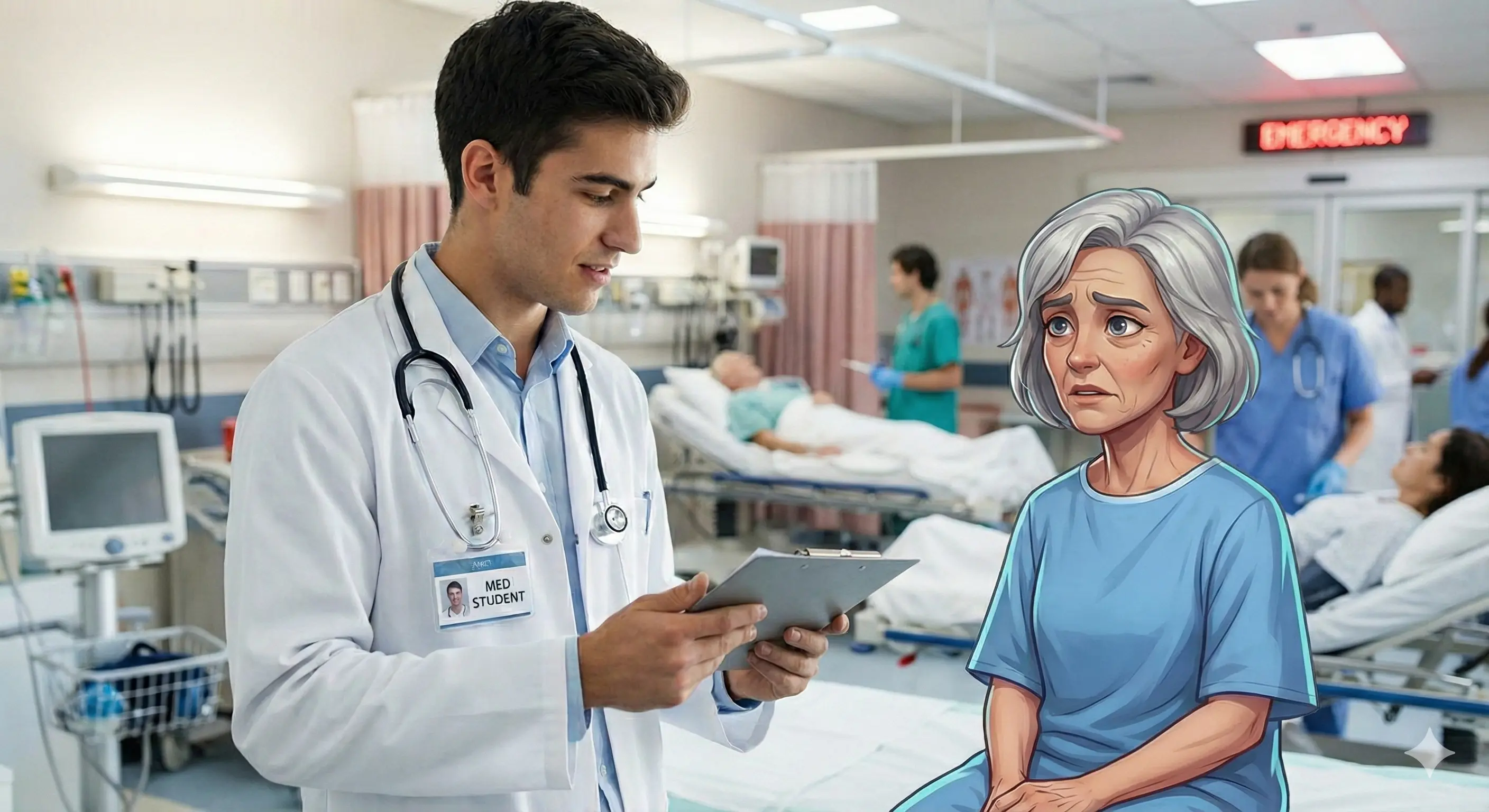
It is therefore essential to offer learners a space where they can practice, test, feel, and start over — before finding themselves alone with a person in a state of profound vulnerability.
Why does simulation work so well for mental health training?
Simulation in healthcare is not new — the Haute Autorite de sante (HAS) recognizes it as an essential method for developing clinical and relational skills. What is new is the arrival of tools capable of going much further in terms of immersion.
Research on immersive simulation is unanimous: memorization improves by 40% when a scenario is lived rather than simply explained (Stanford). Confidence also increases significantly: the AACN estimates that a learner gains up to 34% additional confidence after several simulated practice sessions. And decision-making improves by an average of 27%, because the brain encodes more effectively what it experiences.
In other words: we retain more when we live through things than when we simply read about them. And in mental health, where everything depends on the relationship, posture, listening, and detecting early signals — this difference changes everything.
How do AI avatars act as simulated patients for risk-free practice?
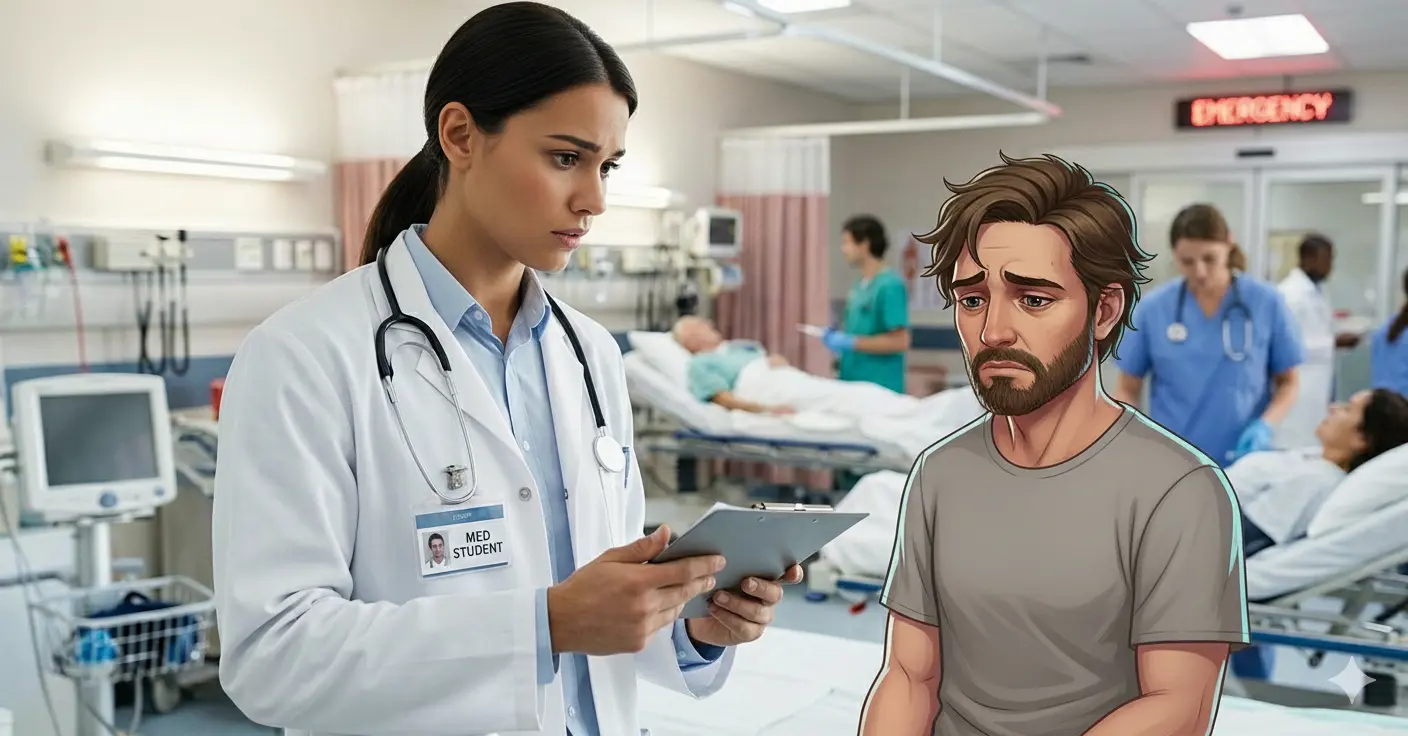
This is where conversational AI avatars come into their own. They allow students, interns, nurses, or social workers in training to engage with a range of situations that no lecture could ever cover.
An avatar can embody a teenager experiencing school dropout, a person exhausted by burnout who minimizes their symptoms, an elderly person living in isolation, or someone who expresses suicidal thoughts indirectly. Responses vary according to the words used, tone, and hesitations. The learner must find the right posture, dare to ask certain questions, adjust their language, soothe, and reformulate.
It is training that resembles reality — without ever putting a real person at risk. And above all, the student can start over. Redo a difficult interview ten times if needed. Try something different, see what changes, build confidence. An opportunity impossible to replicate in real-world situations.
What does AI analysis offer trainers and supervisors?
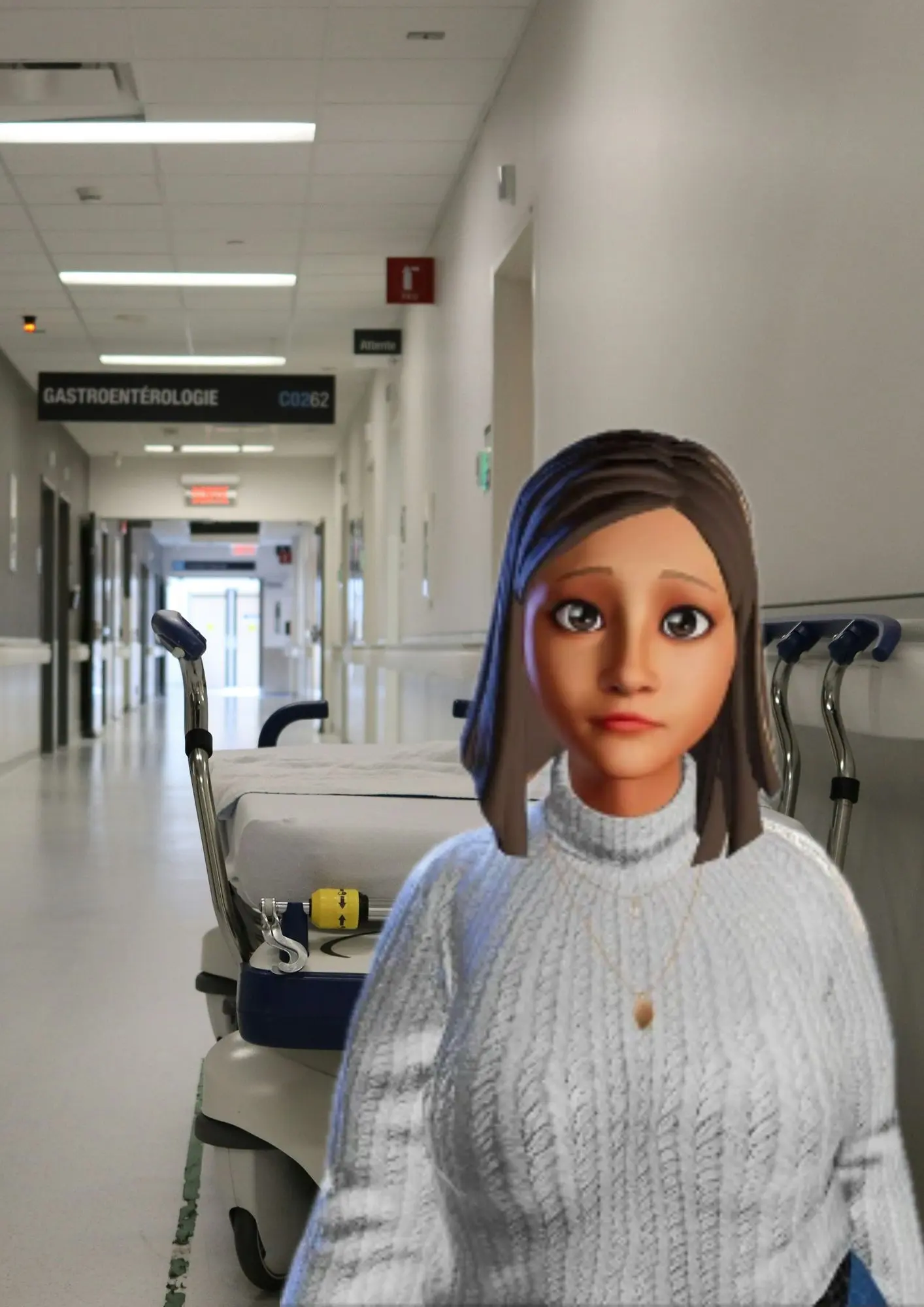
The other strength of these tools is what happens after the simulation. At VRAI Learning, each avatar is connected to a dashboard that automatically records and analyzes the conversation. The system produces structured summaries, extracts key moments, identifies relevant or problematic phrasing, and detects early signals such as an emotional shift, avoidance behavior, or a phrase that may indicate risk.
For teachers and mentors, this changes the way they train. Instead of relying solely on their impressions or memories of a role-play, they have access to an exact record: what was said, how, at what moment, and with what consequences in the flow of the exchange. They can track a student's progress over several weeks, identify those who need additional support, or compare different approaches to the same scenario.
This is augmented pedagogy: more precise, more effective.
Beyond training: a prevention tool for resource-constrained organizations
The primary objective remains training experts and future caregivers. But this same technology can also become a support for associations, listening centers, or psychosocial organizations that are short-staffed.
In these environments where teams are small, the avatar is never presented as a substitute for a professional. It serves as an early point of contact, within a strictly defined framework. Above all, thanks to data collected and analyzed in real time, the AI can detect concerning patterns — for example, the expression of deep despair, mention of suicidal thoughts, a sudden social rupture — and immediately alert the designated supervisor or administrator.
This sentinel role is based on a simple fact: the earlier warning signals are detected, the faster and more appropriate human intervention can be. AI never takes over — it helps ensure no one in distress is missed, which is what teams say they fear most, especially when understaffed.
Training differently, accompanying differently
Everything converges: rising demand, pressure on teams, urgency to strengthen training, and the need to better detect risks upstream. AI avatars are not a magic solution. But they are becoming a concrete, credible, and powerful tool to prepare the professionals of tomorrow and support those of today. They make it possible to multiply practice situations, analyze exchanges with precision impossible to achieve manually, personalize learning journeys, and give organizations a way to strengthen prevention despite limited resources.
We have been developing, over several months, in collaboration with experts, conversational AI avatars dedicated to mental health training and an intelligent dashboard that transforms conversations into knowledge, progress, and sometimes... essential prevention signals.
Once again, technology does not replace the human — it gives them the means to be even more present, more accurate, more prepared, more attentive. And in the field of mental health, that is far from a minor detail.
Want to discover our custom VR immersive training programs? VRAI Learning designs VR modules adapted to your sector and pedagogical objectives.
Read also
Virtual reality training in the company: the complete guide →
Methods, costs, use cases and results for deploying VR in your organization.

Christèle Simeoni
Co-founder VRAI Learning (2023) · CMO
Co-fondatrice de VRAI Learning, spécialiste de la formation immersive VR et des avatars IA conversationnels.
See immersive training in action
Personalised demo, no commitment. We show you what it looks like for your context.
Book a demoExplore our solutions