CS
Christèle Simeoni
Co-founder & CMO, VRAI Learning
Virtual reality (VR) training in the enterprise means immersing employees in simulated environments to train them for realistic situations — without risk and at lower cost.
Alongside in-person and e-learning formats, VR enables organizations to standardize their training, accelerate skill development, and sustainably increase team engagement. Learners are no longer passive observers — they become active participants in their own learning.
Why is VR training a strategic asset for companies?
Key benefits
VR training delivers tangible advantages for organizations:
- Reduced risk related to safety incidents, costly errors, and field accidents
- Lower logistics costs (travel, equipment downtime, trainer mobilization)
- Standardized training quality across all sites and countries
- Faster skill acquisition through accelerated learning and better retention
- Stronger engagement and employer attractiveness via innovative, experiential formats
According to PwC, learners trained in VR feel more confident in their skills and apply what they have learned more effectively on the job.
Enterprise VR training: for which use cases is it most effective?
VR training is particularly relevant when training in real conditions is difficult, risky, or costly.
Most common use cases
- Industrial site safety — procedures, evacuation, high-risk interventions, hazard awareness.
- Maintenance and technical skills — learning complex procedures on sensitive machines or equipment.
- Customer relations and soft skills — conflict management, reception, relational posture, sales situations.
- Onboarding new employees — discovering complex environments: factories, warehouses, retail networks, large facilities.
In these contexts, VR enables realistic, repeatable, and measurable practice scenarios.
When is VR training not the right fit?
This is a key point that is often underestimated.
VR training is not appropriate when:
- The objective is purely informational,
- A simple format (video, PDF, e-learning) is sufficient,
- There is no simulation or practice scenario to work through,
- VR is used solely for its "wow" effect.
In these cases, VR training can quickly become costly, ineffective, or even counter-productive for learners.
The right question is never "can we do VR?" — but "is this the right format for this specific objective?"
What role do avatars play in VR training and beyond?
AI avatars play a key role in immersive learning systems, but their value depends entirely on how they are used and integrated into the learning design.
Avatars integrated into a VR experience
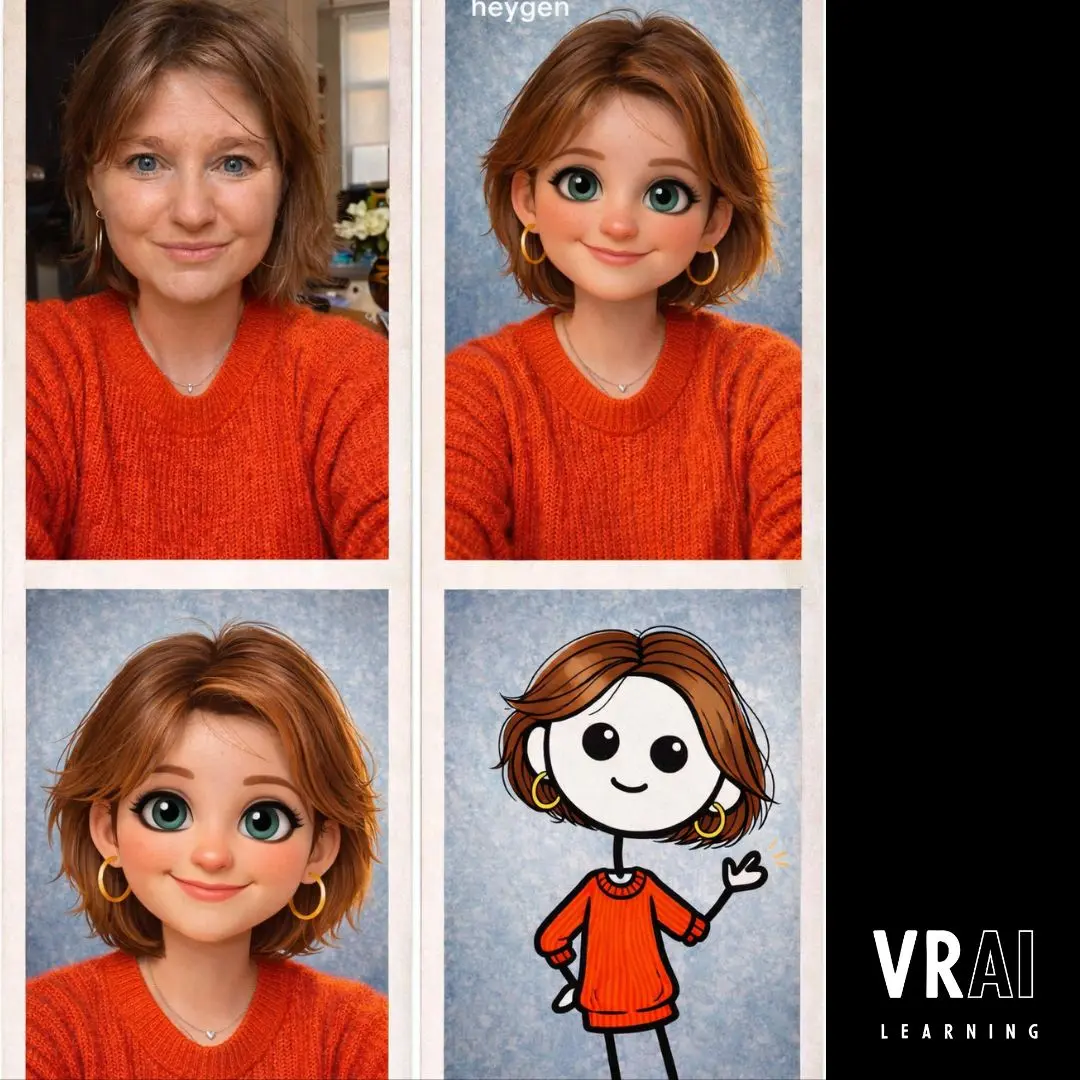
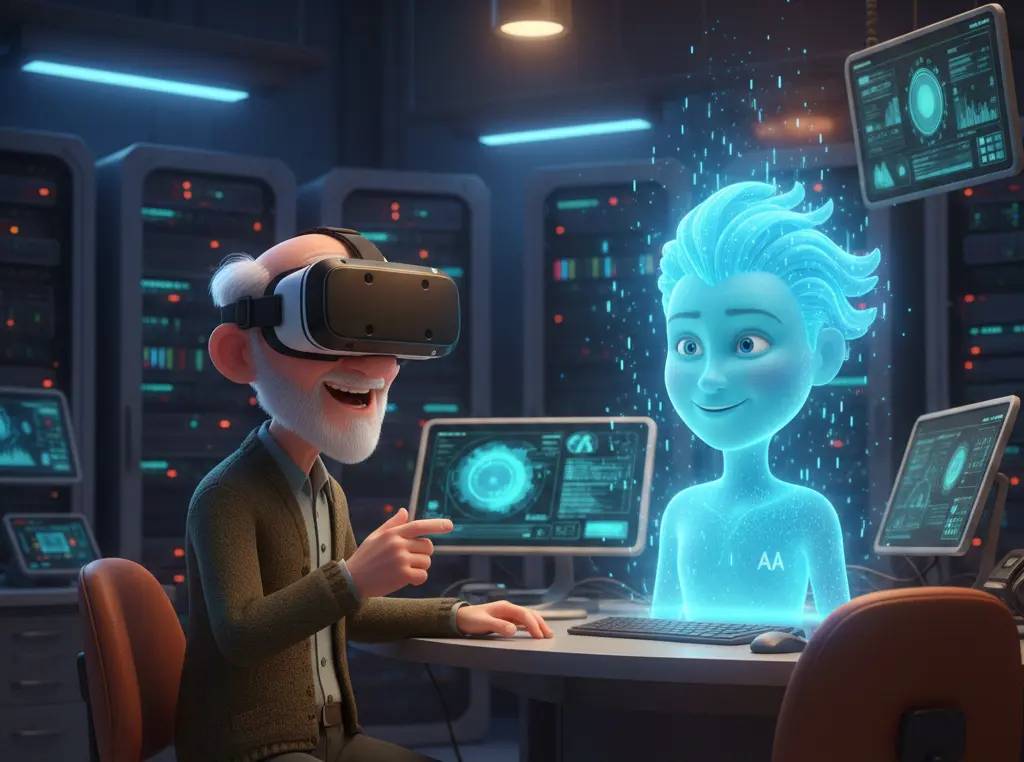
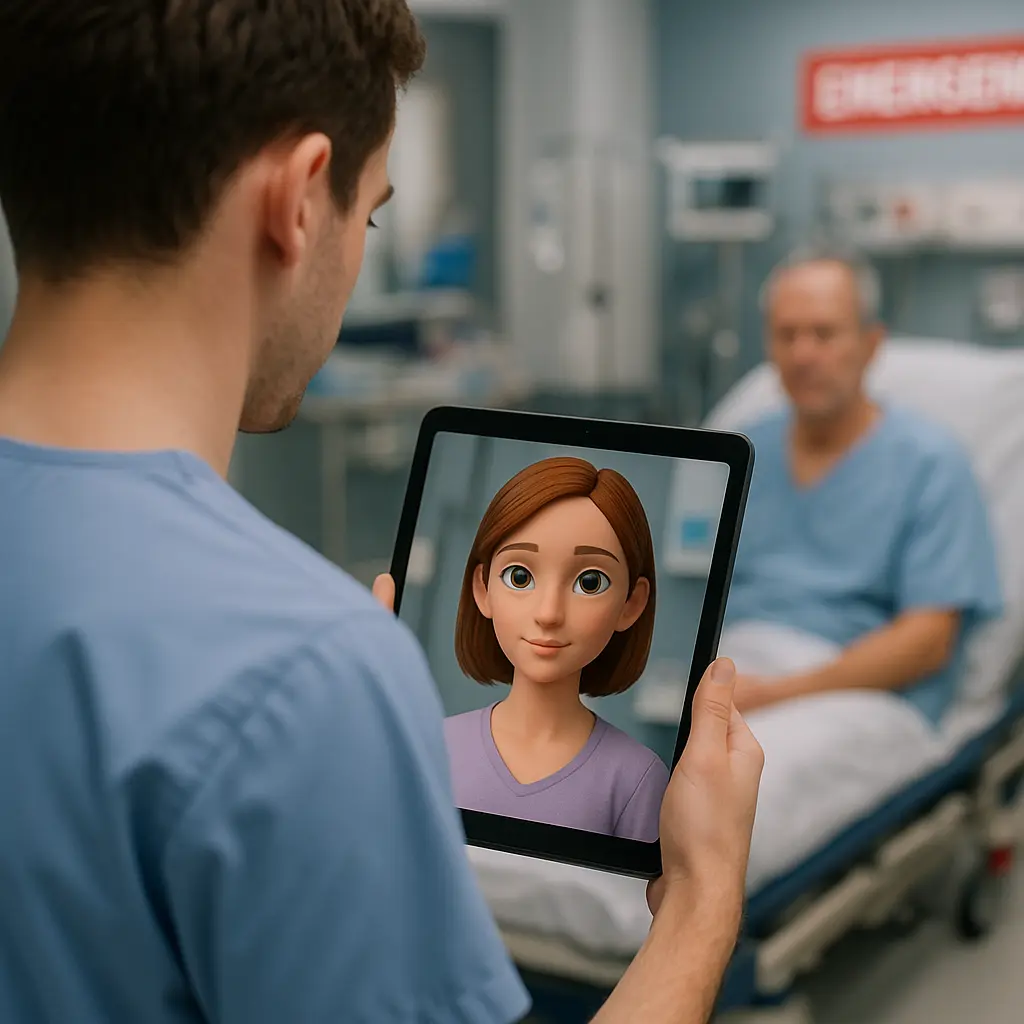
Within a VR environment, an avatar can guide the learner, explain instructions, play a role (customer, manager, colleague), and react to the user's choices and decisions. For example, an avatar can embody a difficult customer in a customer relations training, or serve as a pedagogical tutor guiding the learner throughout the course.
Avatars used outside VR
Avatars are not limited to VR. They can also be deployed on desktop, mobile, or interactive kiosks. In this context, they serve to guide, inform, support a learning journey, and reinforce an existing training system.
An avatar can prepare the learner before a VR experience, or extend learning after, without a headset.
A combined VR and avatar example: what does it look like in practice?
In a project carried out for a major retail group, a virtual welcome avatar was used to accompany employees from their very first day. Connected to internal systems (HRIS, scheduling), the avatar adapted its messaging based on each user's profile: role, context, and availability. VR was then used for specific job-related practice scenarios. Result: a coherent, progressive, and personalized training journey.
How do you measure the impact of VR training?
Effective immersive training must be measurable. Tracked indicators can include: engagement rate, time on task, choices made, common errors, progression, and learner feedback. This data enables continuous improvement of training pathways and demonstrates the real value of VR training on operational performance.
VR training is a means, not an end
Virtual reality training opens major opportunities for professional development. But it only delivers value when it is aligned with a clear pedagogical objective, integrated into a coherent learning journey, and complemented by the right formats (AI avatars, desktop, mobile).
Creating an immersive experience is one thing. Creating an experience that is useful, engaging, and measurable is another. The future of training lies precisely at the intersection of pedagogy, user experience, and immersive technologies.
VRAI Learning, your VR training partner
At VRAI Learning, we support companies that want to move from a training catalogue model to a field-oriented immersive experience model. We help Training, HR, and Business teams to: identify high-impact use cases for enterprise VR training; design scenarios aligned with pedagogical and business objectives; produce immersive modules (VR / MR / AI avatars) adapted to your operational constraints; deploy VR training at scale and measure its impact.
Thinking about launching a VR training project in your company? Contact us to identify your use cases and build a high-value VR pilot.
VR training by sector: concrete use cases
Virtual reality adapts to every industry. Here are the sectors where VRAI Learning has deployed immersive training with measurable results:
- VR training in construction — worksite safety, technical skills and accident prevention
- VR training in cybersecurity — attack simulations and protective reflexes
- VR training in retail — sales techniques and customer relationship management
- VR training for technical roles — solving the skilled labor shortage
- VR training for seniors at work — reigniting motivation and building skills
- VR training in mental health — supporting caregivers with AI avatars
For a deeper look at advantages and limitations, see our analysis: VR training: advantages and disadvantages you should know.

Christèle Simeoni
Co-founder VRAI Learning (2023) · CMO
Co-fondatrice de VRAI Learning, spécialiste de la formation immersive VR et des avatars IA conversationnels.
See immersive training in action
Personalised demo, no commitment. We show you what it looks like for your context.
Book a demoExplore our solutions