CS
Christèle Simeoni
Co-founder & CMO, VRAI Learning
What is immersive training for retail?
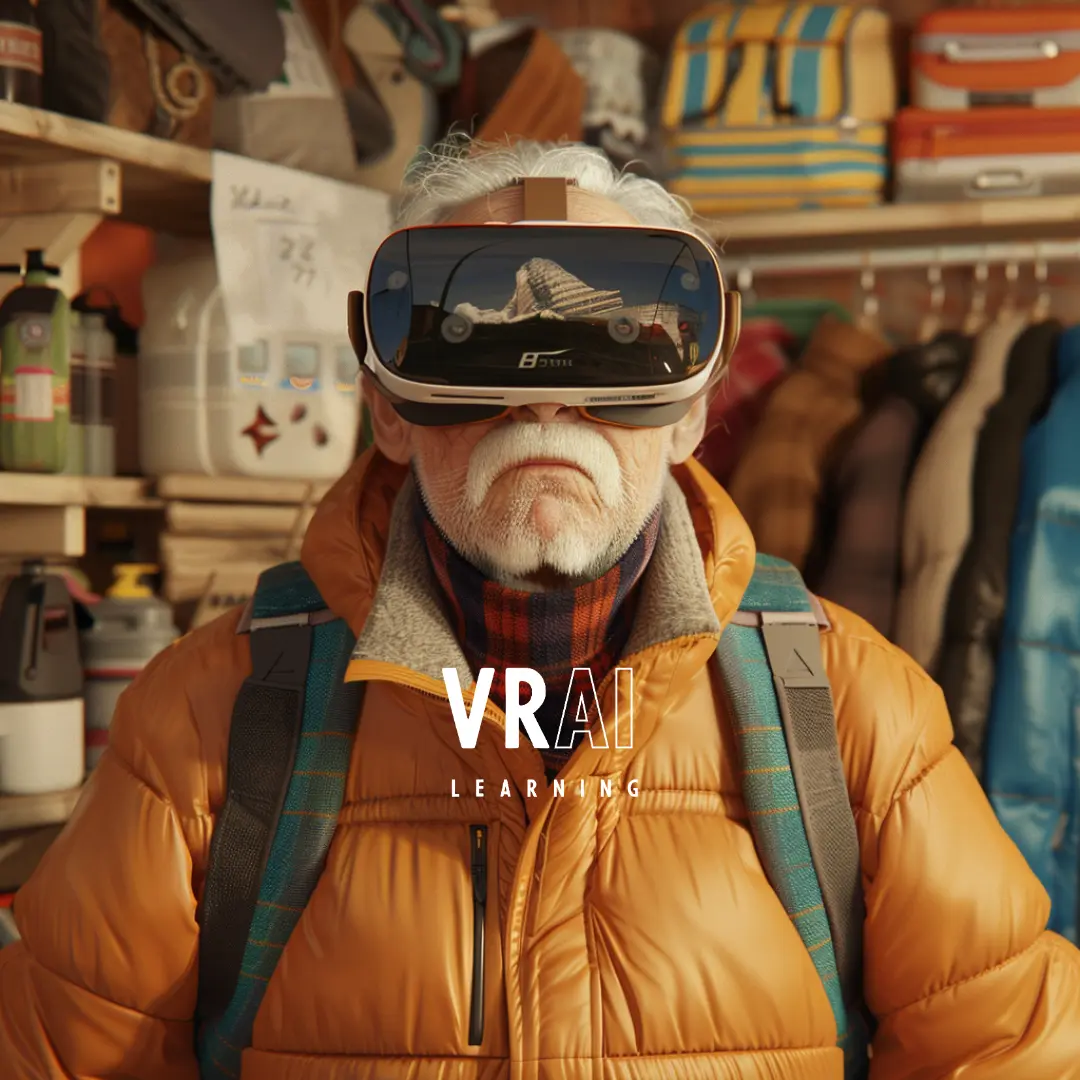
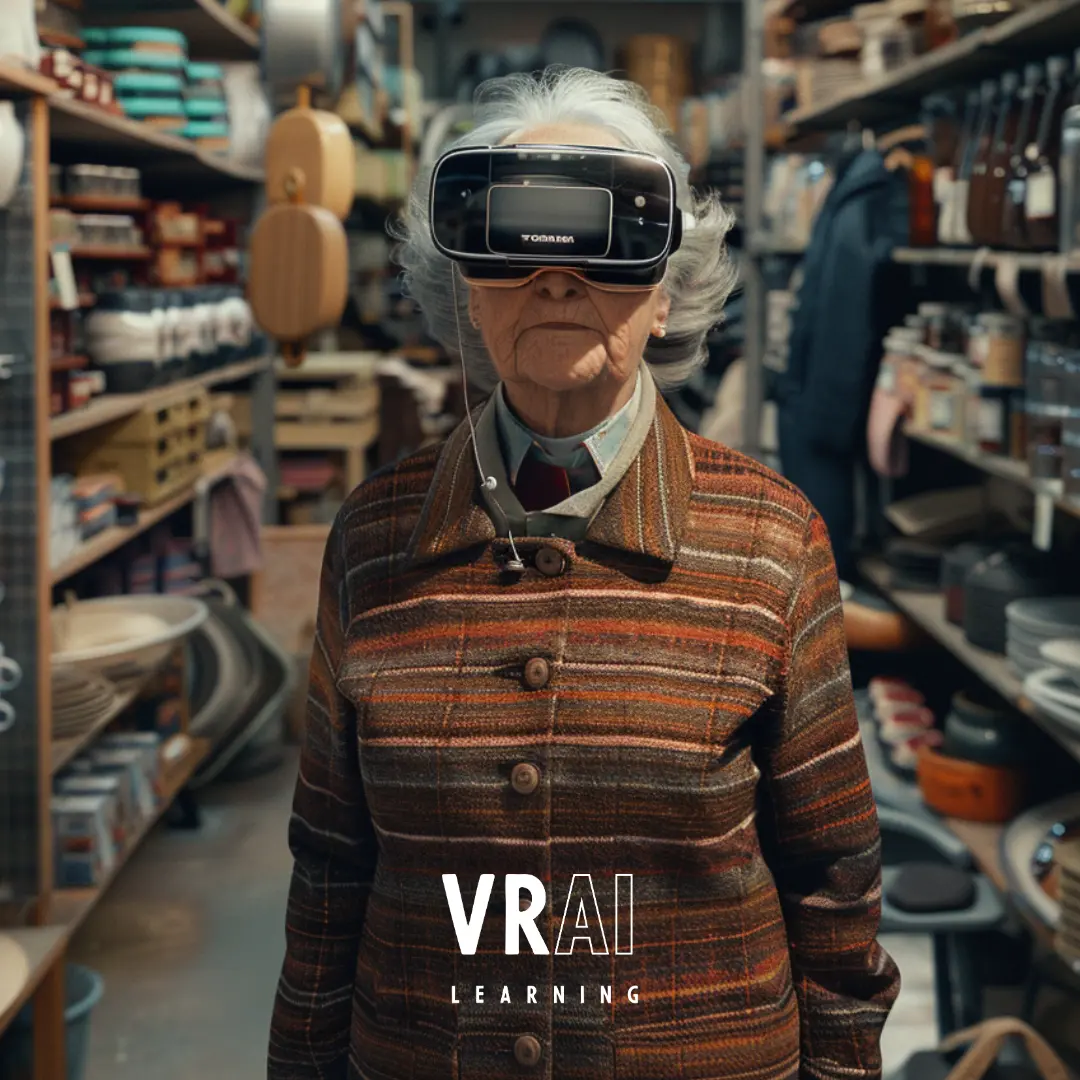
Immersive training for retail refers to the use of virtual reality (VR) and augmented reality (AR) to train sales associates directly within simulated environments. Unlike traditional classroom-based methods, these tools place learners in realistic scenarios: welcoming customers, product advising, and handling objections. According to a PwC study, learners are 4 times faster at completing a task after VR training than after traditional classroom training. Training can be delivered remotely, reducing travel costs and allowing sales associates to learn at their own pace. These new technologies are fundamentally transforming skills development in retail, giving brands concrete levers for performance and standardisation across their entire network.
Virtual Reality and Intelligent Conversational Agents: Immersive Training as a Performance Catalyst
In France, many retail companies have already adopted immersive training. Décathlon, for example, uses VR to train its sales associates in selling mountain sports equipment. Associates can practise advising customers on the right gear depending on weather conditions and hiking routes.
How does immersive training standardise in-store sales practices?
Immersive training standardises sales practices by creating identical learning modules for all sales associates across a network, regardless of their store or experience level. In virtual reality, every team member lives through the same scenarios, the same customer storytelling, the same sales arguments — ensuring consistent brand image across all points of sale. AR complements this by overlaying real-time information directly onto products, guiding associates uniformly. This model is particularly effective for multi-site retailers: a single module update deploys instantly everywhere. The result: product messaging is homogeneous, service standards are upheld, and training can evolve quickly in response to new products or customer feedback.
Standardised Training:
- VR/AR allows trainers to create standardised training modules that all sales associates follow, ensuring consistent training quality across every store while placing them in situations immediately
- Every sales associate, wherever they are, receives the same quality and content of training.
- Brand storytelling and the customer experience can be validated in line with brand guidelines
Easy Access to Resources:
- AR allows sales associates to easily access resources and real-time information, ensuring consistency in customer service.
- For example, visual instructions can be overlaid onto products to guide associates uniformly.
Of course, immersive training can be personalised to meet the specific needs of each business. Training content can be adapted to highlight the company's values, practices and products, taking into account the particularities of each market, including by country. This strengthens brand identity and improves the customer experience.
Data & Metrics
Training data can be collected and analysed to assess sales associates' competencies, identify skill gaps and training needs, and measure the impact of training on sales performance.
Immersive training can also be a highly effective tool for aligning sales associate training with company policy. Indeed, it is not uncommon for product messaging to differ from one store to another within the same brand — yet by working with trainers to create brand experiences that reflect the brand's specifications, standardised virtual simulations can be developed and used to train all sales associates in the same way, regardless of their geographic location or experience level.
Imagine… (Re)creating an end-to-end customer journey simulation, with scenarios based on the customer feedback the brand already holds, scenarios it anticipates, and ones that showcase every sales argument associates need to master.
In short, immersive training based on VR and AR improves sales associates' skills, standardises sales practices across all stores, allows training content to be updated quickly and easily, and reduces training costs. Companies that want to stay competitive in this constantly evolving market should seriously consider integrating these technologies into their training strategy.
Which retail companies are already using immersive training?
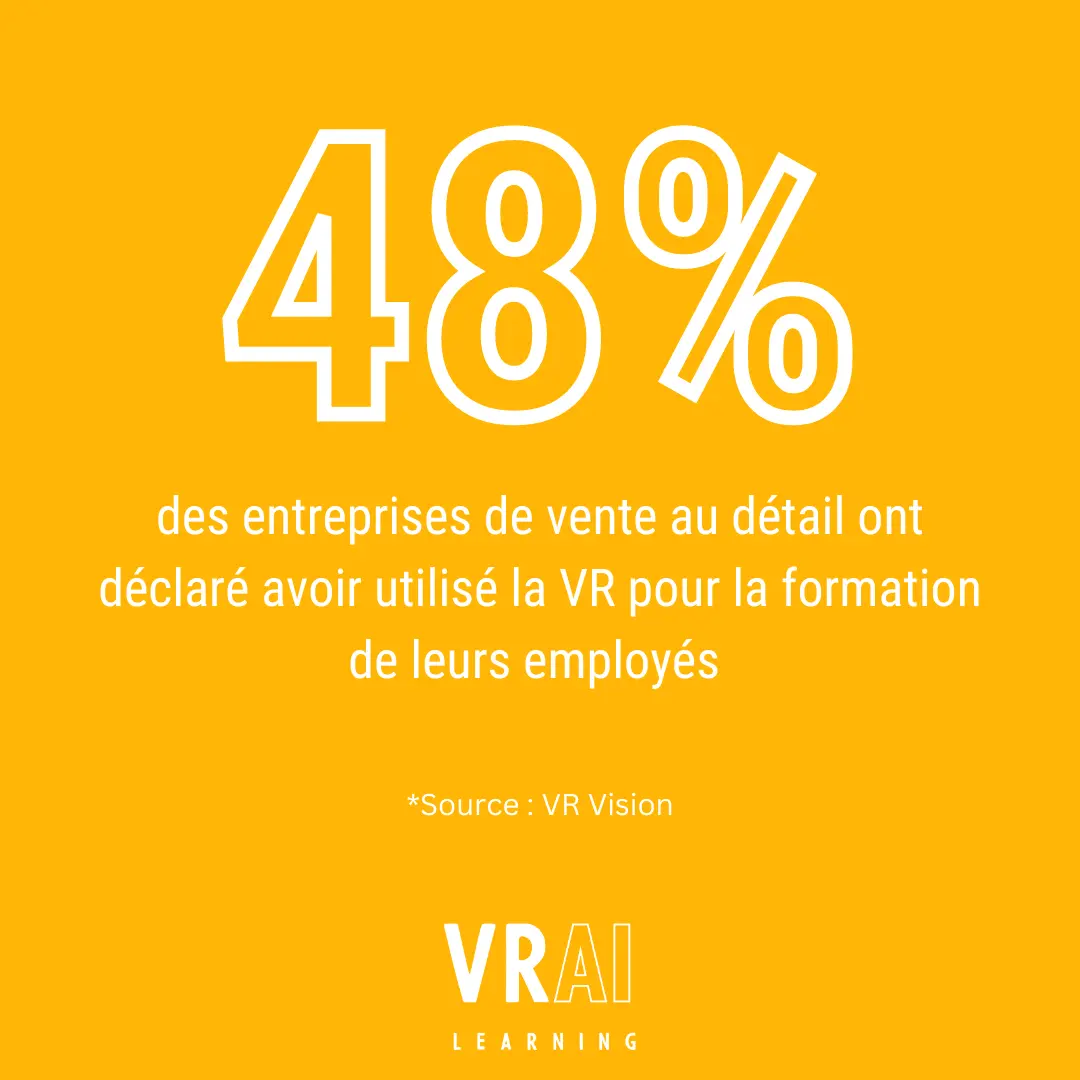
Several major French retailers have integrated virtual and augmented reality into their training programmes with tangible results. Décathlon trains its associates in selling mountain sports equipment using VR, allowing them to practise advising customers based on weather conditions and routes. Leroy Merlin uses AR to teach the use of DIY tools in an interactive 3D environment. Fnac Darty turned to VR to train its teams in selling complex electronics — televisions, audio systems — and to improve the quality of responses to customers' technical questions. These examples demonstrate that immersive training adapts to very different contexts: technical advising, customer relationship management, product mastery. Both large-format and specialist retailers find in it a lever for rapid and measurable skills development.
- "Décathlon: virtual reality to train sales associates", LSA, 17 January 2018.
- "Leroy Merlin uses augmented reality to train its sales associates", L'Usine Digitale, 26 November 2018.
- "Fnac Darty: virtual reality to train sales associates", LSA, 28 March 2017.
- "The Future of Work: The VR/AR Training Revolution", PwC, 2019.
Frequently asked questions
What is the main advantage of virtual reality training for retail sales associates compared to traditional methods?
Virtual reality training gives sales associates a safe learning environment in which they can practise real-life situations without any risk to the customer or the brand. The primary advantage is retention: by living through a situation rather than merely listening to it, associates retain gestures, arguments and reflexes far more effectively. PwC's 2019 study demonstrated that learners trained in VR complete tasks 4 times faster and show 275% greater confidence than those trained via traditional e-learning. For a retail brand, this translates into faster autonomy in the field, fewer errors in real situations, and a better customer experience from the very first weeks on the job. The emotional dimension of immersion also plays a key role in learner engagement.
Is immersive training suited to small retailers, or only to large groups?
Immersive training is now accessible to retailers of all sizes, not just large chains or international groups. While early adopters were companies like Décathlon, Leroy Merlin and Fnac Darty, production costs have fallen significantly since 2020. Modular, shared-cost formats now allow franchise networks or mid-sized independent retailers to deploy immersive training modules without a massive upfront investment. The key is to target high-impact use cases: customer welcome, selling a new product, handling difficult situations. A module focused on a single critical scenario can generate a measurable return on investment from day one of deployment, by reducing onboarding time and improving conversion or customer satisfaction metrics.
How is the effectiveness of immersive training measured for retail sales associates?
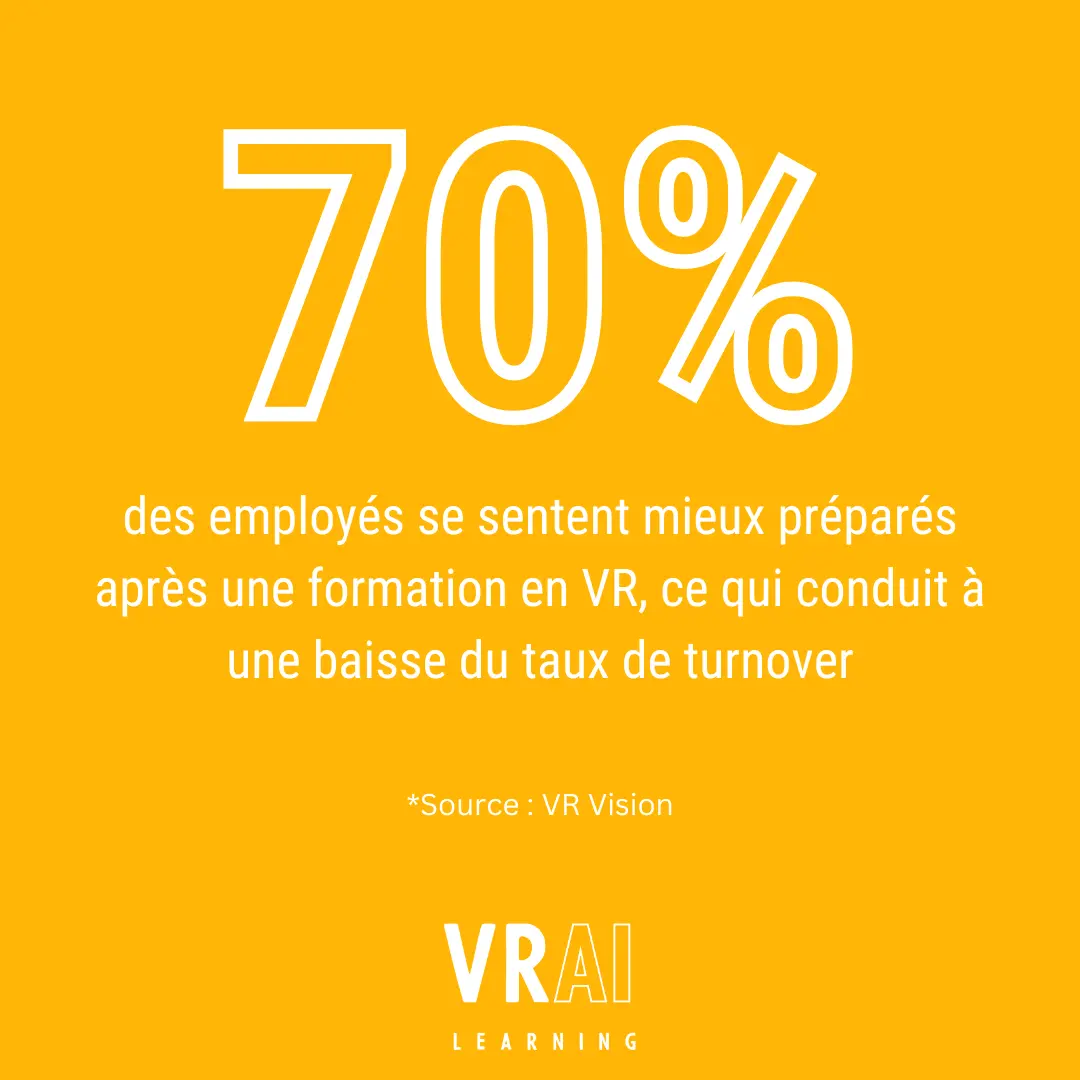
The effectiveness of immersive training for sales associates is measured at several levels. During training, LMS platforms compatible with VR/AR modules collect precise behavioural data: response times, choices made within scenarios, completion rates, scores on integrated assessments. This data enables individual and collective skill gaps to be identified, and content to be adapted in real time. Post-training, the key indicators are speed to autonomy, average basket evolution, customer satisfaction rates measured in-store, and the reduction in turnover linked to poor-quality onboarding. Companies that cross-reference LMS data with their commercial KPIs gain a complete picture of the ROI of their immersive training programme, and can justify the investment to their leadership team.
Can immersive training modules be customised for each retailer or brand?
Yes, customisation is at the heart of the added value of immersive training for retail. Modules are designed to measure based on each retailer's standards, values and products: trainer-validated scripts, brand-specific sales arguments, and customer situations actually encountered in-store are all integrated. Virtual environments faithfully reproduce the brand's universe — store layout, uniforms, signage. This customisation ensures that every trained sales associate genuinely embodies the brand identity, rather than delivering a generic script. Content can also be updated quickly for a product launch, a change in commercial policy, or an evolution in service practices, without having to reshoot the entire module. This is a decisive advantage for retailers that frequently refresh their product ranges.
Want to explore our custom VR immersive training? VRAI Learning designs VR modules tailored to your sector and your learning objectives.
Read also
Virtual reality training in the company: the complete guide →
Methods, costs, use cases and results for deploying VR in your organisation.

Christèle Simeoni
Co-founder VRAI Learning (2023) · CMO
Co-fondatrice de VRAI Learning, spécialiste de la formation immersive VR et des avatars IA conversationnels.
See immersive training in action
Personalised demo, no commitment. We show you what it looks like for your context.
Book a demoExplore our solutions