Christèle Simeoni
8 min min read
How can virtual reality benefit seniors?Societal impact: Virtual reality for seniors
CS
Christèle Simeoni
Co-founder & CMO, VRAI Learning
Virtual reality is often associated with video games or professional training for younger workers. Yet it opens equally promising horizons for older adults — a population facing specific challenges: social isolation, progressive cognitive decline, reduced mobility, and care-related anxiety. Immersive technology offers concrete answers to each of these, documented by a growing body of clinical studies and real-world trials in residential facilities.
Does virtual reality really stimulate cognitive function in older adults?
Yes — and the clinical data confirms it. Interactive virtual environments simultaneously engage working memory, concentration, problem-solving, and spatial orientation. Research by cognitive neurology teams shows that navigating virtual spaces activates the hippocampus, the brain region central to episodic memory. By regularly engaging these neural circuits, virtual reality helps slow age-related cognitive decline and maintain independence for longer. The best-documented protocols combine spatial navigation, recognition exercises, and interactive scenario-based tasks. Effectiveness depends on the regularity of sessions, the progressive difficulty of content, and the quality of the human support that accompanies each session. Weekly use over several months is associated with the most measurable outcomes in available studies.
Identified cognitive benefits include:
- Memory stimulation through navigation in familiar or unfamiliar places
- Improved sustained attention through interactive scenarios
- Training of visuo-motor coordination, useful for fall prevention
- Strengthening of problem-solving skills through gamified situation-based exercises
How is virtual reality used in care homes and residential facilities for seniors?
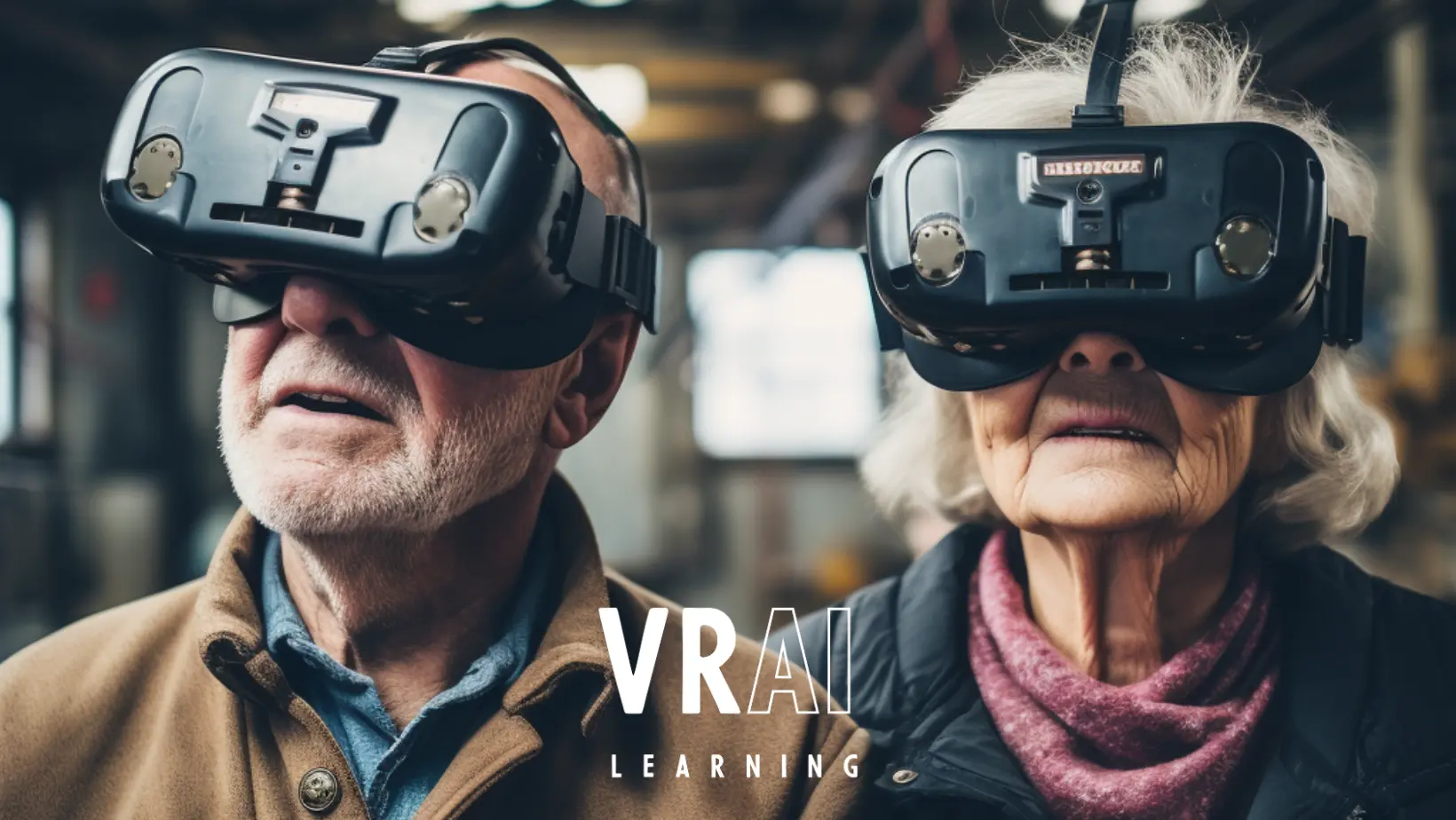
In residential care facilities, virtual reality is primarily deployed to combat isolation and give residents access to experiences from the outside world. Equipped with lightweight headsets and accompanied by trained care staff, residents experience things that would be physically out of reach: visiting a dream destination, returning to their hometown, attending a concert, or exploring a nature park. Care teams consistently report visible emotional stimulation during sessions, reduced passivity, and improved communication between residents, families, and staff. These outcomes are further reinforced by shared activities: two residents each wearing a headset can experience the same environment simultaneously, generating topics of conversation and strengthening social bonds. Social isolation — a major risk factor for the mental health of older adults — is significantly reduced as a result.
The most common uses in residential care settings are:
- Virtual travel: visiting a dream destination, returning to a hometown, exploring a nature park
- Visits to familiar places: their former home, childhood neighbourhood, a significant place of worship
- Attending shows and concerts: opera, theatre, sporting events experienced in full immersion
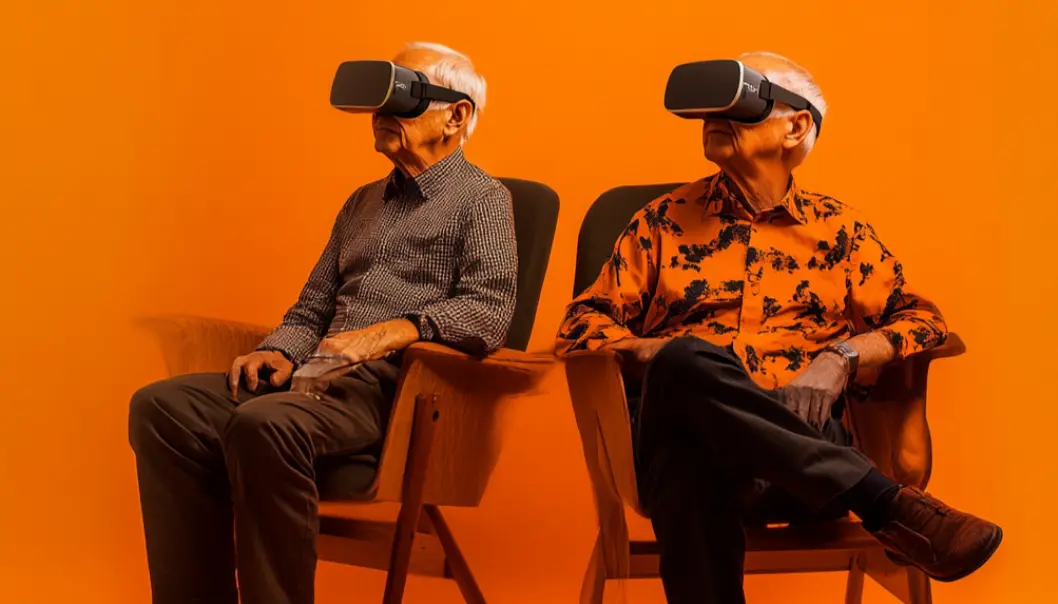
- Shared group activities: two residents each wearing a headset can live the same experience simultaneously, creating a shared memory and a source of social connection
One essential point: these sessions must always be accompanied by a trained professional. The headset alone is not enough; it is the human interaction before, during, and after the session that produces lasting therapeutic effect.
Can virtual reality reduce pain and anxiety in older adults?
Yes, virtual reality is now recognised as an effective complementary tool for pain and anxiety management. The mechanism is based on attentional distraction theory: the brain cannot simultaneously process an intense painful stimulus and a highly engaging visual and auditory experience. Immersion in a calming environment — a natural landscape, a beach, a forest — captures enough attention to reduce the perception of pain during invasive care such as dressing changes, punctures, or painful physiotherapy. Clinical studies confirm a measurable reduction in perceived pain among patients using VR during treatment. For seniors suffering from chronic anxiety or mild to moderate depression, gradual exposure protocols allow phobias and social anxiety to be addressed in a safe setting, under therapeutic supervision, with progressive and documented results.
For seniors suffering from chronic anxiety or mild to moderate depression, gradual exposure protocols in virtual reality make it possible to:
- Learn relaxation and breathing techniques in a safe environment
- Practise simulated social interactions for those with social anxiety
- Work on specific phobias (fear of falling, claustrophobia) with a therapist
Reduced mobility and accessibility: VR as a space for autonomy
For older adults whose mobility is limited — whether due to a locomotor condition, a long-term care stay, or simply the natural ageing process — virtual reality offers an unprecedented space for autonomy. It allows them to experience active situations without physical constraints.
Practical applications include:
- Adapted fitness: guided movement applications enable light physical exercise in a seated position, stimulating coordination with no risk of falling
- Immersive rehabilitation: certain physiotherapy protocols use VR to make rehabilitation exercises more engaging and better tolerated
- Exploring the world: VR offers an alternative to physical travel, invaluable for people who can no longer get around independently
- Participation in cultural events: concerts, exhibitions, and family ceremonies filmed in 360° can be experienced as if you were truly there
These experiences do not replace real human interactions or in-person physical activity. They complement them in situations where such interactions are limited, maintaining a sense of engagement with the world and an overall quality of life.
Limitations to be aware of
Enthusiasm about VR for older adults must be tempered with a clear-eyed view of its limitations:
- Motion sickness: some older adults are more prone to nausea or dizziness. Starting with static experiences (virtual visits with no movement) and short sessions (10–15 minutes) is recommended.
- Technology adaptation: the learning curve for using a headset can be an initial barrier. Human support is essential during the first sessions.
- Medical contraindications: individuals with epilepsy, certain balance disorders, or advanced dementia should undergo a medical assessment before any VR experimentation.
- Quality of experience: poorly designed content or low-quality hardware undermines the experience and may cause frustration rather than wellbeing.
These limitations highlight the importance of a structured deployment, with appropriate hardware, content specifically designed for this audience, and trained human support throughout.
Do you work in healthcare, social care, or the medico-social sector, or are you looking to understand how virtual reality can be integrated into your support programmes? Explore our immersive training solutions and the documented measurable benefits, or contact us to discuss your needs.
Frequently asked questions
Is there a minimum age to use virtual reality as a senior?
There is no minimum or maximum age to use virtual reality — the determining criteria are overall health status and specific medical contraindications, rather than chronological age. Trials have been successfully conducted with individuals aged 70 to over 95. What matters is the ability to tolerate the headset, the absence of epilepsy, severe balance disorders, or advanced dementia, and the presence of a trained companion during the session. First sessions should always begin with short (10 to 15 minutes), static, and reassuring experiences to assess individual tolerance. A prior medical assessment is recommended for people with neurological or vestibular conditions. With appropriate support, the vast majority of older adults living in residential care or at home can benefit from virtual reality safely.
Can virtual reality help prevent Alzheimer's disease?
Virtual reality does not prevent Alzheimer's disease as such, but it is a cognitive stimulation tool that may help maintain mental functions for longer in people at risk or in an early phase. Research on hippocampus stimulation through navigation in virtual environments is promising: it shows activation of the neural circuits involved in episodic memory. Clinical studies have observed a measurable slowing of cognitive decline in participants who regularly used VR protocols combined with therapeutic follow-up. It remains a complementary approach, not a medical treatment. Its effectiveness depends on the regularity of sessions, the progression of content, and integration into a broader care protocol including medical follow-up, physical activity, and social connection.
What VR equipment is suitable for seniors in residential care?
The best-suited equipment for seniors in residential care facilities are lightweight, standalone, wireless headsets without cables, to minimise fall risks and simplify setup. Models such as the Meta Quest or equivalent devices are commonly used in care settings because they require no PC or complex technical configuration. Content must be specifically designed for this audience: static or very slow-motion experiences, sessions limited to 10–20 minutes, and a simplified interface requiring no controller manipulation. Hygiene is an essential criterion in institutional settings: headsets with easily cleanable or replaceable foam padding should be prioritised. A human companion must be present throughout the session, regardless of the equipment used. Content quality takes precedence over the technical sophistication of the headset.
Does virtual reality replace group activities in a care home?
No, virtual reality does not replace traditional group activities — it complements them and can even enrich them. Direct human exchanges, shared hands-on activities, and group outings remain essential to residents' wellbeing and cannot be substituted by technology. VR works best as a complementary tool for moments when these interactions are limited: reduced mobility, weather conditions, insufficient staffing levels. It can also create new reasons for connection: two residents experiencing the same virtual environment simultaneously then share common memories, emotions, and conversations. Used in this way, virtual reality strengthens social bonds rather than isolating individuals. The challenge for care teams is to integrate it intelligently into a varied activity programme, without making it a substitute for human presence.
Read also
Virtual reality training in the workplace: the complete guide →Methods, costs, use cases, and results for deploying VR in your organisation.

Christèle Simeoni
Co-founder VRAI Learning (2023) · CMO
Co-fondatrice de VRAI Learning, spécialiste de la formation immersive VR et des avatars IA conversationnels.
See immersive training in action
Personalised demo, no commitment. We show you what it looks like for your context.
Book a demo