CS
Christèle Simeoni
Co-founder & CMO, VRAI Learning
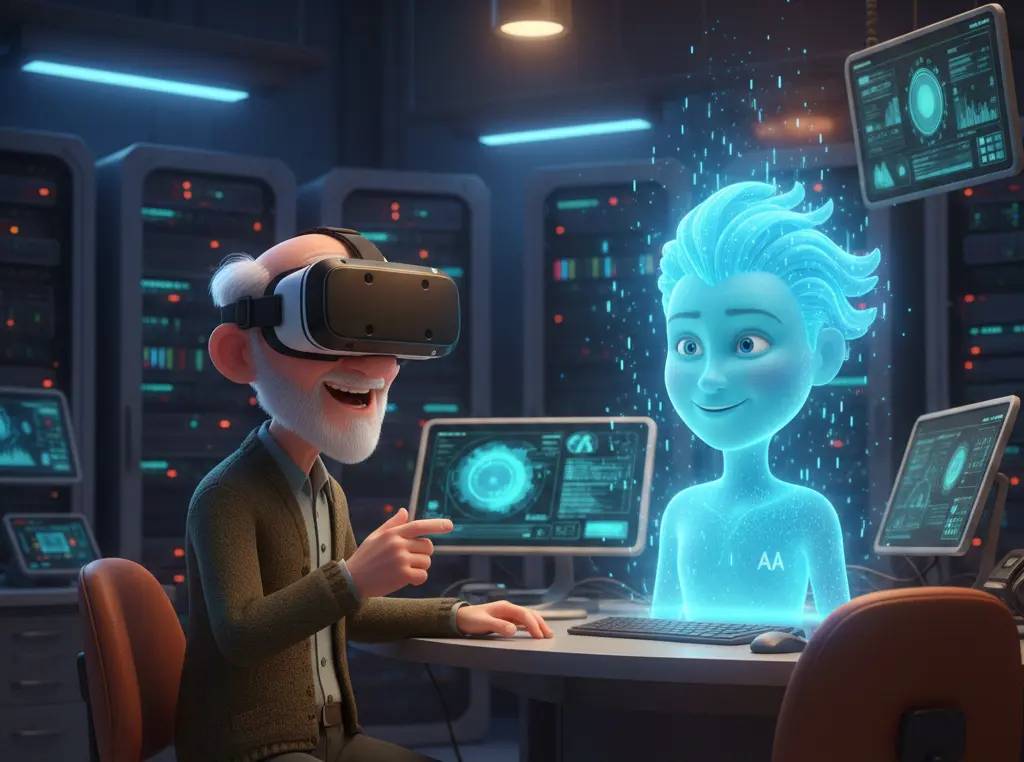
An AI avatar as a training coach? Let us explain! Professional training is evolving rapidly. Faced with increasingly demanding, dispersed learners seeking meaning, it's essential to offer engaging, effective and personalised formats. That's where the VRAI Learning conversational AI avatar comes in: a virtual coach, both supportive and challenging, capable of transforming each training session into a genuine learning experience.
What is a conversational AI avatar?
👤 An interactive virtual presence
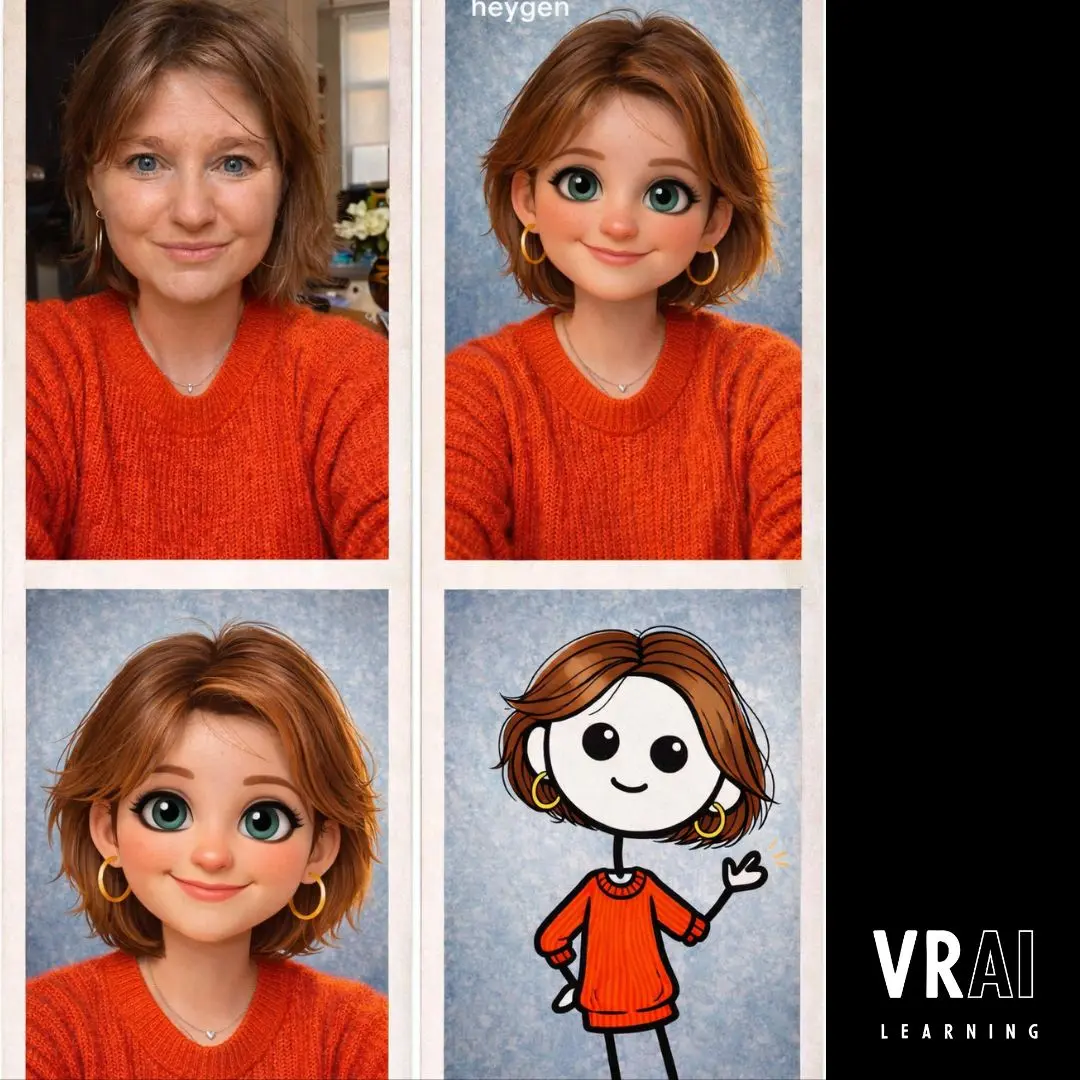
The AI avatar is a 3D or 2D representation, animated in real time by generative AI. It can listen, ask questions, respond, follow up, correct, and adapt its speech to the person it's interacting with.
🔄 Integrated into a learning path
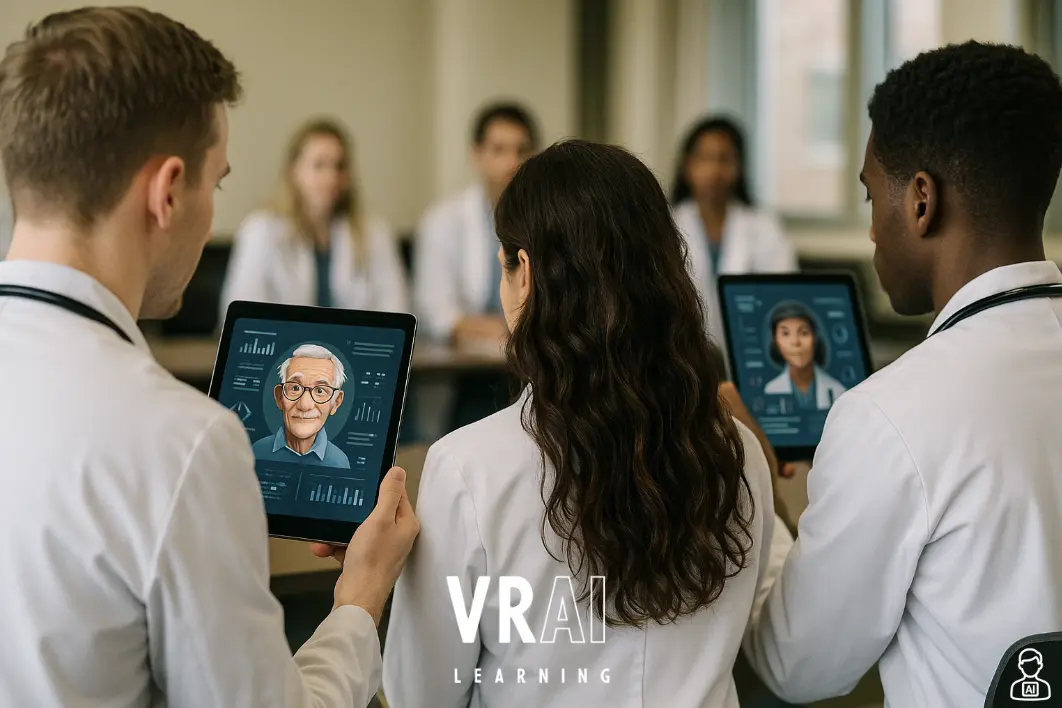
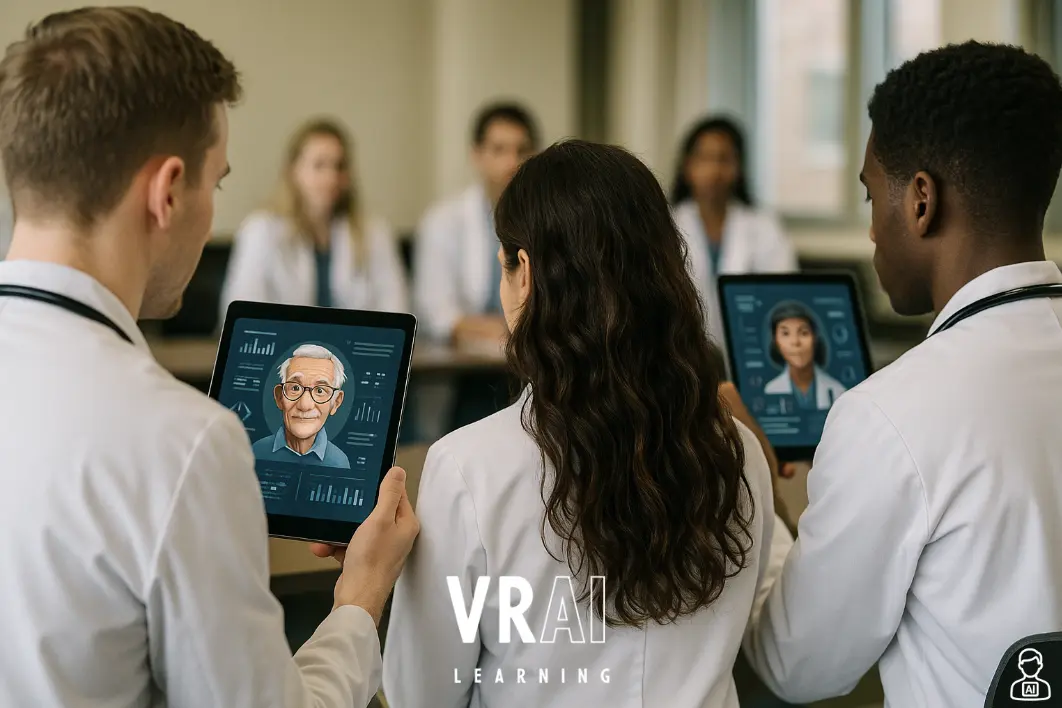
The avatar can be used in immersive VR training, on a screen, tablet or totem. It becomes the thread of the path, adapting to learner responses and supporting them throughout skill development.
What are the benefits for professional training?
Enhanced engagement
The avatar creates an emotional bond through listening, adjusted reactions and a coaching stance. It motivates, encourages and maintains attention throughout the session.
Real-time personalisation
Unlike a video or fixed module, the AI avatar adapts its behaviour to each learner — their level, needs, hesitations. Result: a smoother, more relevant experience.
Continuous automated assessment
The avatar analyses responses, identifies blockage points and generates immediate feedback, while collecting useful data for trainers.
Time and resource savings
It scales support — each learner gets individualised follow-up without permanently mobilising human resources.
Clear objectives: engagement, progression and personalisation
Adding our AI avatars to learning materials aims to:
✅ Immerse the learner in an active experience: by simulating realistic professional situations (customer relations, conflict management, safety, etc.)
✅ Create an emotional and motivating bond, with an attentive, supportive avatar connected to pedagogical goals
✅ Adapt exchanges in real time according to learner reactions, responses or hesitations
✅ Coach and challenge the learner throughout the module: asking questions, relaunching reflection, or pushing further on certain points
✅ Assess competencies in the moment, via targeted feedback and behaviour/response analysis
✅ Automate certain support steps, while maintaining a personalised and engaging experience
How does it work?
At the heart of the system: a 3D conversational avatar, driven by generative AI, capable of interacting naturally with each learner.
It can:
Simulate a realistic exchange (difficult client, HR interview, crisis situation…)
Respond, follow up, correct, adapt to each profile and level
Offer immediate and evolving feedback
Integrate into a multimodal path (face-to-face, e-learning, blended…)
💡 All accessible on multiple devices: VR headset, tablet, PC, totem, smartphone… for a fluid and scalable experience.
📊 What do the numbers say?
The results speak for themselves:
+275% memorisation compared to classic training (source: PwC, 2020)
⏱️ Learning 4x faster on average in an immersive environment
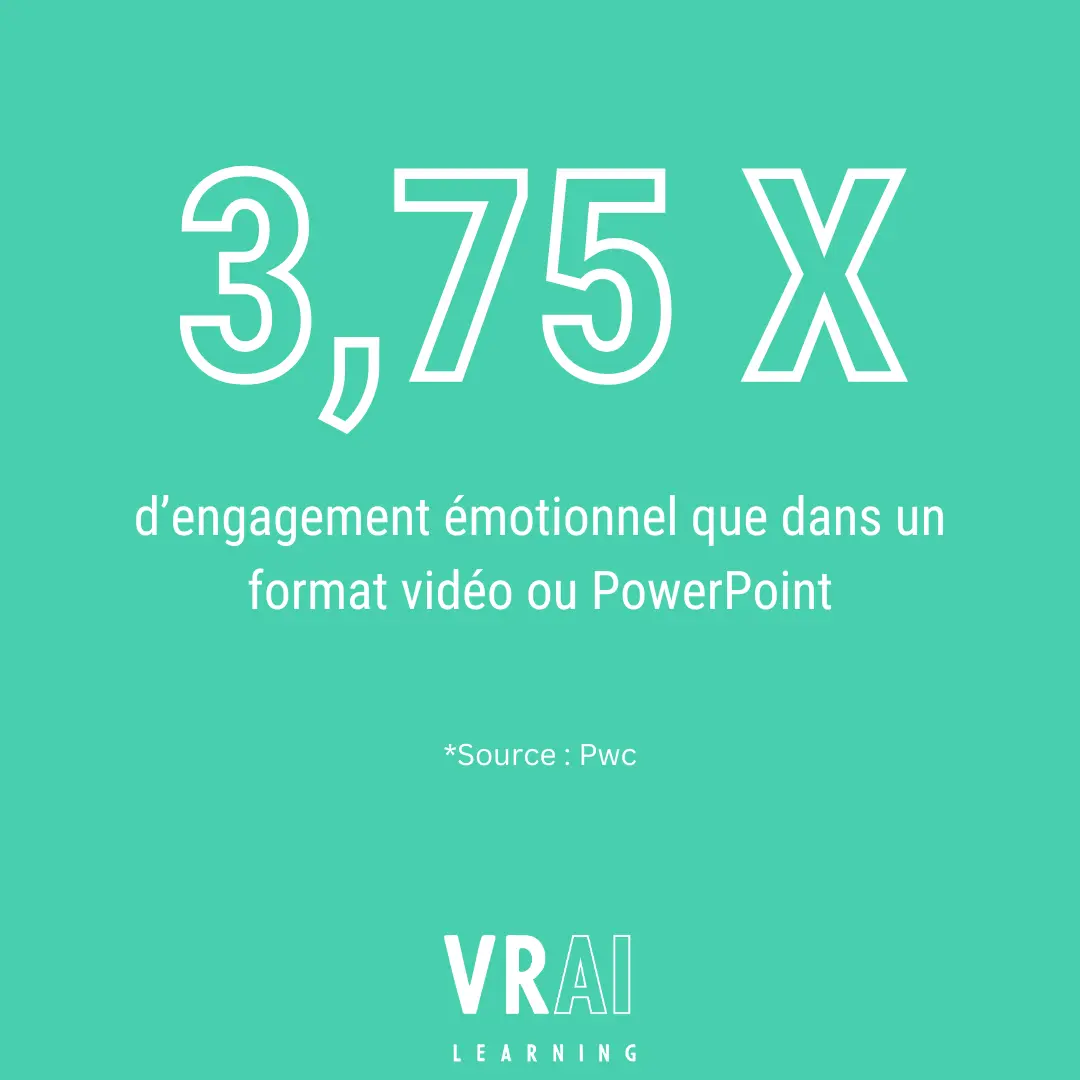
3.75x more emotional engagement than video or PowerPoint format
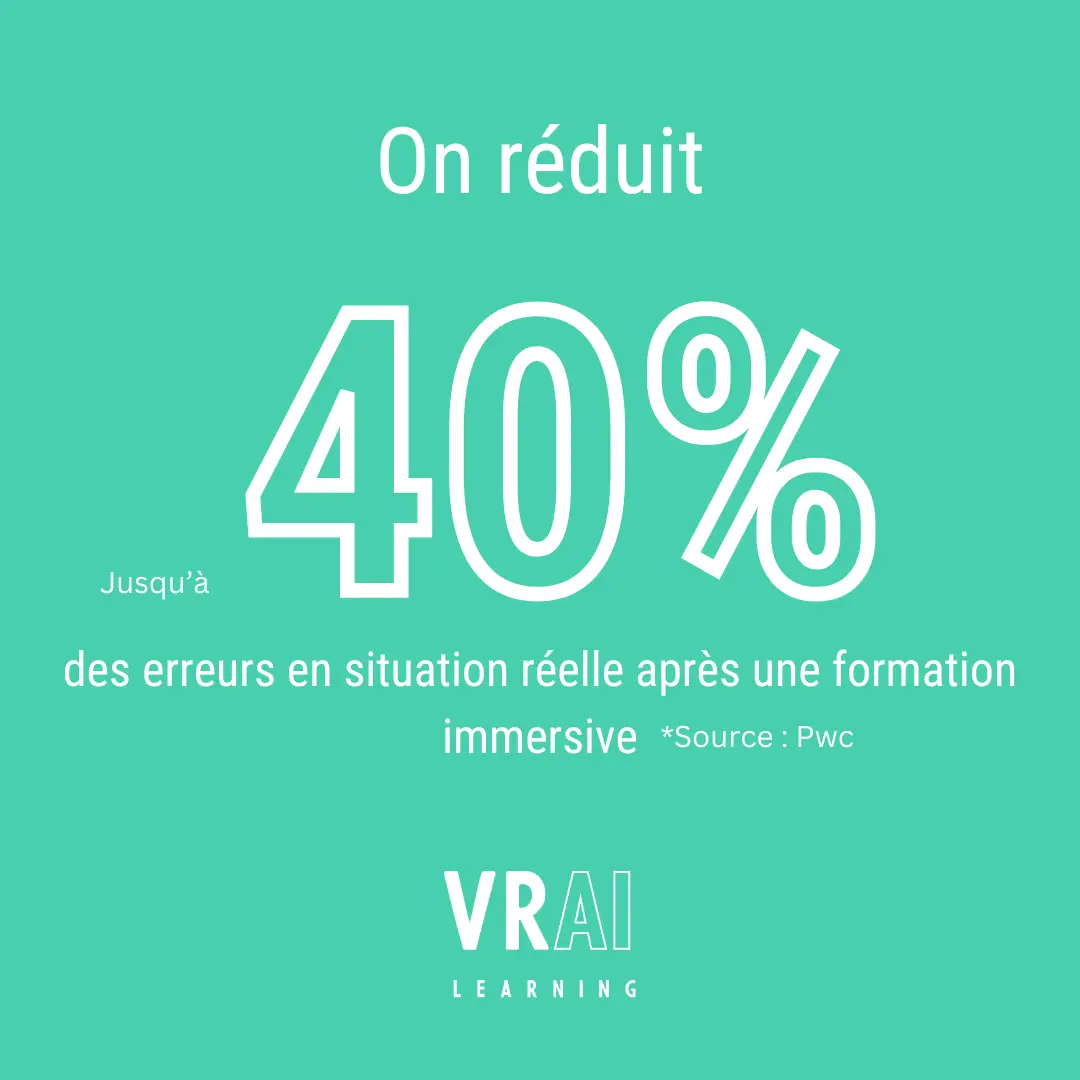
40% reduction in errors in real situations after immersive training
91% of learners feel more confident after VR training (source: Accenture)
The benefits?
💡 Active learning: learners are no longer passive recipients — they're actors in the experience!
📊 Actionable data: every interaction is tracked and analysed to adjust paths.
🌍 Accessibility: multi-device, multilingual, multi-level — AI adapts to your needs.
🙋♀️ Trainer support: the avatar becomes an intelligent assistant, relaying, complementing and enhancing the human.
💰 Long-term profitability: a well-designed immersive training is scalable, reusable and improves overall performance.
In conclusion
AI avatars in immersive training are not a gadget innovation: they constitute a strategic response to current HR, pedagogical and technological challenges. They enable faster, more effective, more engaging training while offering precise tracking and immediate feedback.
📅 Want to learn more about embodied AI? Download our guide to explore use cases and imagine your own scenarios.
What does an AI avatar for professional training cost?
The cost of an AI avatar varies depending on the level of personalisation, learner volume and target devices. A turnkey solution integrating a generative conversational 3D avatar — such as those offered by VRAI Learning — is custom-built for each organisation. There is no single catalogue price, as every project is different: industry sector, pedagogical scenarios, number of modules, LMS compatibility, languages covered.
What is certain is that the economic model of an AI avatar is above all that of a scalable investment. Once deployed, the module supports an unlimited number of learners without additional trainer cost. Compared to the recurring cost of in-person training (travel, HR mobilisation, facilities), the return on investment is typically reached by the second or third session. To obtain an estimate tailored to your context, VRAI Learning provides personalised scoping on request.
How do you integrate a conversational AI avatar into an existing LMS?
Integrating an AI avatar into an existing LMS (Learning Management System) relies on the SCORM standard, the most widely used interoperability format in e-learning platforms (Moodle, Cornerstone, TalentSoft, 360Learning, etc.). Modules developed by VRAI Learning are SCORM-exportable and import directly into your LMS without specific development.
In practice, the AI avatar module appears in your LMS catalogue like any other content: the learner launches it from their usual space, the avatar interacts in real time, and completion data is automatically sent back to the LMS. Finer data (scores, responses, behaviours) can be transmitted via xAPI (Tin Can) if your platform supports it. VRAI Learning accompanies each client through the technical integration phase to guarantee full compatibility with the existing environment.
Frequently asked questions about AI avatars in training
What is the deployment timeline for an AI avatar for training?
The deployment timeline for an AI avatar depends on the complexity of the pedagogical scenarios and the level of personalisation required. For a standard module with existing scenarios, VRAI Learning can deploy an operational solution in 4 to 8 weeks. For custom projects integrating specific professional situations, characters tailored to the company's image, or multilingual modules, the timeline is generally between 8 and 16 weeks. This schedule includes pedagogical scoping, avatar creation, scenario writing, user testing and LMS integration. A dedicated contact is assigned from the start of the project to ensure deadlines are met.
What is the difference between an AI avatar and a training chatbot?
A training chatbot is a text-based tool, scripted on predefined decision trees: it responds to questions within a limited, predictable framework. A conversational AI avatar is fundamentally different: it relies on generative artificial intelligence to produce contextual, non-scripted responses, adapted in real time to each learner. It also has a visual presence (3D body, expressions, gaze) that creates an emotional bond absent from a chatbot. At VRAI Learning, avatars do not follow a fixed script: they reformulate, follow up, adapt to the learner's level and handle the unexpected — just as a human trainer would. It is this non-scripted adaptability that generates the memorisation and engagement gains measured in the PwC and Accenture studies.
Are VRAI Learning AI avatar modules SCORM and LMS compatible?
Yes, AI avatar modules developed by VRAI Learning are compatible with SCORM 1.2 and SCORM 2004, the two most widely used standards in LMS platforms on the market. They are also xAPI (Tin Can) compatible for platforms that support this more advanced format, enabling finer behavioural data upload. Modules have been tested and deployed on major LMS platforms: Moodle, Cornerstone OnDemand, TalentSoft, 360Learning, Docebo, and others. In terms of devices, modules work on web browser (PC, Mac), tablet, smartphone, and in VR environments (standalone headset or PCVR). The VRAI Learning technical team accompanies integration and performs compatibility testing on your specific environment before final deployment.

Christèle Simeoni
Co-founder VRAI Learning (2023) · CMO
Co-fondatrice de VRAI Learning, spécialiste de la formation immersive VR et des avatars IA conversationnels.
See immersive training in action
Personalised demo, no commitment. We show you what it looks like for your context.
Book a demoExplore our solutions