CS
Christèle Simeoni
Co-founder & CMO, VRAI Learning
Avatars at the service of pedagogy and user experience
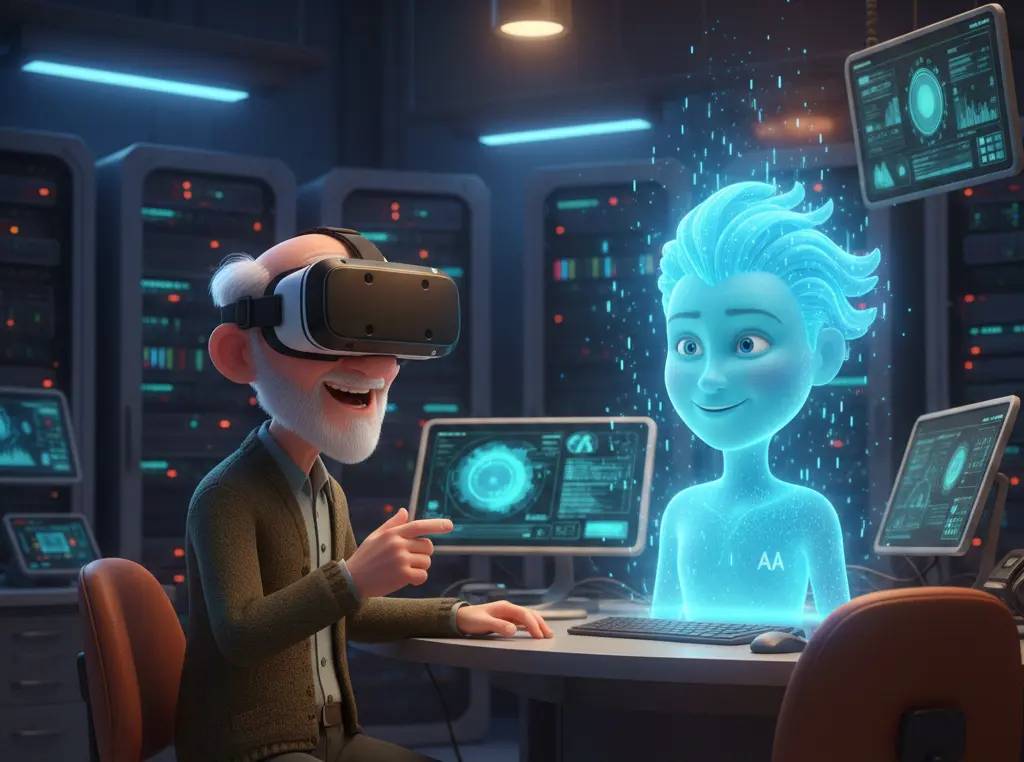
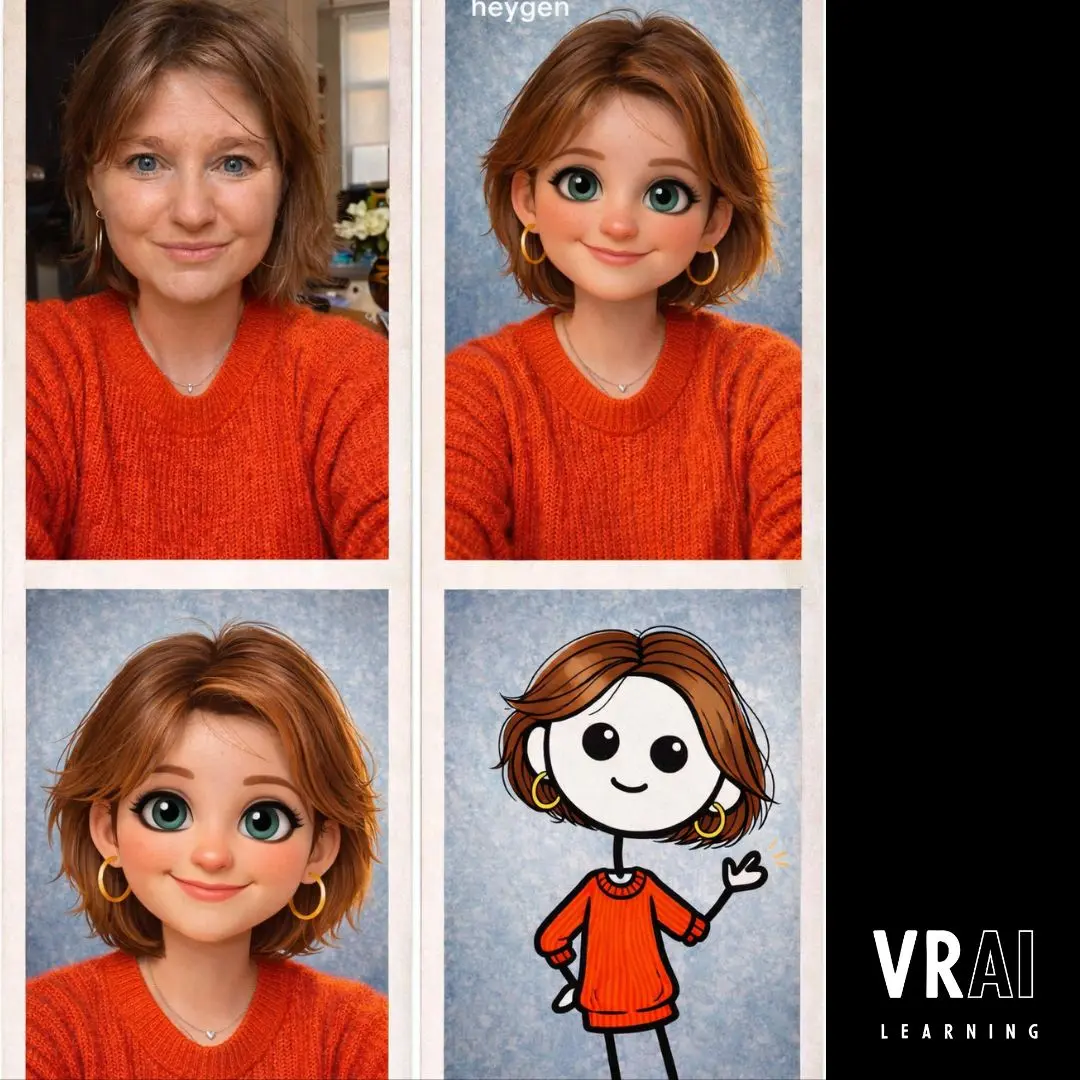
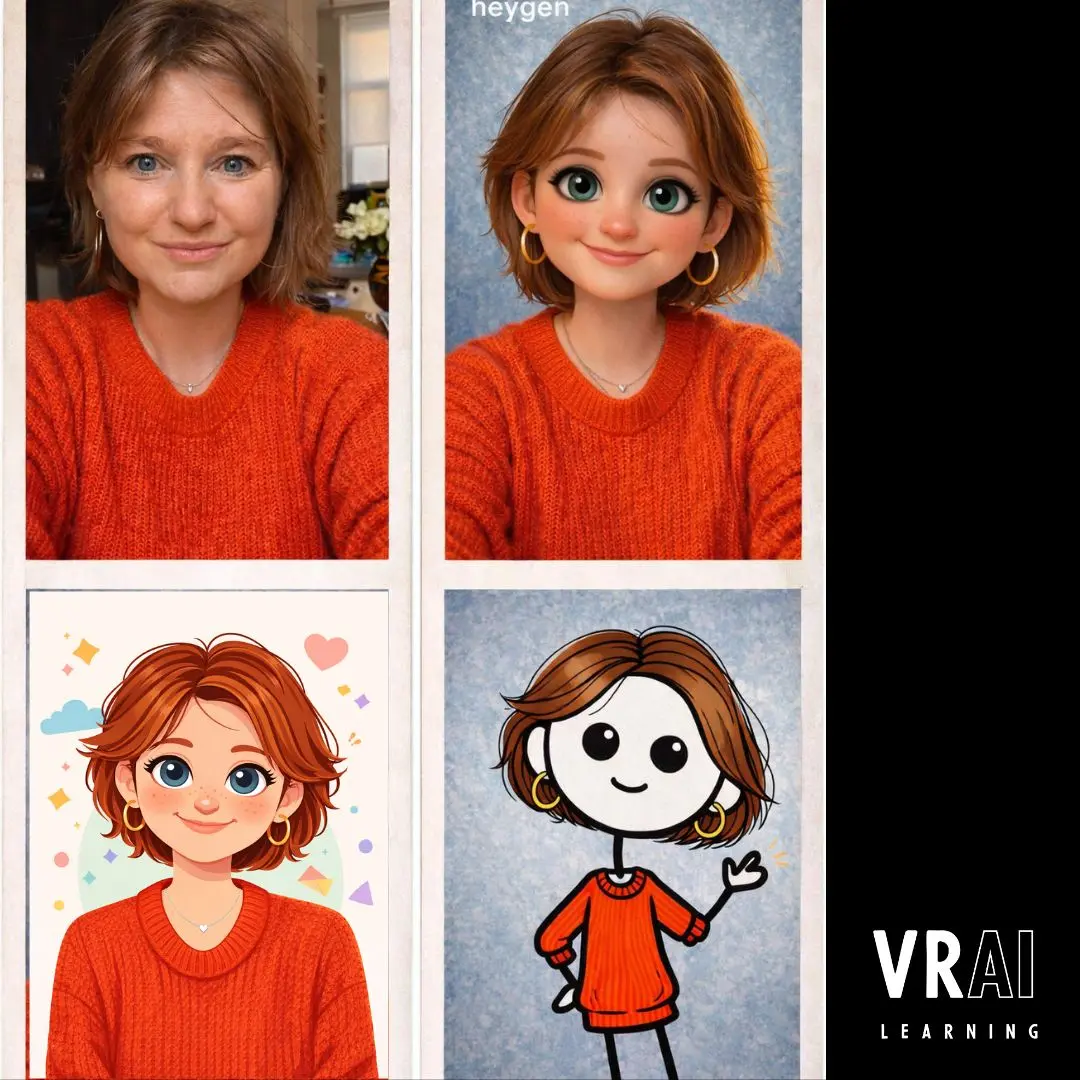
In 2026, AI avatars are beginning to appear everywhere: in games, customer service, training solutions, and even video calls. Driven by the rapid advances of generative artificial intelligence and real-time 3D engines, they represent a new frontier between the human and the digital.
Yet behind the enthusiasm and the proliferation of tools, a question persists: how do you create avatars that are genuinely useful — capable of serving a clear objective rather than simply following a trend, especially in a B2B context?
Increasingly powerful avatar engines: what does this mean for your organization?
Over recent months, virtual avatars and AI avatars have multiplied rapidly. 3D engines, digital human creation platforms, conversation solutions, automatic lip-sync... The ecosystem is evolving fast, driven by generative AI, XR, and the democratization of real-time engines.
On paper, creating an avatar has never seemed so simple. In practice, it is far more complex.
Creating an avatar is not the same as creating a useful experience
Having an avatar creation platform is not enough to produce a relevant avatar. An avatar without a clear objective quickly becomes a gadget — or worse, counter-productive.
The real questions arise very quickly:
- What is the avatar's exact role?
- At what moment does it intervene in the user or learner journey?
- What level of autonomy should it have?
- What pedagogical or informational stance should it adopt?
- What should it explain, demonstrate, support, or evaluate?
Without precise answers, even the best avatar engine on the market cannot guarantee engagement or effectiveness.
Why is technical complexity so often underestimated?
Deploying an avatar internally involves far more than choosing a platform:
- Advanced technical integration
- Interconnection with existing systems
- Model training and configuration
- Performance, security, and data management
- Long-term maintenance
This requires high-level developers, but also a clear vision of what value the avatar is expected to deliver.
A concrete example illustrates this complexity well. In a project carried out for a major retail group, integrating a virtual welcome avatar required advanced interconnection with the HRIS and internal scheduling systems. The goal was to allow the avatar to adapt its messaging based on each employee's profile: role, context, availability, and learning journey. This type of deployment clearly shows that avatar success depends not only on the technology used, but on the precise alignment between technical expertise, usage understanding, and business objectives.
The avatar must serve an objective, not the other way around
At VRAI Learning, we start from a simple principle: an avatar is never an end in itself — it is a means. Before discussing technology, we focus on use cases. Our avatars are designed upfront, according to precise objectives:
- Pedagogical objectives (train, explain, practice, assess)
- Informational objectives (orient, reassure, guide, inform)
- Real usage context (professional training, retail, public services, user experience)
Technology comes afterward to support that intention — not replace it.
How are avatars designed for training and beyond?
Historically expert in the immersive learning world, we design avatars whose pedagogical role is central:
- posture adapted to the learner
- structured discourse
- interaction designed to foster understanding and retention
- coherence with skills objectives
This expertise also allows us to deploy avatars in informational contexts:
- welcome and user experience in stores
- orientation in public spaces (prefectures, reception areas, institutions)
- support for complex journeys
- And of course, data analysis for ongoing tracking!
In every case, the avatar is designed as a mediator — not as a technology showcase.
The future of avatars lies in how they are used
Avatar platforms will continue to multiply, and AI engines will keep improving in performance. But real value will not lie in the tool alone. It will lie in the capacity to understand users, define a clear role for the avatar, and design experiences that are useful, engaging, and measurable.
That is precisely the intersection of pedagogy, user experience, and immersive technologies where VRAI Learning accompanies its clients.
Because creating an avatar is one thing. Creating an avatar that genuinely serves a training or informational objective is another.
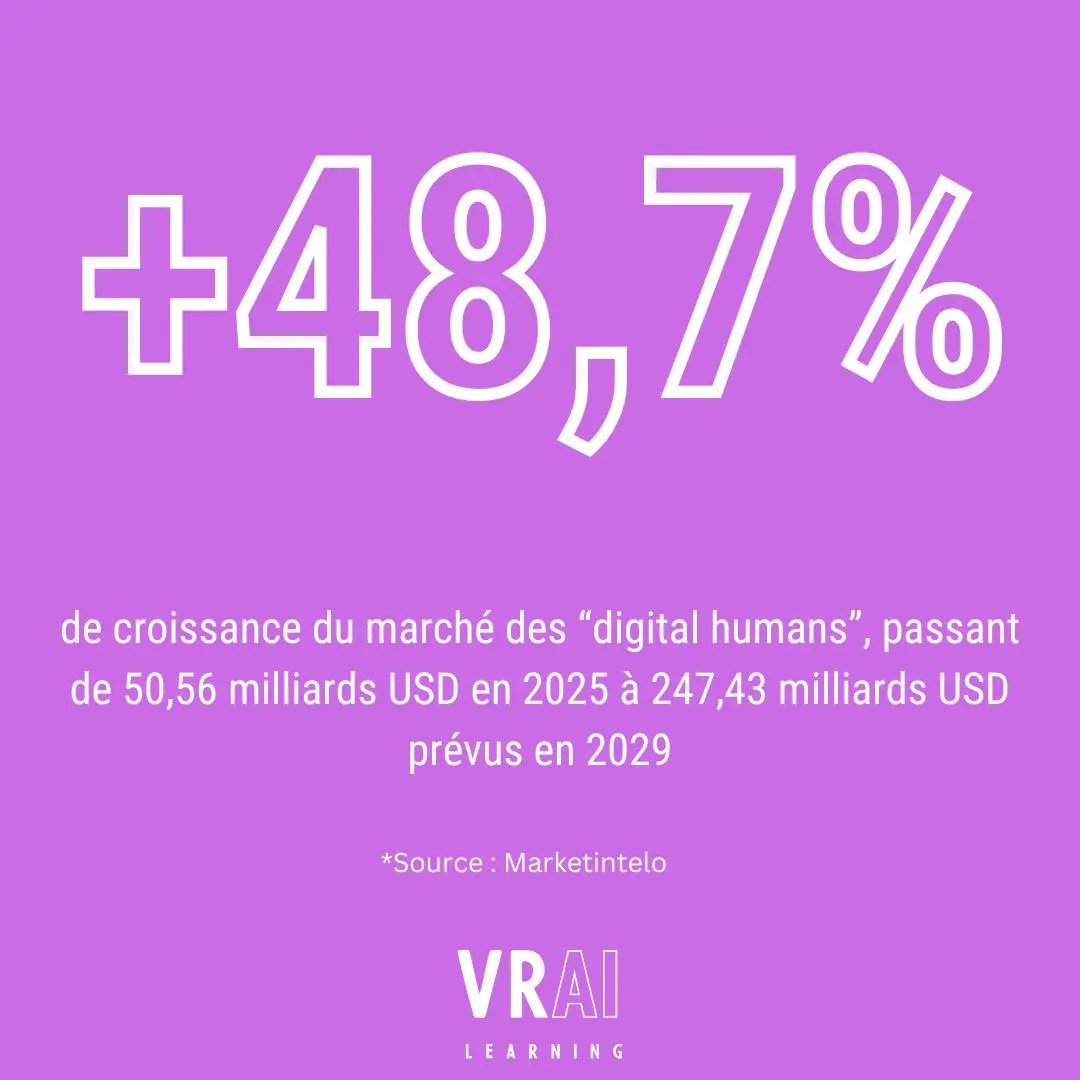
Some interesting figures:
Market growth
The AI avatar generator market is experiencing spectacular expansion. In 2024, it was valued at $1.27 billion USD and is expected to reach $17.44 billion USD by 2033, with an annual growth rate of 34.6%. The broader "digital humans" market is even more dynamic, growing from $50.56 billion USD in 2025 to $247.43 billion USD projected by 2029, an annual growth rate of 48.7%. *Source: Markintelo
Market data shows that gaming and entertainment represent 68% of the market in 2023, making it the largest user segment. Online education and remote work are also emerging as key sectors, with avatars enabling presence and interaction in virtual classrooms and meetings.
*Source: Scoopmarket
Measurable impact
Studies reveal concrete results: one e-learning platform reported a 30% increase in user engagement after implementing an AI-powered avatar with realistic body animations. Using avatars in virtual events led to participation increases of up to 50% according to Eventbrite. *Source: Technavio
FAQ — AI avatars for training and customer experience
What is the difference between a scripted avatar and a generative AI avatar?
A scripted avatar follows a predefined decision tree: every user question triggers a response from a fixed catalogue. If the request falls outside the programmed scope, the avatar fails. A generative AI avatar — like those developed by VRAI Learning — generates its responses in real time from a large language model trained on your specific content. It understands unforeseen formulations, reformulates when necessary, adapts its language level, and evolves with the knowledge base. The practical difference is decisive: where a scripted avatar is brittle and static, a generative AI avatar is flexible, context-aware, and capable of genuine dialogue. This is what allows learners or customers to forget they are speaking to a machine — and to engage fully.
What are the real costs of deploying an AI avatar in an enterprise context?
The cost of an AI avatar deployment depends heavily on the scope: a standalone conversational assistant built on an existing knowledge base is significantly less expensive than a fully custom avatar integrated into a VR headset, LMS, and HRIS simultaneously. Most enterprise deployments with VRAI Learning follow a SaaS model — monthly or per-active-user pricing — which eliminates large upfront hardware investments and allows costs to scale with actual usage. The key insight is that cost-per-interaction drops dramatically at scale: an AI avatar that handles 10,000 training sessions per year has a marginal cost per session far below that of a human trainer repeat session. Beyond the direct cost, companies consistently report indirect savings — reduced formator time, lower accident rates, faster onboarding — that make the ROI positive within the first year of deployment.
Can an AI avatar be used both for training and for public-facing customer experience?
Yes — and this dual capability is one of the most underutilized strengths of the technology. VRAI Learning designs avatars that can serve a pedagogical function (training employees, evaluating competencies, providing structured feedback) and an informational function (welcoming visitors, answering product questions, orienting customers in a physical or digital space) from the same underlying platform. The avatar's persona, tone, and knowledge base are configured per context, but the core generative AI engine — capable of natural dialogue in 62 languages — is shared. This means a company can train its sales teams with the same avatar technology it deploys at the point of sale for customer experience, ensuring consistency between internal training scenarios and real-world interaction standards.

Christèle Simeoni
Co-founder VRAI Learning (2023) · CMO
Co-fondatrice de VRAI Learning, spécialiste de la formation immersive VR et des avatars IA conversationnels.
See immersive training in action
Personalised demo, no commitment. We show you what it looks like for your context.
Book a demoExplore our solutions