CS
Christèle Simeoni
Co-founder & CMO, VRAI Learning
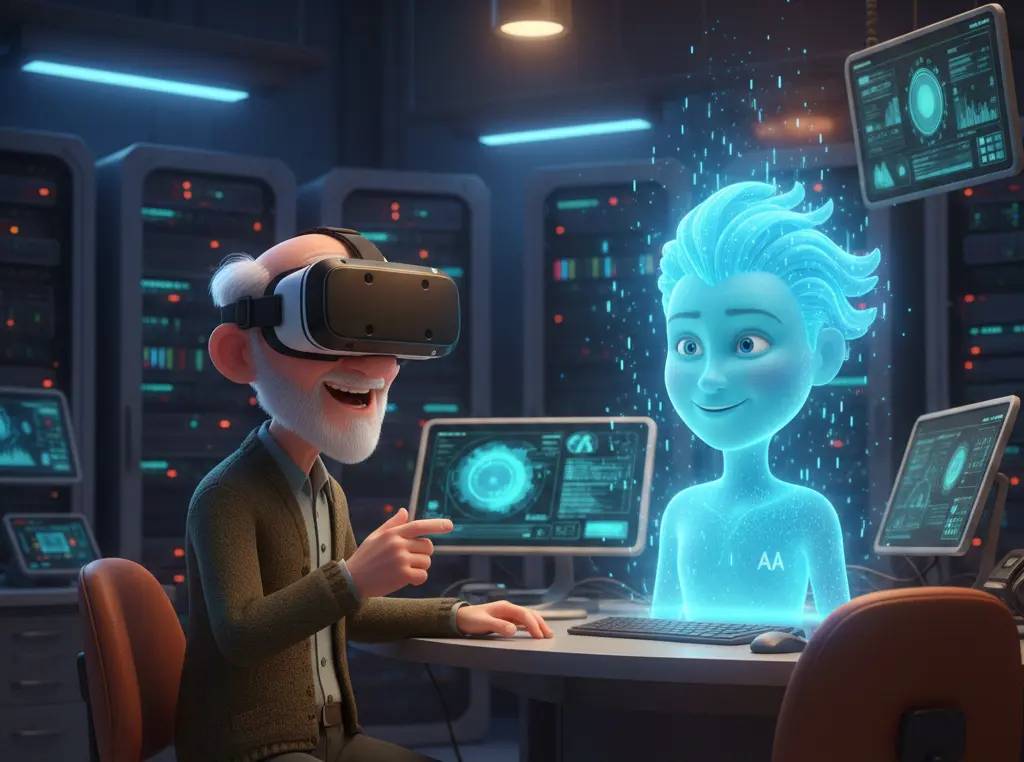
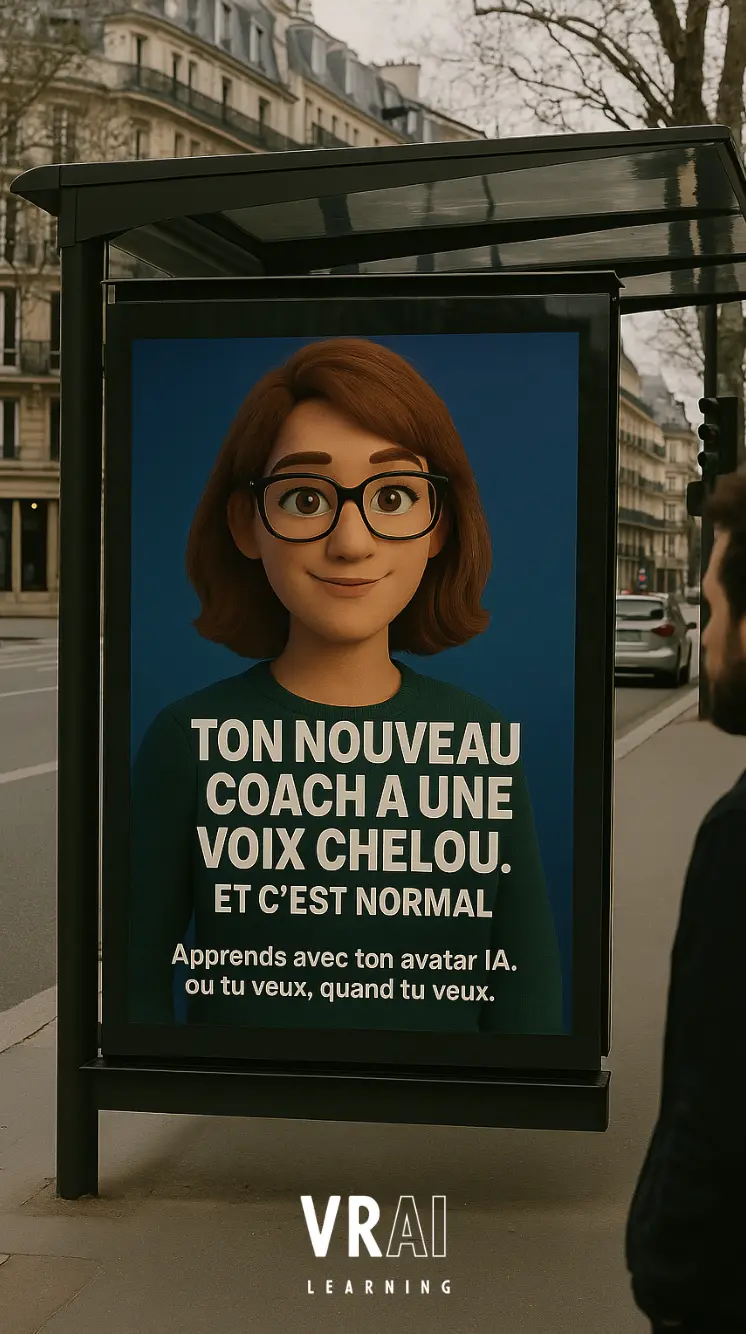
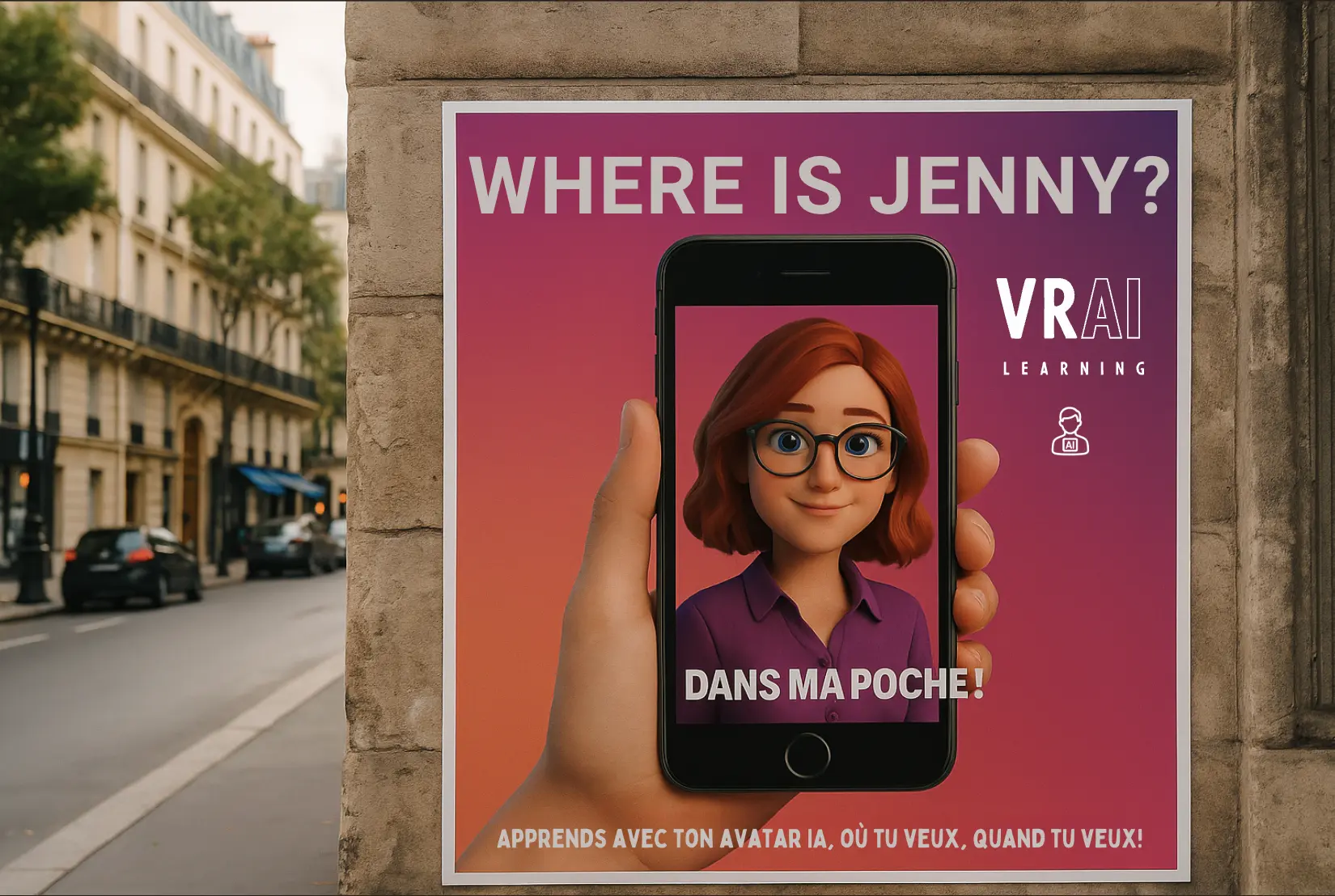
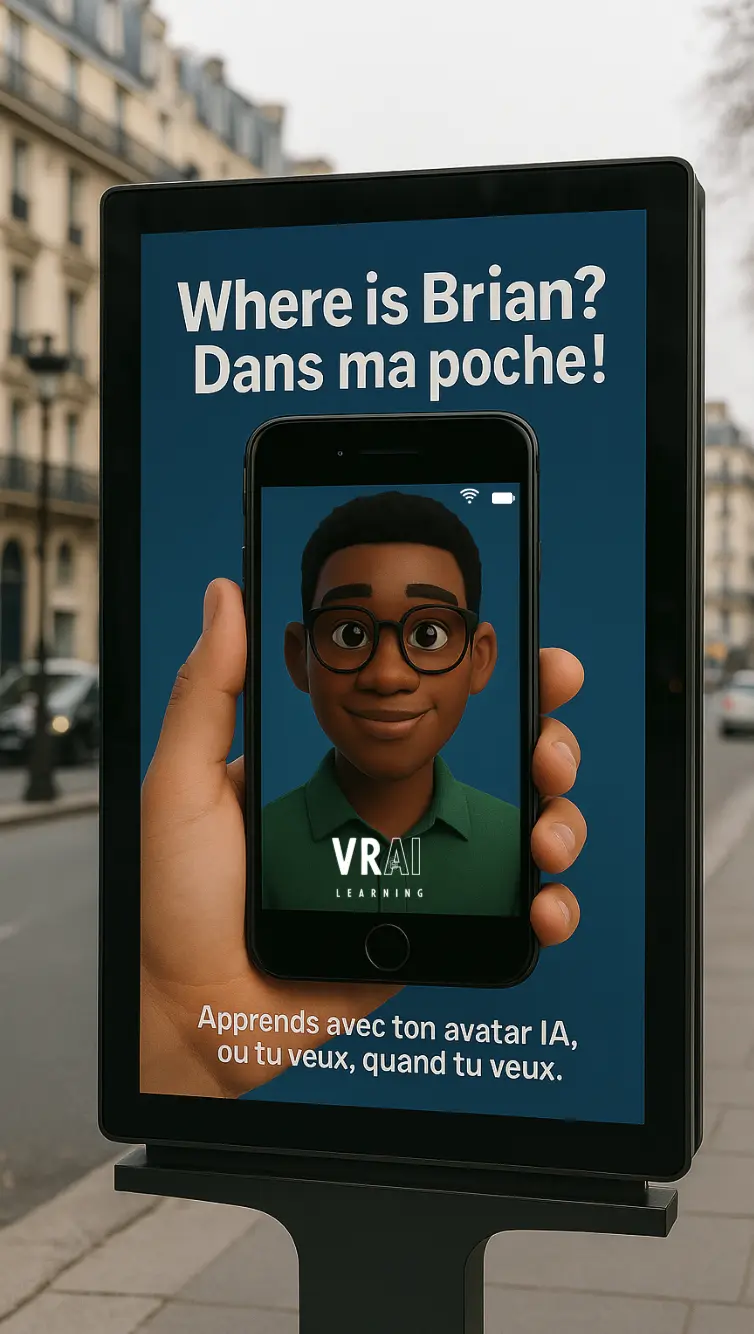
Even as professions evolve rapidly, training has never been more accessible. Today, anyone can learn continuously regardless of background. But one question persists: how do you design paths that are genuinely personalised — not generic? At VRAI Learning, we believe the answer lies in personalised support, which is why we developed embodied AI: conversational avatars connected to artificial intelligence, capable of personalising the experience and making learning both more effective and more human.
Training in job skills and soft skills with AI and avatars
Two complementary axes shape professional training:
- Job skills — technical and regulatory competencies essential for operational readiness.
- Soft skills — increasingly valued abilities such as communication, collaboration and leadership.
With a conversational AI agent, the learner doesn't just follow a theoretical module — they live an immersive situation. The avatar can embody a demanding client, a difficult colleague, a supportive manager, or an international counterpart.
The learner practises reacting in context, mobilising competencies, testing approaches, being challenged and responding to chosen scenarios.
This engages more because it's closer to real-world situations. Learning by doing, not just listening.
Personalised support: a response to learner loneliness
One of digital training's key challenges is loneliness — it's easy to disengage facing a screen.
The conversational avatar plays a key role here. More than a tool, it becomes a learning companion:
- answers questions,
- asks questions back,
- encourages in moments of doubt, with genuine care,
- gives immediate feedback,
- motivates continuation.
This personalised support recreates a human bond, fostering engagement and regularity in learning. Not progressing alone, but with an embodied guide.
The power of data and real-time analysis
AI's true strength is its ability to continuously analyse interactions and behaviours.
Every response, every hesitation, every success becomes data feeding the path. The result:
- the content adapts in real time to the learner's level,
- weak points are identified,
- content can be optimised based on feedback,
- progress is measured and shared with the trainer or organisation.
This data-driven approach transforms training: instead of a uniform path, everyone benefits from a unique, adjusted trajectory tailored to their needs, with targeted recommendations.
For organisations, this means more effective training aligned to real business needs and the competencies truly required.
Why embodied AI makes the difference
Why an avatar, and not simply a text chatbot?
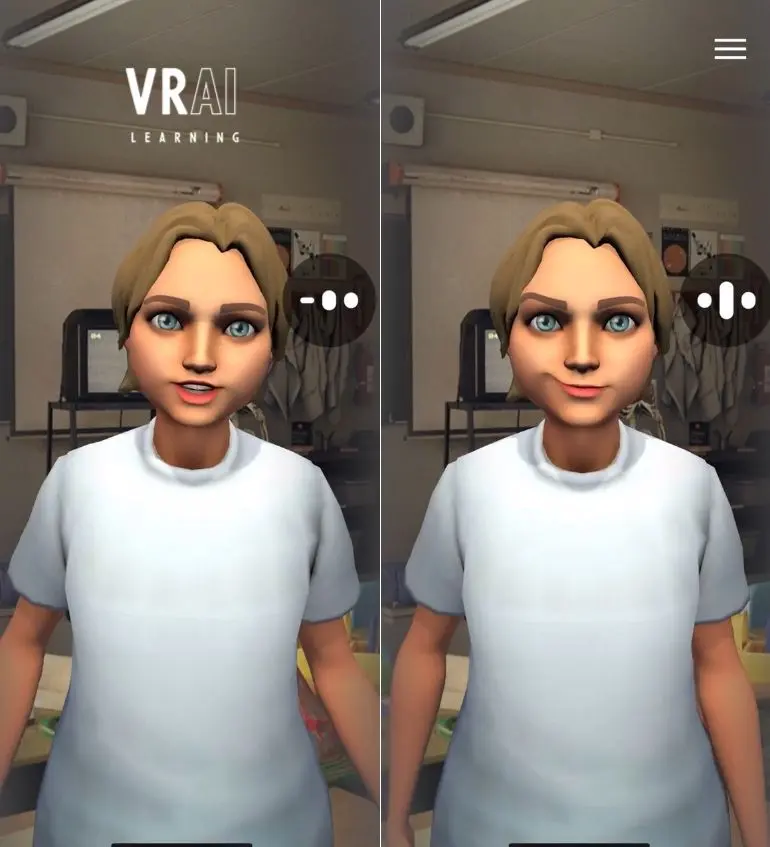
The difference is significant. A conversational avatar is not a cold interface — it's an embodied presence. Its voice, gaze and style create a more engaging relationship. This fosters confidence, memorisation and buy-in.
At VRAI Learning, we also work on non-verbal cues — facial expressions, gestures, intonations — because they play a decisive role in communication and learning. These subtle signals reinforce the authenticity of the interaction and facilitate emotional understanding.
Embodiment makes technology human and memorable — which makes all the difference in learning.
And tomorrow, education
The benefits already visible in business naturally extend to education.
In schools and universities, AI avatars can:
- support teachers,
- answer student questions outside class hours,
- help personalise paths according to each person's rhythm and difficulties.
What transforms professional training today could well become a lever for inclusion and educational success tomorrow.
Personalisation is no longer optional: it's the key to more effective, engaging and sustainable training.
With our AI-connected conversational avatars, VRAI Learning opens the way to a new generation of experiences:
- immersive,
- data-driven,
- human,
- multilingual,
- adapted to each learner.
What is the measurable impact of an AI-personalised training path on knowledge retention?
The numbers speak for themselves: according to a PwC study, learners trained through AI-powered immersive environments retain content up to 275% better than with classic e-learning approaches. The explanation is neurological: a path that adjusts in real time to the learner's pace, errors and hesitations actively engages long-term memory rather than passive memorisation.
With an AI avatar like those developed by VRAI Learning, every interaction generates a signal: a hesitation on a response, a longer reaction time, an inaccurate reformulation. These micro-data points feed an adaptive model that immediately redirects content towards identified gaps. The learner revisits what they haven't yet mastered, consolidates what they have, and progresses 4 times faster than in traditional training. Retention is no longer left to chance: it becomes the result of a data-driven process, anchored in repeated, contextualised practice.
How do AI avatars adapt to different learner profiles?
Adaptation starts from the very first interaction. The avatar analyses the learner's starting level: vocabulary used, speed of responses, types of errors made. From these signals, it dynamically adjusts the difficulty of scenarios, the pace of exchanges and the level of rigour in feedback.
For a beginner, the avatar adopts a reassuring tone, breaks down complex concepts into simple steps and multiplies reformulations. For an expert, it immediately raises the bar, proposes critical cases and challenges responses with advanced objections. VRAI Learning avatars also integrate the non-verbal dimension: facial expressions, intonations and gestures adapt to the emotional register detected. Available in multiple languages, they support multicultural teams without any loss of pedagogical quality. The result: whether junior or seasoned, every learner experiences a path calibrated to their real needs — not a theoretical average.
Frequently asked questions about AI avatars and training personalisation
What is the difference between an AI avatar and standard e-learning?
Standard e-learning offers fixed content: videos, quizzes and texts identical for all learners. The learner passively consumes the material, with no real interaction or adjustment to their needs. A conversational AI avatar, by contrast, creates real-time bidirectional interaction. It asks questions, analyses responses, detects hesitations and redirects the path accordingly. Beyond content, the VRAI Learning avatar mobilises non-verbal cues: its gaze, expressions and intonations recreate the dynamic of an authentic human exchange. This embodiment fosters emotional engagement — a key factor in lasting memorisation. Standard e-learning trains; an AI avatar coaches. The distinction is fundamental: we move from contemplative learning to action-based learning rooted in real-world situations.
How can a learner's progress be measured with an AI avatar?
Progress measurement relies on data collected at every interaction. The avatar continuously records: the correct answer rate, processing time per question, topics on which the learner hesitates, and performance evolution from session to session. This data feeds dashboards accessible to trainers and L&D managers. At VRAI Learning, these indicators make competency development objective: no longer based on self-assessment or a final quiz, but on longitudinal, granular tracking. Progress is visible, comparable and actionable for adjusting training plans across a team or entire organisation. This data-driven approach transforms HR reporting: each session becomes a concrete source of insight into the real level of employees.
Can an AI avatar be used for regulatory or certification training?
Yes, AI avatars are particularly well suited to high-stakes training: regulatory, certifying or compliance-related. In these contexts, repeating critical scenarios, verifying correct application of procedures and traceability of interactions are essential. The VRAI Learning avatar can simulate precise situations defined by a regulatory framework (a regulated customer interaction, crisis management, a safety protocol) and ensure the learner validates every required competency. Each session is recorded and timestamped, facilitating compliance with the requirements of certifying bodies. The AI also adapts difficulty to prepare the learner for the most complex real-world cases they may encounter. The result: stronger preparation, fewer field errors and complete traceability for the organisation.

Christèle Simeoni
Co-founder VRAI Learning (2023) · CMO
Co-fondatrice de VRAI Learning, spécialiste de la formation immersive VR et des avatars IA conversationnels.
See immersive training in action
Personalised demo, no commitment. We show you what it looks like for your context.
Book a demoExplore our solutions