CS
Christèle Simeoni
Co-founder & CMO, VRAI Learning
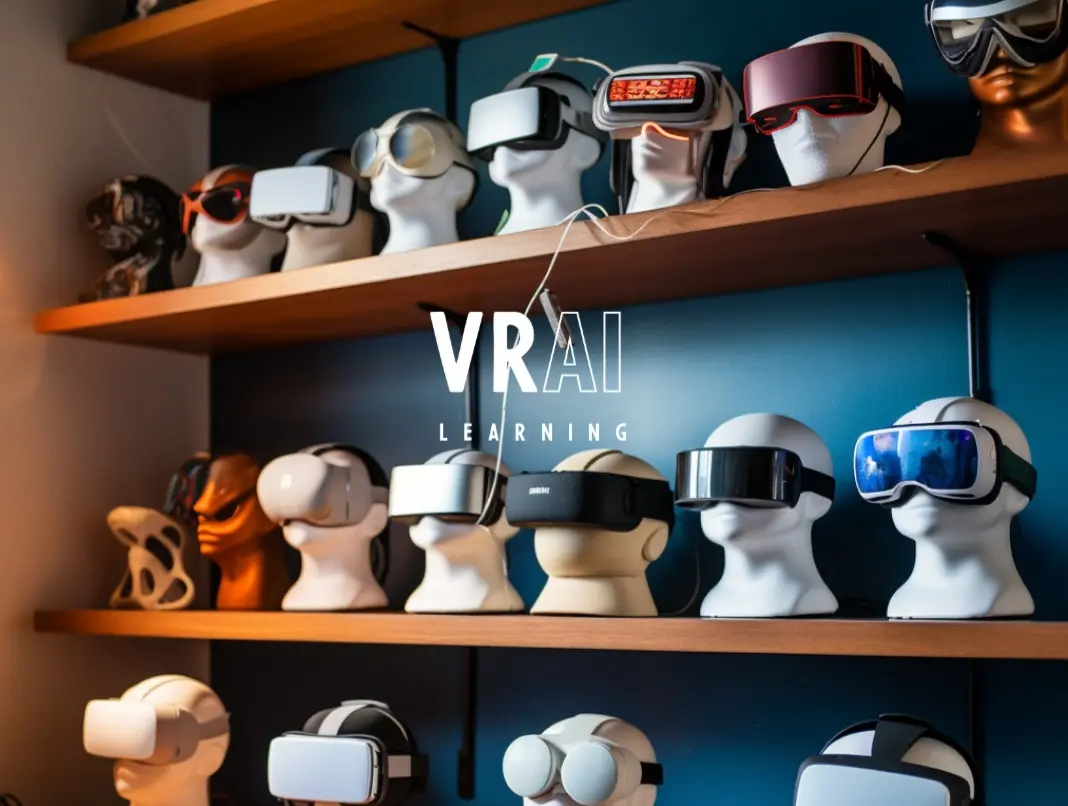
Many companies have taken the plunge: they invested in virtual reality headsets, gathered their teams for a demonstration, generated genuine enthusiasm — then put the headsets back in a drawer. A few months later, the hardware is collecting dust. This scenario, far too common, is not inevitable. It is almost always the sign of a poorly framed project, not a problem with the technology itself.
\n\nAccording to a PwC study (2020), learners trained in virtual reality learn 4 times faster than in classroom training, with a level of confidence in their skills 275% higher. These results are not achieved by choosing just any headset or broadcasting just any content. They require a coherent strategy, starting with the choice of hardware.
\n\nWhy do VR headsets end up in the drawer?
\n\nVR headsets end up in a drawer when the purchase is not preceded by a rigorous analysis of training needs and a structured deployment plan. The five main causes are always the same: an impulse buy following a compelling demonstration, no content developed specifically for the organisation, insufficient support for trainers and learners in getting to grips with the device, technical incompatibility with the IT infrastructure or business software, and failure to integrate the tool into a coherent learning journey. Each of these obstacles is avoidable once the VR headset is treated as a full pedagogical tool in its own right — on a par with an LMS platform or a training room — rather than a technology gadget designed to impress at a seminar.
\n\nThe reasons are often the same from one organisation to the next:
\n\n- \n
- Impulse purchase: the headset was bought following a compelling demonstration, with no prior analysis of training needs \n
- No content: the hardware arrived without training modules developed for the organisation \n
- Insufficient support: neither trainers nor learners were trained on how to use the device \n
- Technical incompatibility: the chosen headset is not compatible with the organisation's business software or IT infrastructure \n
- No pedagogical integration: VR remained an isolated demonstration, never integrated into a coherent training journey \n
The good news: all of these obstacles are avoidable. The key is to treat the VR headset as a pedagogical tool — on a par with a training room or an LMS platform — rather than a technology gadget.
\n\nWhat are the essential criteria for choosing a professional VR headset?
\n\nWhen choosing a professional VR headset for corporate use, six criteria are decisive: software compatibility with your immersive training platform and IT infrastructure, remote fleet management capability via an MDM (Mobile Device Management) tool, battery life of at least 2 to 3 hours of active use, comfort for extended sessions including compatibility with prescription glasses, availability of sector-specific content and personalisation capability, and technical support quality over at least 3 to 4 years. These criteria must be evaluated together: a high-performing headset that is incompatible with your LMS, or comfortable but without lasting support, quickly becomes expenditure with no measurable return on investment for your organisation.
\n\nSoftware compatibility and ecosystem
\n\nBefore any other criterion, ensure the headset is compatible with the software required for your operations. Each headset relies on a proprietary ecosystem (Meta Quest, HTC Vive, Pico, Apple Vision Pro…) that determines which applications can be deployed on it. A high-performing headset that is incompatible with your immersive training platform is a wasted investment.
\n\nQuestions to ask before purchasing:
\n\n- \n
- Does the headset support enterprise-mode application deployment (MDM — Mobile Device Management)? \n
- Can access be locked to training applications only to prevent misuse? \n
- Is the intended training platform certified as compatible with this model? \n
Ease of deployment and fleet management
\n\nIn a professional context, you are not managing one headset but a fleet — often 5 to 30 devices depending on the organisation. The ability to update, deploy and supervise devices remotely is critical. Opt for headsets that offer centralised management via an admin console, automatic updates and a usage monitoring dashboard.
\n\nBattery life and durability
\n\nBattery life directly determines the smoothness of training sessions. A headset that shuts down after 90 minutes in the middle of a simulation disrupts learning and complicates logistics. Target models offering a minimum of 2 to 3 hours of active battery life, with fast-charge capability during breaks.
\n\nDurability is equally important for intensive use: the headset will be handled by dozens of different learners, sometimes in industrial environments. Favour models with impact protection and replaceable hygienic foam inserts.
\n\nComfort and ergonomics for extended sessions
\n\nAn uncomfortable headset will quickly be set aside. Criteria to evaluate: total weight (the lightest models weigh around 500 g), weight distribution (front/rear), interpupillary distance adjustment, and compatibility with prescription glasses. Have the headset tested by a representative panel of your employees before placing any volume order.
\n\nAvailable content and personalisation capability
\n\nA headset only has value if relevant content can be deployed on it. Assess the availability of training modules in your sector (industry, construction, healthcare, retail, professional services) and the supplier's ability to develop custom simulations. Content costs typically exceed hardware costs in a VR project: factor this into your budgeting from the outset.
\n\nTechnical support and product lifecycle
\n\nVR technologies evolve rapidly. Prioritise manufacturers who provide continuous support, regular firmware updates and guaranteed parts availability for at least 3 to 4 years. A headset whose support is discontinued 18 months after purchase puts the longevity of your investment at risk.
\n\nWhat criteria are often overlooked when choosing a corporate VR headset?
\n\nTwo factors are consistently underestimated in professional VR procurement: hygiene in multi-user contexts and compatibility with prescription glasses. Hygiene is non-negotiable in healthcare, food industry or any setting where learners use the same devices in rapid succession: face-contact foam must be replaceable or easily cleanable, ideally with silicone or antibacterial fabric covers offered by the manufacturer. Glasses compatibility directly determines the real adoption rate of the device, given that approximately 70% of the French population wears a visual correction. A headset whose eye box is too narrow to accommodate glasses creates immediate friction and drives actual usage well below initial projections.
\n\nTwo factors are frequently underestimated in procurement processes:
\n\n- \n
- \n Hygiene in multi-user contexts
\n Face-contact foam must be easily cleanable or replaceable. Some manufacturers offer silicone or antibacterial fabric covers. This is non-negotiable in healthcare, food industry or any setting where learners use devices in rapid succession.\n \n - \n Compatibility with glasses
\n Approximately 70% of the population wears a visual correction. A headset whose eye box is too narrow to accommodate glasses creates immediate friction and will reduce adoption. Always verify this point during user testing.\n \n
Immersive training and cost reduction: the numbers you need to know
\n\nThe main barrier to purchasing VR headsets is their apparent cost. Yet a comparison with traditional training reveals a favourable ROI beyond a certain volume of learners:
\n\n- \n
- Increased engagement: immersive virtual environments sustain learner attention and promote active learning, reducing the need for catch-up sessions \n
- Risk-free repetition at no added cost: learners can repeat a scenario as many times as needed without mobilising a trainer, real equipment or a room \n
- Personalisation at scale: difficulty parameters adjust automatically based on skill level, with no additional human intervention \n
- Complete traceability: every learner action in the virtual environment is recorded, providing assessment data far richer than an end-of-module multiple-choice quiz \n
The break-even point is generally reached between 50 and 150 learners per year depending on content complexity. Beyond that threshold, savings on travel, accommodation and trainer costs more than offset the initial investment.
\n\nHow to prevent VR headsets from ending up in the drawer: a 4-step strategy
\n\nPreventing VR hardware abandonment rests on four pillars that must all be defined before any purchase. First, a precise analysis of training needs: which competencies to develop, what learner volume, what measurable pedagogical objectives. Second, content development scripted specifically for immersive delivery — not simply a transposition of existing PowerPoint or e-learning materials into 3D. Third, training for both trainers and learners, with a usage guide and a structured support protocol from the very first group sessions. Fourth, full integration into the overall training journey: a pedagogical before (theoretical preparation) and a structured after (debriefing, assessment, memory consolidation). With all four conditions in place, the VR headset becomes a strategic tool for sustainable skills development.
\n\nThe hardware is only the visible part of the project. The success of a VR training deployment rests on four pillars:
\n\n- \n
- Training needs analysis: precisely define which competencies must be developed, in what context, with what learner volume and what measurable pedagogical objectives \n
- Adapted content development: create scenarios specifically designed to leverage immersive capabilities — not simply transpose a PowerPoint into 3D \n
- Training for trainers and learners: plan an initial onboarding session, a usage guide and a support protocol for the first sessions \n
- Integration into the overall training journey: VR must be embedded in a coherent curriculum, with a before (theoretical preparation) and an after (debriefing, assessment, consolidation) \n
With all four conditions met, VR headsets do not end up in the drawer — they become indispensable tools for skills development.
\n\nWould you like to frame your immersive training project and choose the right hardware for your needs? Explore our immersive training solutions, the Avatar Academy tracking platform and the measurable benefits documented with our clients, or contact us for an initial no-obligation conversation.
\n\nFrequently asked questions
\n\n\n\n
\n
\n\nWhat budget should you plan for a VR training project in a corporate setting?
\n\n
\nThe budget for a corporate VR training project breaks down into two distinct items: hardware and content. A professional VR headset (Meta Quest for Business, Pico Enterprise, HTC Vive Focus) costs between €400 and €1,200 per unit depending on the model and fleet management options. Developing a custom training module represents an investment of between €15,000 and €80,000 depending on duration, scenario complexity and the level of realism required. The break-even point compared to traditional training is generally reached between 50 and 150 learners per year. Beyond this threshold, savings on travel, accommodation, trainer and production downtime costs more than offset the initial investment. It is advisable to start with a pilot on a targeted use case before a large-scale rollout.
\n\n
\n\nWhich sectors benefit most from virtual reality training?
\n\n
\nVirtual reality training delivers measurable benefits in every sector where risk gestures, rare situations or complex interactions are difficult to replicate in traditional training. Industry and construction use VR to train on safety procedures, technical gestures and emergency situations without exposing learners to real danger. Healthcare uses it for first-aid gestures, hygiene protocols and the management of critical situations. Retail and services use it to simulate client interviews, conflict management situations or commercial negotiations. Professional services and management find it a powerful tool for developing soft skills (leadership, communication, stress management) in simulated environments with no real stakes. According to the PwC study, learner engagement in VR exceeds that observed in a classroom by 275%.
\n\n
\n\nHow do you integrate VR headsets into an existing LMS platform?
\n\n
\nIntegrating VR headsets into an existing LMS (Learning Management System) relies on the compatibility of VR content with recognised e-learning standards, primarily xAPI (Tin Can) or SCORM 2004. These protocols allow learning data to be sent back from the virtual environment to the LMS platform: time spent, score, actions completed, steps achieved and errors made. Not all LMS platforms natively support xAPI: verify your platform's compatibility before beginning VR content development. Some VR solution providers offer their own integrated tracking platform, such as Avatar Academy by VRAI Learning, which centralises fleet management, content deployment and pedagogical reporting while integrating with market LMS platforms. Integration must be planned from the project scoping phase to avoid retrospective cost overruns.
\n\n
\n\nHow long does a virtual reality training session last?
\n\n
\nA virtual reality training session typically lasts between 15 and 45 minutes per module, depending on scenario complexity and pedagogical objectives. Beyond 30 to 45 minutes of continuous immersion, visual and cognitive fatigue effects can appear, particularly for users unfamiliar with the headset. Effective VR training programmes break the journey into short modules (15 to 20 minutes), interspersed with out-of-headset debriefing phases. This structure promotes memory consolidation and reduces discomfort. The total duration of a complete learning journey varies from 2 to 8 hours depending on the role and the level of certification sought. It is recommended to include a 5 to 10-minute onboarding session at the start of the first module to familiarise the learner with the controllers and the virtual environment, regardless of their prior experience with VR.
\n
Christèle Simeoni
Co-founder VRAI Learning (2023) · CMO
Co-fondatrice de VRAI Learning, spécialiste de la formation immersive VR et des avatars IA conversationnels.
See immersive training in action
Personalised demo, no commitment. We show you what it looks like for your context.
Book a demoExplore our solutions