Christèle Simeoni
8 min min read
Pilot Training in Virtual Reality: The Example of the US Air Force
CS
Christèle Simeoni
Co-founder & CMO, VRAI Learning
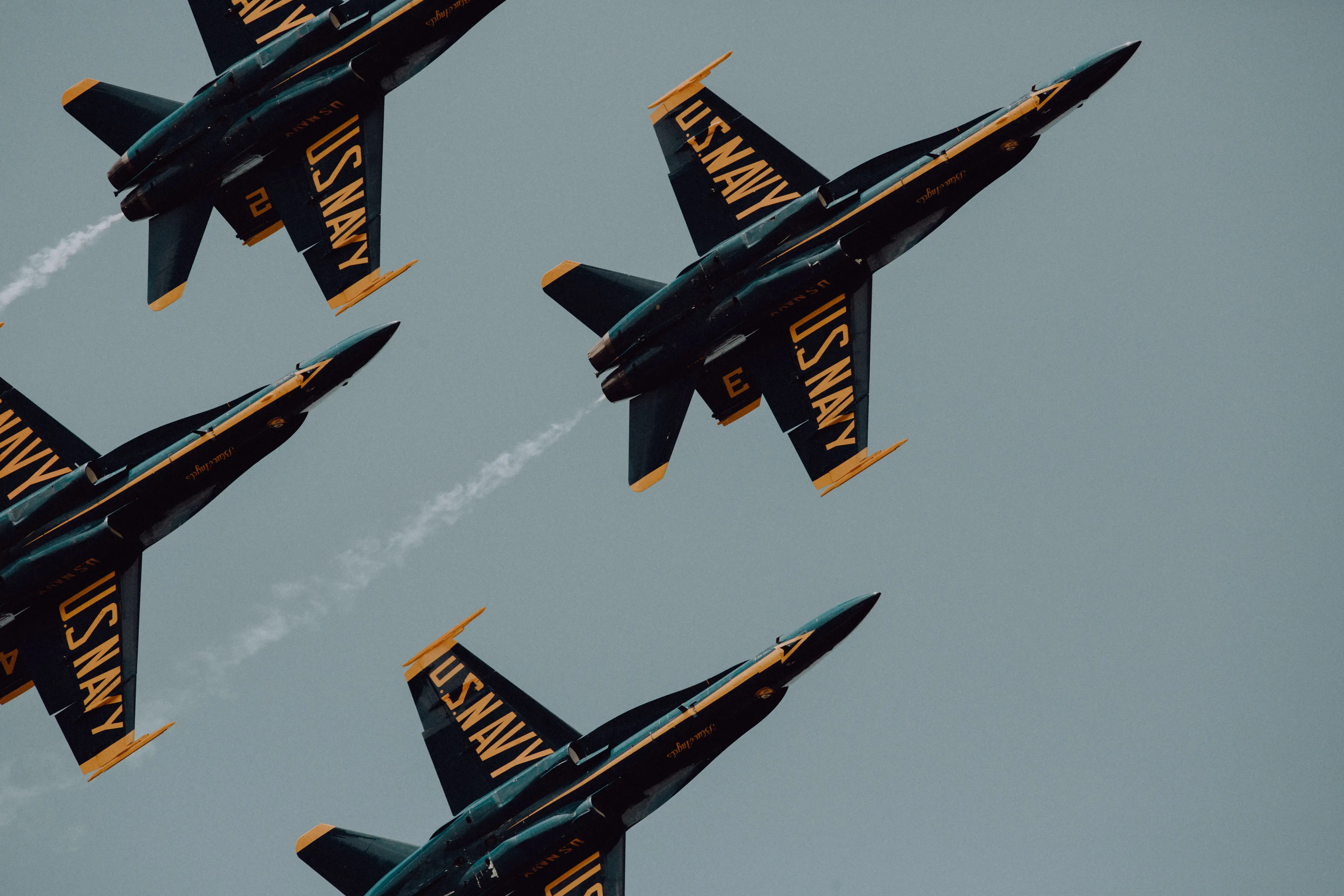
In 2023, the American military signed a 4.5-million-dollar contract with Specular Theory to develop a virtual reality flight simulation environment intended to train pilots of the new generation B52 bombers. This decision illustrates a major turning point in how organizations train their teams in highly technical and risky skills.
What drives one of the most advanced armies in the world to focus on virtual reality training? What concrete results have been achieved? And what lessons can civilian companies draw from it?
Why Train Pilots in Virtual Reality?
Aviation training is among the most expensive and risky in the world. Each flight hour on a real aircraft involves equipment worth tens of millions of euros, consumes significant amounts of fuel, and exposes pilots and crews to risks inherent to real-condition training. Virtual reality addresses these three constraints simultaneously: cost, safety, and accessibility. For the US Air Force, a real training flight costs about 80,000 dollars, and each pilot requires an average of 6 flights to acquire the necessary skills, amounting to 480,000 dollars per pilot for the flight training phase alone. VR simulation replaces a significant portion of these flight hours with high-fidelity immersive training — without deploying a real aircraft, without fuel, and without exposing crews to unnecessary risks. Studies show that learners trained in VR demonstrate 275% higher confidence and four times greater long-term retention.
For the US Air Force, the figures speak volumes:
- A real training flight costs approximately 80,000 dollars
- Each pilot requires an average of 6 flights to acquire the necessary skills
- Which amounts to a cost of 480,000 dollars per pilot for the flight training phase alone
Virtual reality drastically reduces this cost by replacing a significant portion of these flight hours with high-fidelity immersive simulations — without deploying a real aircraft, without fuel consumption, and without exposing crews to unnecessary risks.
The Specular Theory Project: An Ultra-Realistic Simulation Environment
Specular Theory developed for the US Air Force a virtual environment precisely reproducing the B52 cockpit and systems. The company's approach emphasized image quality: high-resolution textures, realistic lighting, dynamic weather effects. This level of visual fidelity is not a luxury — it's a prerequisite for learning transferable to real life.
Cognitive science research shows that the more credible a simulated environment, the more the brain processes the experience as real, and the stronger the acquired skills become. A pilot who has repeated a procedure hundreds of times in a virtually identical environment to their real cockpit will execute it with the same fluidity in operational conditions.
Key Components of the Simulation
- Accurate reproduction of the B52 cockpit in an immersive 3D environment
- Simulation of flight scenarios at various progressive difficulty levels
- Integrated storytelling associating technical procedures with concrete operational situations
- Virtual trainers and human instructors supervising sessions remotely
- Personalized tracking of each pilot's performance in training
What Measurable Results Has VR Training Produced for the US Air Force Pilots?
The data from the B52 program is particularly significant: 89% of pilots who underwent virtual reality training reported increased confidence in their skills, and 70% said they felt better prepared to handle delicate situations and in-flight emergencies. These figures fit within a widely documented trend — according to PwC's study (2020), individuals trained in VR are 275% more confident than those trained in a classroom, with a four times higher knowledge retention rate long-term. For professions where a mistake can cost lives, these gains aren't trivial; they constitute a direct operational advantage, justifying the initial investment in immersive simulation. The combination of high visual fidelity and risk-free repetition allows for embedding robust skills that pilots effectively transfer to real-world conditions.
- 89% of pilots who underwent virtual reality training reported increased confidence in their skills
- 70% of them said they felt better prepared to handle delicate situations and in-flight emergencies
These results fall in line with a large-scale documented trend. According to the PwC study (2020) involving thousands of learners, those trained in virtual reality exhibit a 275% higher confidence than those trained in classrooms, with a four times higher long-term knowledge retention rate.
For professions where a mistake can cost lives — like military pilots, industrial operators, or maintenance technicians on critical infrastructure — these increases in confidence and retention are not trivial. They constitute a direct operational advantage.
Economic and Environmental Benefits
Beyond educational performance, using virtual reality for pilot training generates substantial savings across several areas:
- Fuel costs: each simulation hour saves thousands of liters of kerosene, with a significant environmental impact
- Equipment wear and tear: simulated flight hours do not stress aircraft structures, extending their operational lifespan
- Training logistics: multiple pilots can train simultaneously on different scenarios, without constraints of aircraft or field availability
- Reduced human and material risks: training accidents — rare but costly — are avoided when initial learning takes place in a virtual environment
VR simulation does not replace real flights — pilots still fly on real aircraft. It complements them by allowing faster, safer, and more economical skill acquisition before moving on to operational flight hours.
What Civilian Companies Can Learn
The example of the US Air Force isn't reserved for the military realm. The same principles apply to any organization training employees in complex technical skills in high-stakes environments:
- Manufacturing industry: training for maintenance operations on sensitive equipment, safety procedures on production lines
- Healthcare sector: simulating surgical actions, managing medical emergency situations, training in hospital protocols
- Construction and energy: working at heights, interventions on electrical or petroleum installations, managing job site risks
- Transport and logistics: driving industrial vehicles, managing warehouse incidents, training for handler safety
In all these sectors, virtual reality enables the reproduction of situations that traditional training cannot recreate — either because they're too dangerous, too costly to stage, or too rare to experience in real conditions during the training period.
Immersive Training at VRAI Learning
At VRAI Learning, we develop virtual reality training tailored to companies wishing to evolve their educational approach. As with the US Air Force pilots, each module is designed based on an in-depth analysis of target skills, situations to simulate, and expected performance criteria.
We combine immersive 3D environments with conversational AI avatars capable of acting as instructors, evaluators, or simulated clients — and connect everything to our tracking platform Avatar Academy to measure each learner's progress in real-time.
The measurable results from immersive training — in terms of confidence, retention, and skill transfer — are today documented in dozens of academic and industrial studies. Visit our measurable VR training benefits page to learn more.
Want to explore how virtual reality can transform training in your organization? Contact us for an initial exchange without commitment.
Frequently Asked Questions
How much does virtual reality pilot training cost compared to traditional training?
Traditional pilot training on real aircraft represents a considerable cost: the US Air Force estimates a single training flight on a B52 bomber costs about 80,000 dollars, and each pilot requires an average of 6 flights to reach the required level, which amounts to 480,000 dollars per pilot for this phase alone. Virtual reality can significantly reduce this cost by replacing part of these hours with high-fidelity immersive simulations. Beyond the direct cost of flight hours, VR also reduces expenses related to fuel, aircraft wear, training logistics, and risk of accidents. The investment in a simulation environment is amortized once several hundred learners use it. For civilian companies, this cost-benefit ratio is equally favorable in sectors with high practical training costs.
Is virtual reality training as effective as real training for pilots?
Virtual reality training does not fully replace real-condition training, but it complements it very effectively. The data from the B52 program of the US Air Force shows that 89% of pilots trained in VR report increased confidence, and 70% feel better prepared for emergencies. These results are explained by the cognitive mechanisms at work: in a sufficiently faithful virtual environment, the brain processes the experience as real and embeds robust skills. PwC's study (2020) confirms that learners trained in VR demonstrate knowledge retention four times superior to those trained in classrooms. VR allows especially the repetition of rare or dangerous scenarios as often as necessary, which no real training can offer at this cost and without risk.
Which sectors can draw inspiration from the US Air Force's VR training model?
The virtual reality training model developed by the US Air Force for its B52 pilots can be adapted to any sector where practical training is costly, risky, or difficult to organize in real conditions. The manufacturing industry uses it to train on maintenance operations on sensitive equipment and safety procedures on production lines. The healthcare sector uses it for simulating surgical gestures and managing medical emergencies. Construction and energy sectors train in VR for working at heights and interventions on critical installations. Transport and logistics simulate industrial vehicle driving and warehouse incident management. In all these cases, the principle is identical to military aviation: allow a rapid, safe, and measurable skill acquisition before exposing employees to real high-stakes situations.
How does the visual fidelity of a VR simulator influence training effectiveness?
The visual fidelity of a virtual reality simulation environment is a determining factor in educational effectiveness. Specular Theory made image quality a priority for the B52 program: high-resolution textures, realistic lighting, dynamic weather effects. This choice is based on cognitive science — the more credible a simulated environment, the more the brain treats it as real, and the more robust and transferable the skills acquired during training will be in operational conditions. A pilot who has repeated a procedure hundreds of times in a virtually identical cockpit to their real one will execute it with the same fluidity in a real situation. Conversely, a low-fidelity simulator can create incorrect habits or fail to trigger the necessary emotional and attentional response for durable memory anchoring.

Christèle Simeoni
Co-founder VRAI Learning (2023) · CMO
15+ years of expertise in digital marketing and EdTech. International career: Québecor (TVA), Adviso Montreal, Marketing Director at Holberton School. On this blog, she unpacks the best marketing and communications strategies to maximise the ROI of immersive learning and AI avatars.
See immersive training in action
Personalised demo, no commitment. We show you what it looks like for your context.
Book a demoExplore our solutions