CS
Christèle Simeoni
Co-founder & CMO, VRAI Learning
Are you comfortable with the terms and the different possible uses of these new immersive technologies?
We're seeing more and more of these abbreviations in the media and on social networks, but it isn't always easy to tell them apart and understand what distinguishes them.
Here are a few tips to help you find your way around:
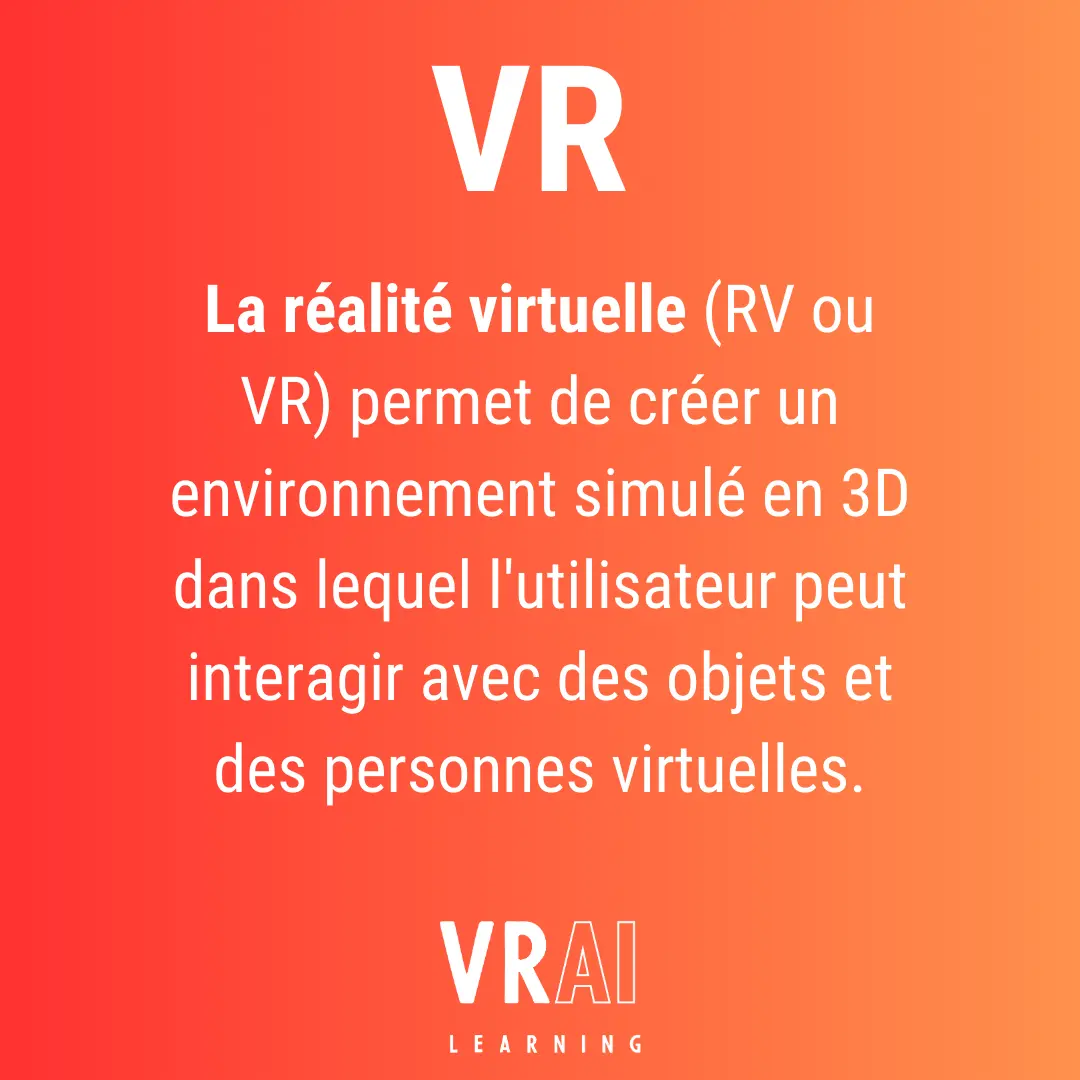
📌 Virtual Reality (VR)
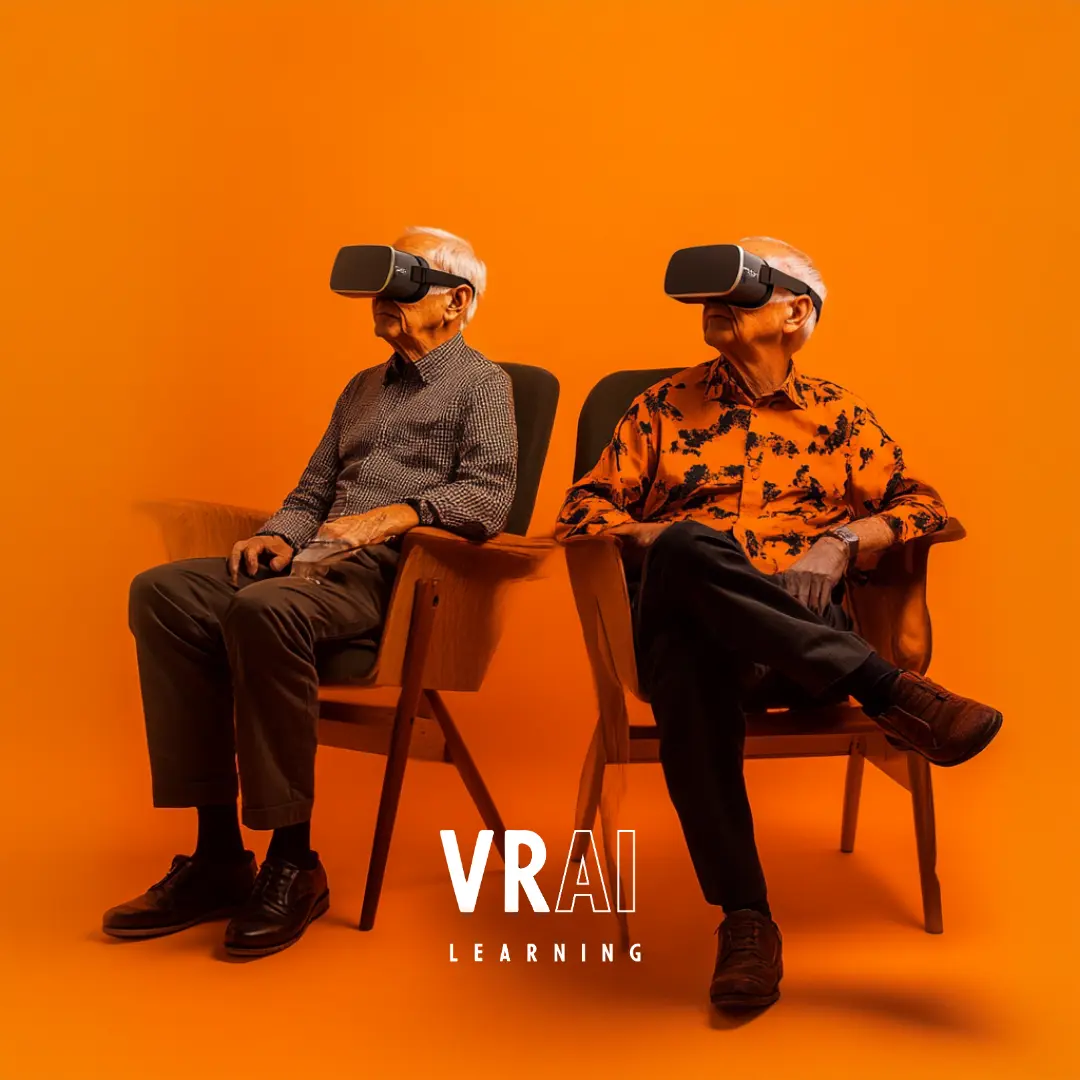
This makes it possible to create a simulated 3D environment in which the user can interact with virtual objects and people. This immersion is usually achieved using a headset or a projection system that displays images in real time based on the user's movements. VR can also include interfaces that let the user feel tactile sensations, as well as sensors that track their movements to create a more realistic immersive experience.
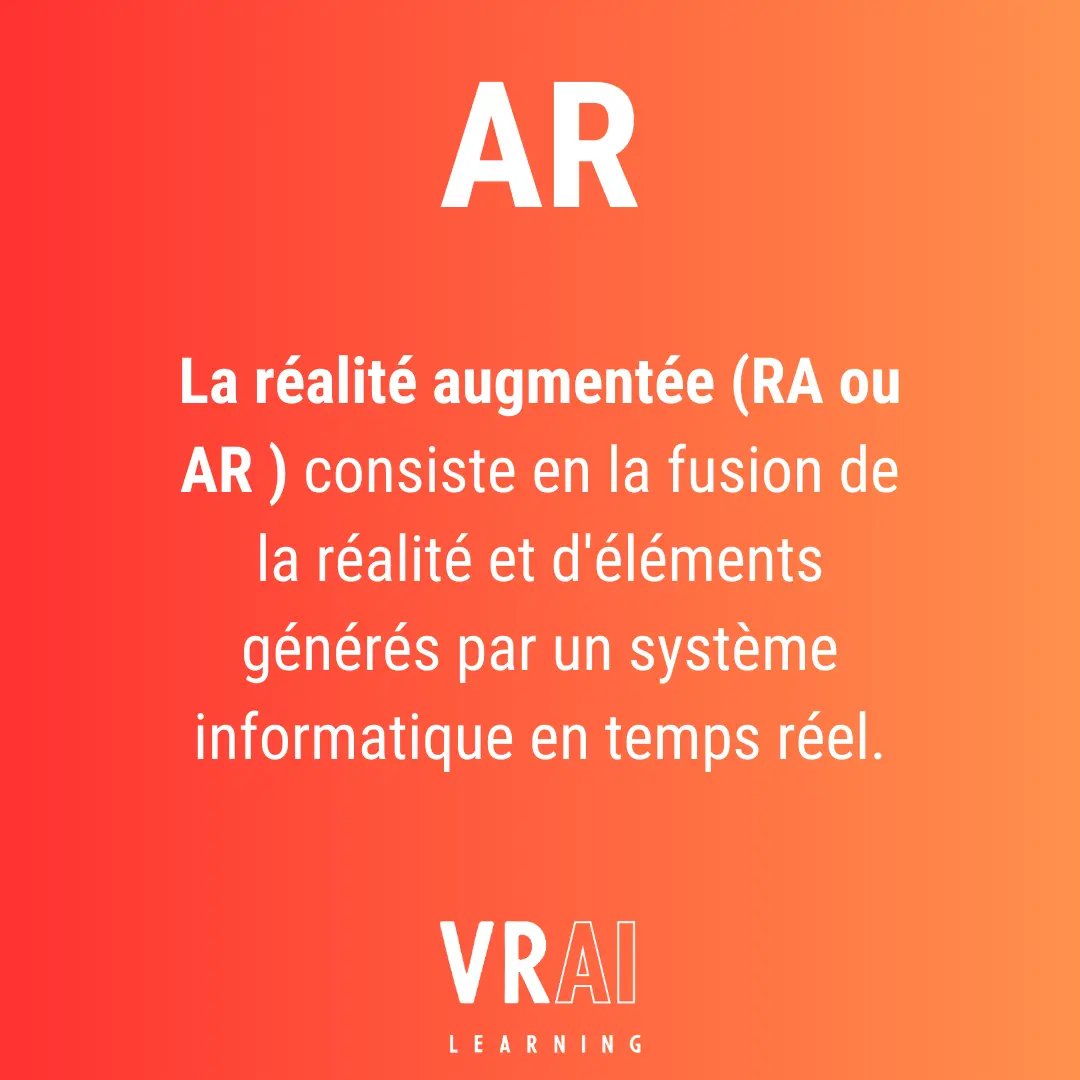
📌 Augmented Reality (AR)
This is the fusion of reality with elements generated by a computer system in real time. The term generally covers all techniques that allow virtual objects to be credibly inserted into a sequence of real images. When the user points a device at a specific object or place, the AR software analyses the environment in real time and adds virtual elements to the image captured by the camera. These elements can be interactive, letting the user manipulate or modify them based on their environment.
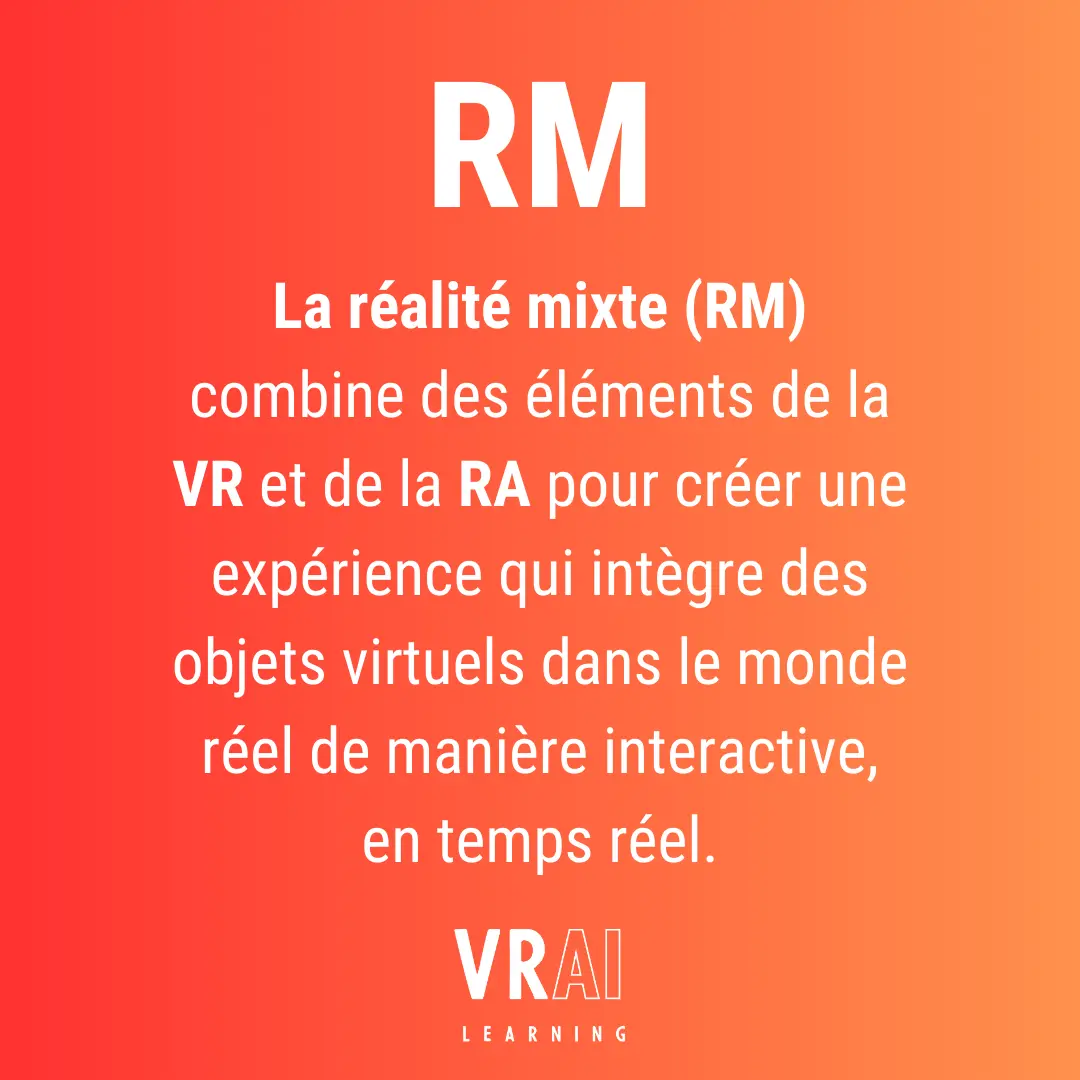
📌 Mixed Reality (MR)
Mixed reality combines elements of virtual reality (VR) and augmented reality (AR) to create an experience that integrates virtual objects into the real world interactively and in real time. MR uses devices such as special glasses or headsets equipped with cameras and sensors to create an immersive experience where virtual objects can be anchored in the real world, so the user can interact with them as if they were real. MR also lets the user move freely through the environment while interacting with virtual objects that can be modified or manipulated based on the real environment.
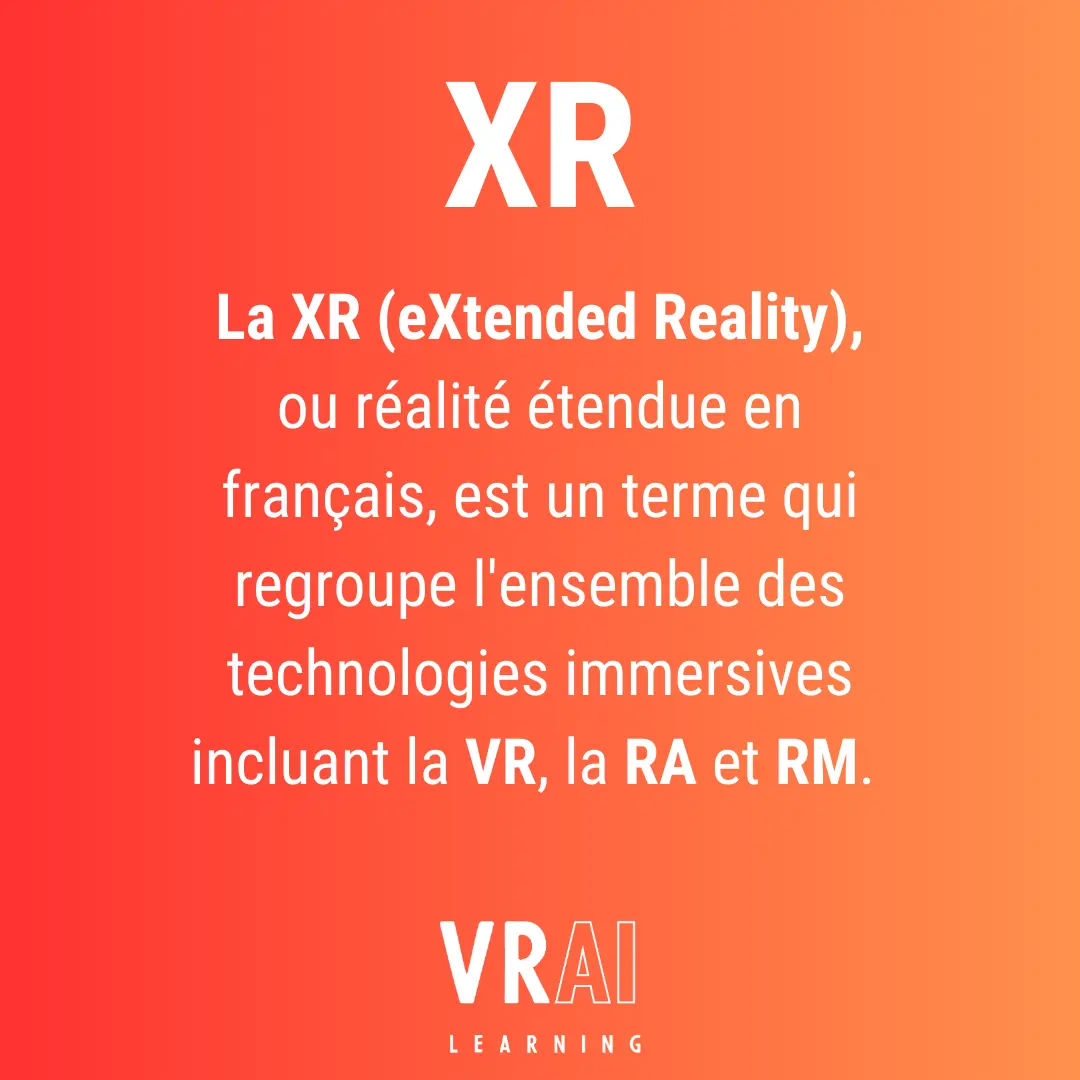
📌XR (eXtended Reality) is an umbrella term that covers all immersive technologies seeking to create interactive, realistic virtual experiences, including virtual reality (VR), augmented reality (AR) and mixed reality (MR).
And we'll end with that huge playing field that is artificial intelligence
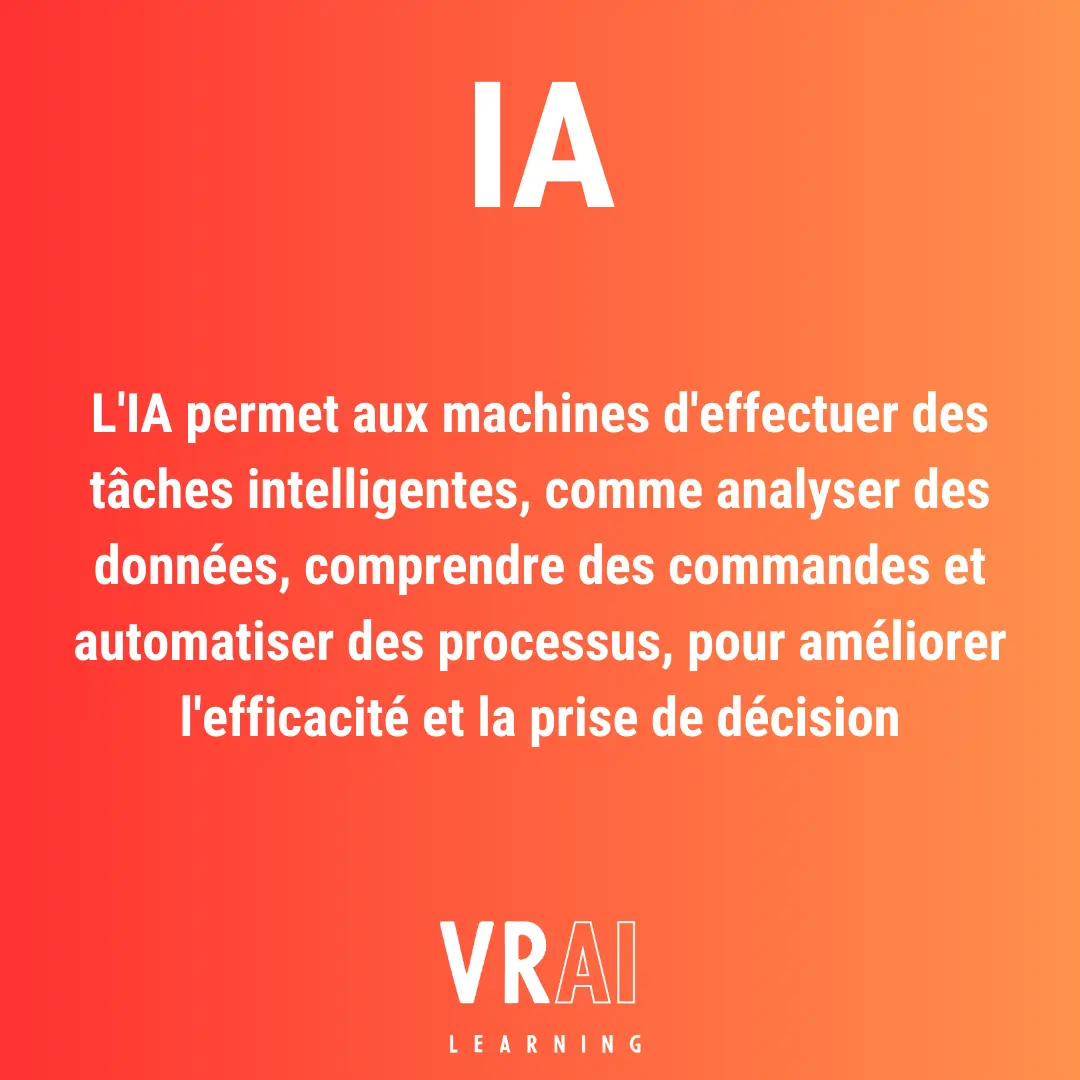
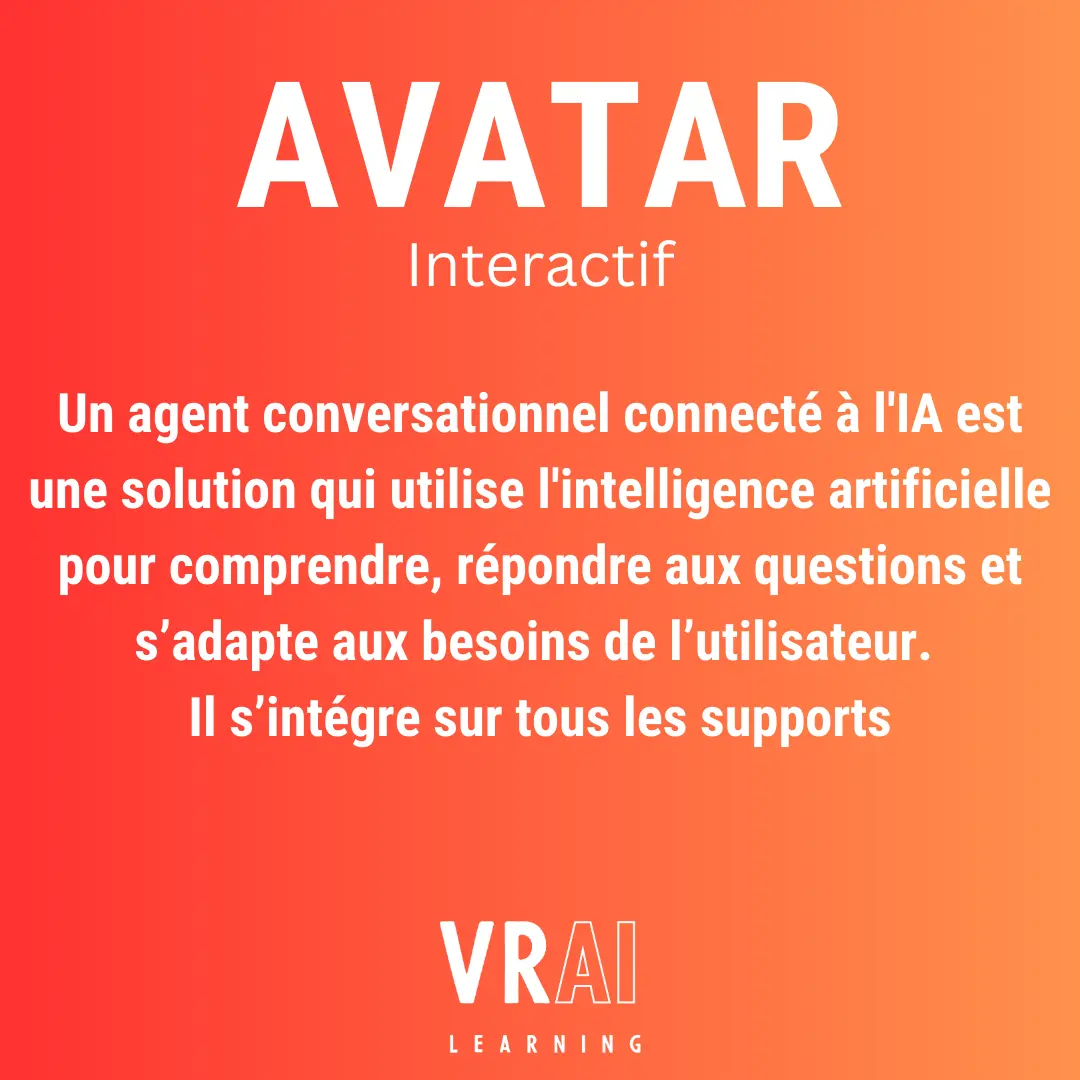
and why we connect our conversational agents to AI to make them more powerful and effective in our training experiences!
Which immersive technology should you choose to train your employees?
The choice between VR, AR and mixed reality depends above all on the instructional goal and the training context. Virtual reality (VR) is particularly well suited to high-risk scenarios — technical gestures, crisis management, safety — because it immerses the employee in a fully simulated environment, with no real danger. Augmented reality (AR) is better suited to training in a real work setting: it overlays useful information on the physical environment, ideal for industrial maintenance or guided on-the-job assistance. Mixed reality (MR) combines both, offering maximum interactivity between the real world and virtual objects. Finally, if a company wants to cover several use cases with a single strategy, the term XR (eXtended Reality) refers to this overall ecosystem. An audit of business needs and logistical constraints is the essential starting point for making the right choice.
VR or AR: which is more effective for professional training?
The comparison between VR and AR for professional training depends on the type of learning targeted. VR excels in fully immersive scenarios: it lets learners repeat complex gestures and simulate stressful situations (a difficult interview, an industrial accident, a medical intervention) in a safe setting. Studies show that retention rates in VR can reach 75%, compared with 10% for traditional classroom training. AR, meanwhile, is more effective for learning in a real-world context: the learner keeps their eyes on their workstation and receives real-time instructions, which reduces errors and speeds up skills development. The two technologies are complementary: VR for skills acquisition, AR for operational assistance. The optimal choice depends on budget, available hardware and on-site constraints.
What is XR, and why does it matter to HR teams?
XR, or eXtended Reality, is an umbrella term that groups together all immersive technologies: virtual reality (VR), augmented reality (AR) and mixed reality (MR). For HR and L&D (Learning & Development) teams, XR represents a major strategic opportunity. It makes it possible to train employees in behavioural skills that are hard to practise in a classroom (communication, leadership, stress management) through realistic simulations with avatars or AI conversational agents. It also offers a measurable advantage: XR modules generate precise data on learner behaviour — reaction time, errors made, progression — enabling individualised tracking that's impossible with traditional formats. In a context of fierce competition for talent and accelerated upskilling, XR is emerging as a differentiator for training and retention strategies.
How does virtual reality training actually work?
Virtual reality training happens in several steps. The learner puts on a VR headset (standalone or connected to a PC) and finds themselves immersed in a 3D environment that faithfully reproduces their professional context: a workshop, a meeting room, a construction site, a care unit. They interact with this environment using controllers or their gaze, depending on the instructional scenario. AI-powered conversational agents can play the role of customers, colleagues or patients, making the interaction more realistic and adaptive. Every action the learner takes is recorded: the instructor or the LMS receives a detailed report on the decisions made, the errors, and the time spent on each step. The training can be repeated as many times as needed, which encourages learning by doing. A VR module typically lasts between 5 and 20 minutes, making it compatible with the operational constraints of frontline teams.
FAQ — Virtual and augmented reality in the workplace
What is the difference between VR, AR and MR?
VR (Virtual Reality) refers to a fully digital environment in which the user is immersed via a headset. AR (Augmented Reality) overlays virtual elements onto the real world, visible through the camera of a smartphone or a pair of connected glasses. The fundamental difference lies in the level of immersion: in VR, the user no longer sees the real world; in AR, they remain anchored in their physical environment while receiving additional digital information or visualisations. Mixed reality (MR) goes further, allowing virtual objects to interact with the physical environment in real time.
How much does a VR headset cost for a business?
The price of a professional VR headset varies depending on the model and the intended use. Standalone headsets (no PC required) such as the Meta Quest 3 or the Pico 4 Enterprise sit between €500 and €1,500 per unit. Enterprise solutions often include MDM (Mobile Device Management) licences to manage a fleet of headsets, extended warranties and dedicated support, which can bring the total cost to €1,000–€2,500 per deployed headset. On top of this hardware cost comes the development or purchase of VR training modules, whose price depends on the complexity of the scenario and the level of customisation. Over the long term, VR remains competitive compared with repeated in-person training (travel, trainers, logistics), with a return on investment that's often positive within 12 to 18 months of use.
What kinds of training are possible in virtual reality?
Virtual reality covers a very wide range of professional training. In industry and construction, it's used to simulate technical gestures, train employees on safety procedures and prevent workplace accidents. In healthcare, it lets clinicians practise medical procedures or manage emergency situations. Sales and management teams benefit from simulated interviews, negotiations or difficult feedback conversations — soft skills long considered hard to train remotely. VR is also used for onboarding new employees, CSR awareness, psychosocial risk prevention and regulatory training. In short: any scenario that requires repeated practice, real-world role-play or emotional learning is a good candidate for VR.

Christèle Simeoni
Co-founder VRAI Learning (2023) · CMO
Co-founder of VRAI Learning, specialist in immersive VR training and conversational AI avatars.
See immersive training in action
Personalised demo, no commitment. We show you what it looks like for your context.
Book a demoExplore our solutions