Christèle Simeoni
7 min min read
Boost the immersive experience with intelligent conversational avatars
CS
Christèle Simeoni
Co-founder & CMO, VRAI Learning
Conversational Avatars and Artificial Intelligence
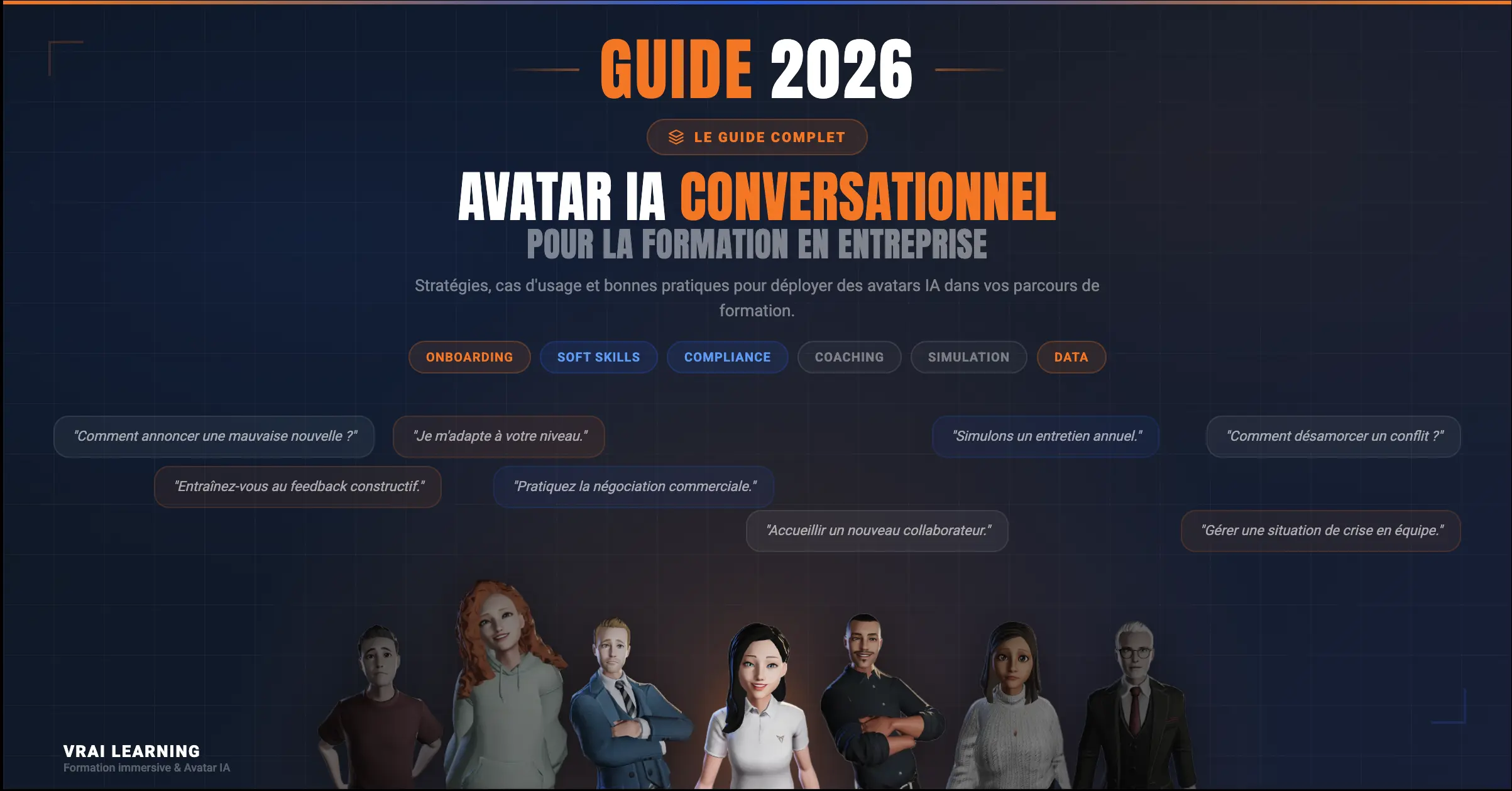
At VRAI, we work to create educational content and immersive experiences that enhance and complement traditional training curricula, leveraging technological tools such as virtual reality and augmented reality. With the goal of making learning and skills acquisition more dynamic and effective, we recently decided to also integrate conversational agents in the form of avatars — an additional tool to make learning experiences even more immersive and even more effective.
What is an AI Conversational Avatar in Professional Training?
An AI conversational avatar is an animated digital character connected to artificial intelligence, capable of engaging in natural dialogue with the learner. Unlike a simple text-based chatbot, it visually embodies a coach, trainer, or peer, and adapts its discourse in real time based on the user's responses. In a professional training context, this avatar continuously analyses learner performance, identifies gaps, and provides instant, personalised feedback. It can be deployed in a VR environment, on PC, tablet, mobile, or digital kiosk, making it accessible to all learners regardless of their equipment. This combination of visual embodiment and conversational AI creates a level of engagement and knowledge retention far superior to classic e-learning methods.
CHARLIE, the AI Avatar That Talks to Learners!
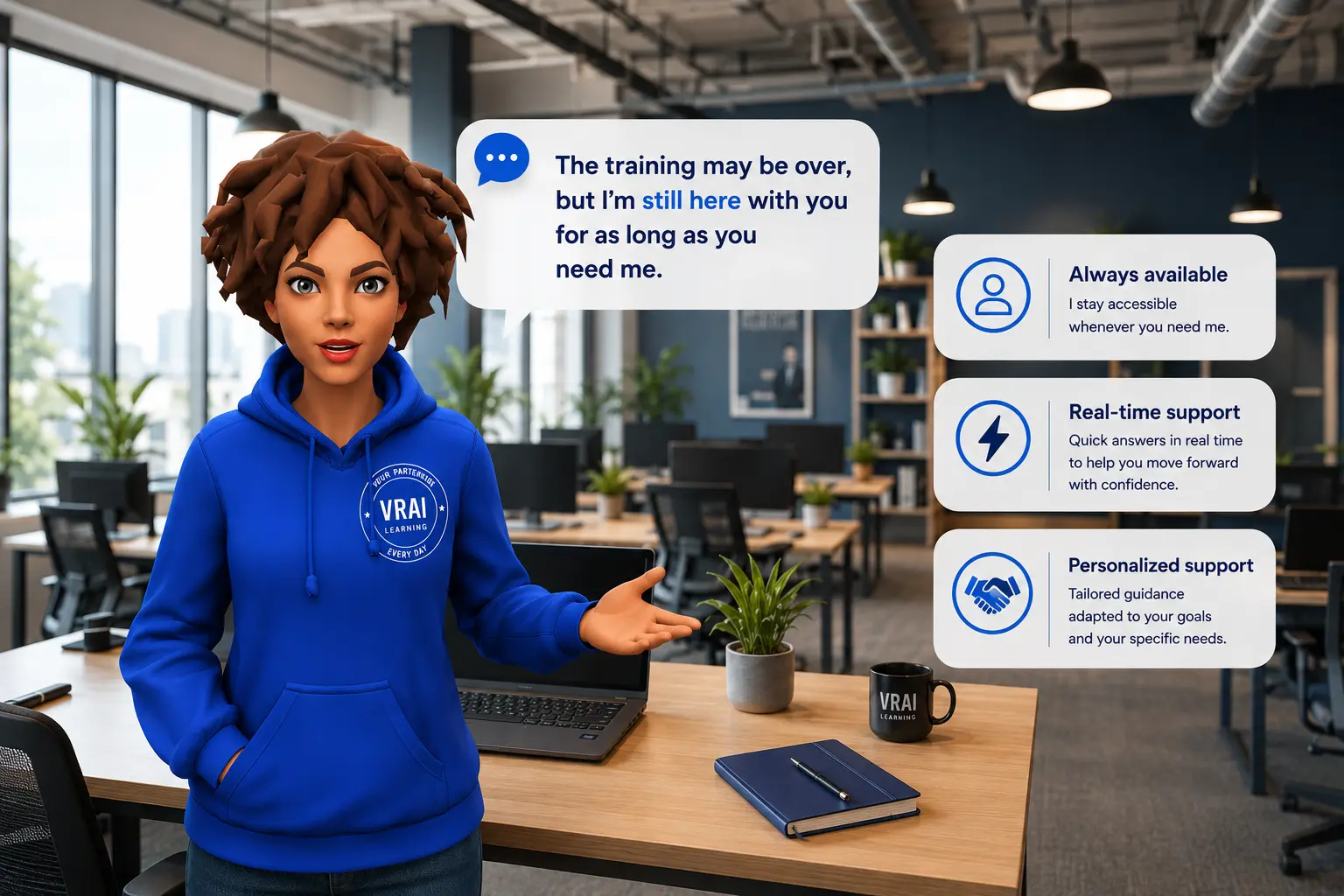
Meet CHARLIE, our intelligent conversational avatar. He embodies a coach, trainer, or peer, depending on the needs of the scenario. Equipped with conversational AI, he does not simply "recite" content: he engages in dialogue, asks questions, reacts, follows up, and personalises his discourse.
It is this relational dimension that makes all the difference.
This interaction reinforces learner engagement, helping them stay focused and motivated throughout the training journey.
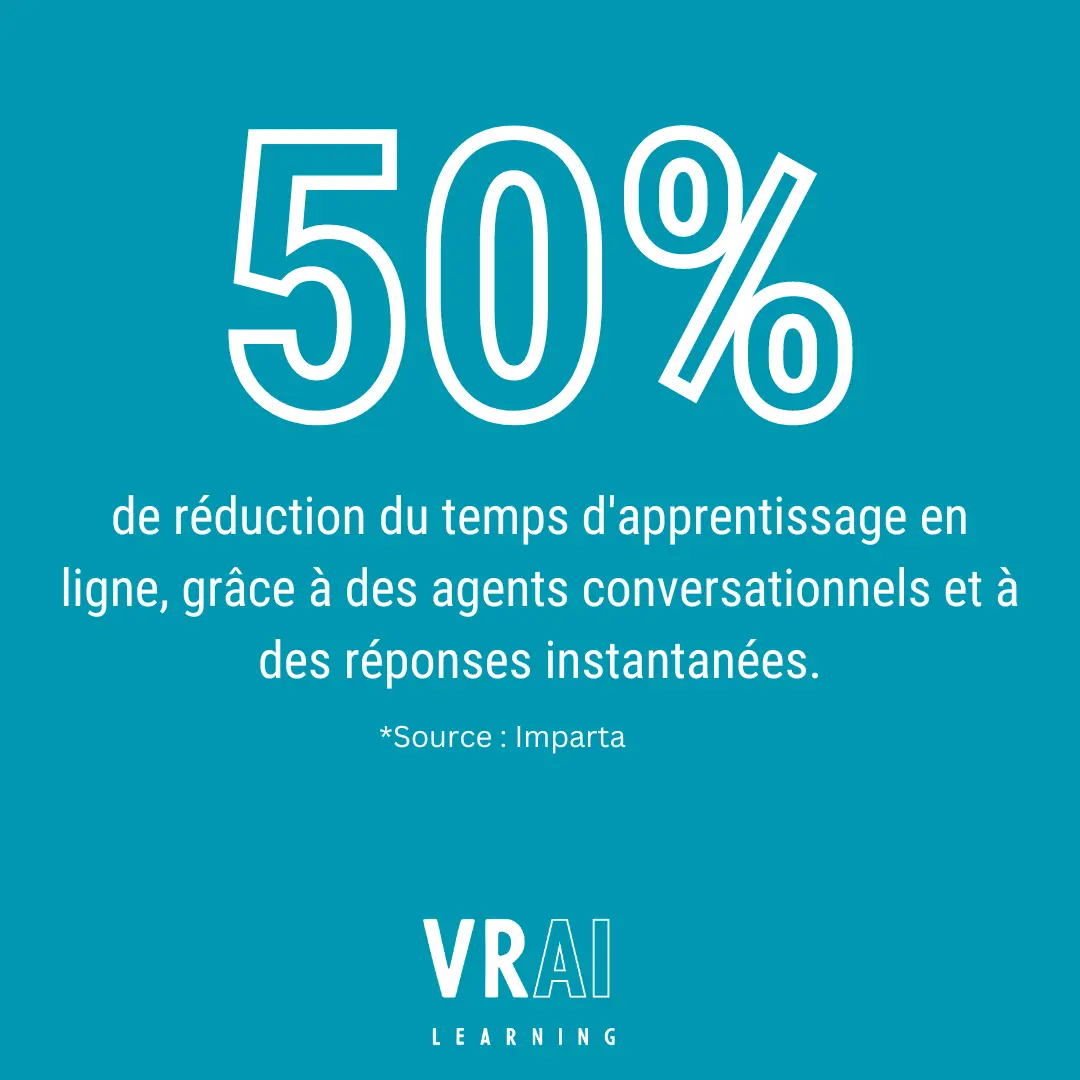
Thanks to their connection to artificial intelligence systems, conversational avatars can be programmed to adapt to individual learner needs. These AI systems analyse learner performance in real time, identify gaps in their understanding, and provide instant, personalised feedback. This allows learners to progress at their own pace while benefiting from individualised support, significantly improving training effectiveness.
Furthermore, the use of an interactive avatar can help create a more accessible learning environment. Learners can interact with the avatar at any time and from anywhere, enabling a flexible learning experience adapted to their needs. Moreover, interactive avatars can be designed to represent diverse cultural and ethnic identities, thus promoting diversity and inclusion in online learning.
Integrating conversational agents in this personalised form offers a more immersive and memorable learning experience. By simulating realistic interactions, these avatars allow learners to fully immerse themselves in the training content, promoting better retention of the knowledge and skills acquired.
What Are the Concrete Benefits of AI Conversational Agents in Training?
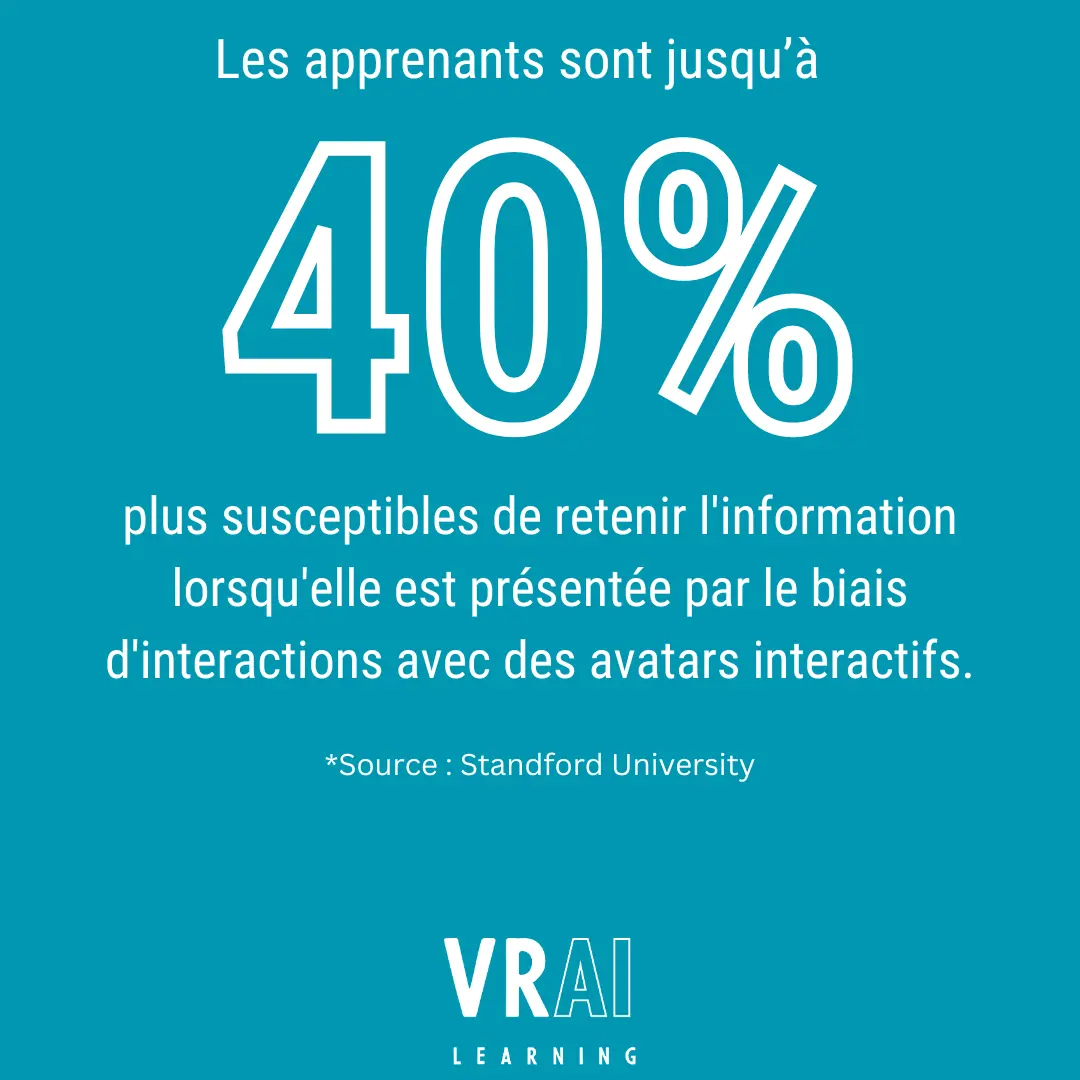
Conversational agents coupled with artificial intelligence transform training by generating four measurable benefits: increased engagement, instant and personalised feedback, adaptation to individual needs, and simulation of realistic interactive scenarios. According to a Harvard Business Review study, the use of interactive avatars can increase learning outcomes by 60% compared to traditional methods. Stanford University confirms that learners are up to 40% more likely to retain information presented via avatars. These figures are explained by the dialogic nature of the interaction: the learner is no longer a passive spectator — they practise, receive immediate feedback, and correct their mistakes in a risk-free environment. This is particularly effective for developing behavioural, interpersonal, or complex technical skills.
🔸 Increased Engagement: The use of conversational agents in immersive environments can boost learner engagement by providing more natural and personalised interaction.
🔸 Instant and Personalised Feedback: Conversational agents connected to AI can analyse learner actions and responses in immersive environments, providing instant and personalised feedback to guide them throughout their learning journey.
🔸 Adaptation to Individual Needs: Using AI algorithms, conversational agents can adapt to individual learner needs and preferences, adjusting content and interactions to maximise learning effectiveness.
🔸 Simulation of Interactive Scenarios: Conversational agents can facilitate the simulation of interactive scenarios in immersive environments, allowing learners to practise skills in realistic situations and receive real-time feedback.
The good news is that our conversational agents are also available outside VR headsets: PC, tablet, mobile, digital kiosk — your avatar accompanies you everywhere!
*Sources:
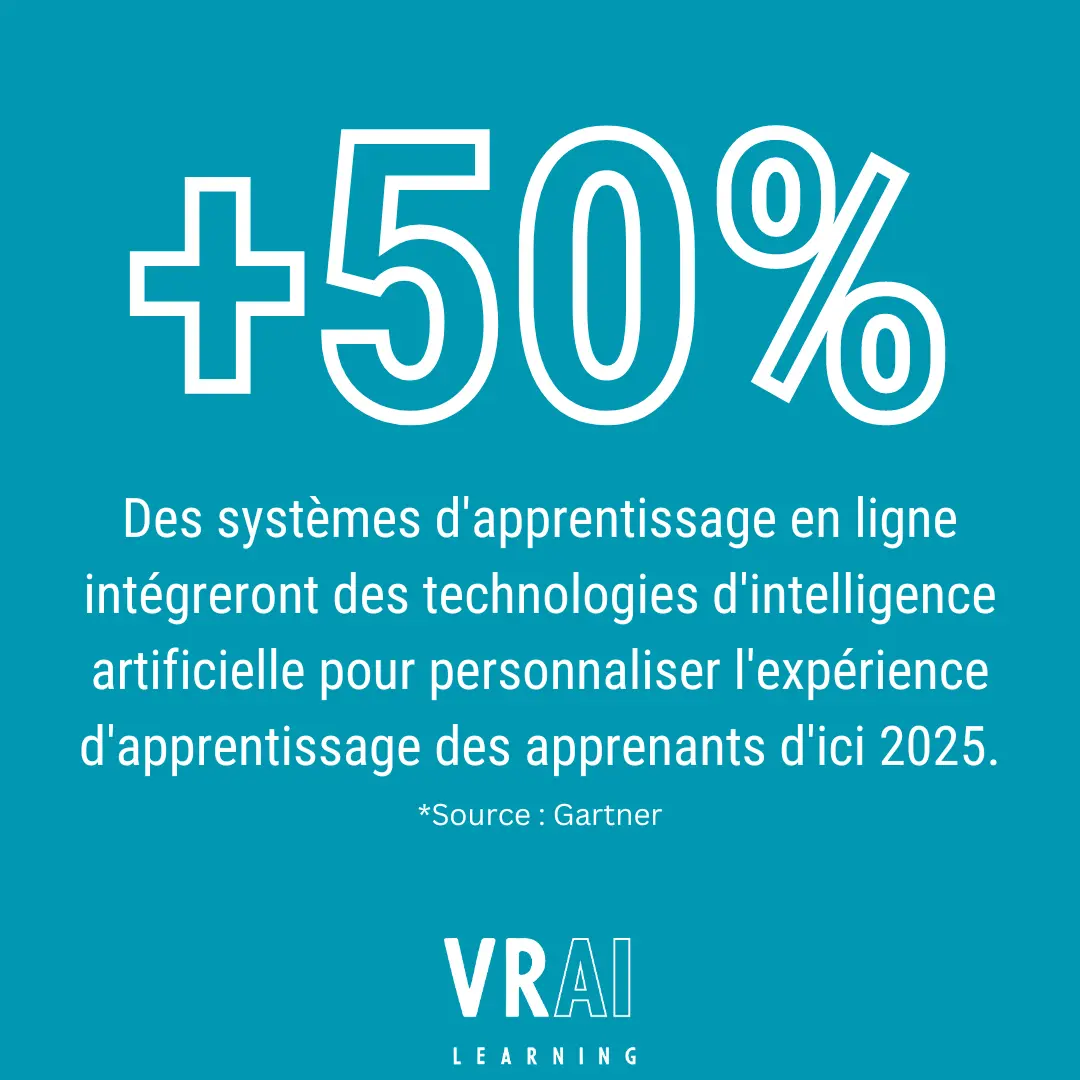
📌 Personalisation effectiveness: Research by Gartner revealed that by 2025, more than 50% of online learning systems will integrate artificial intelligence technologies to personalise the learning experience.
📌 Improved learning outcomes: A study conducted by the Harvard Business Review showed that the use of interactive avatars in online training can lead to a 60% increase in learning outcomes compared to traditional methods.
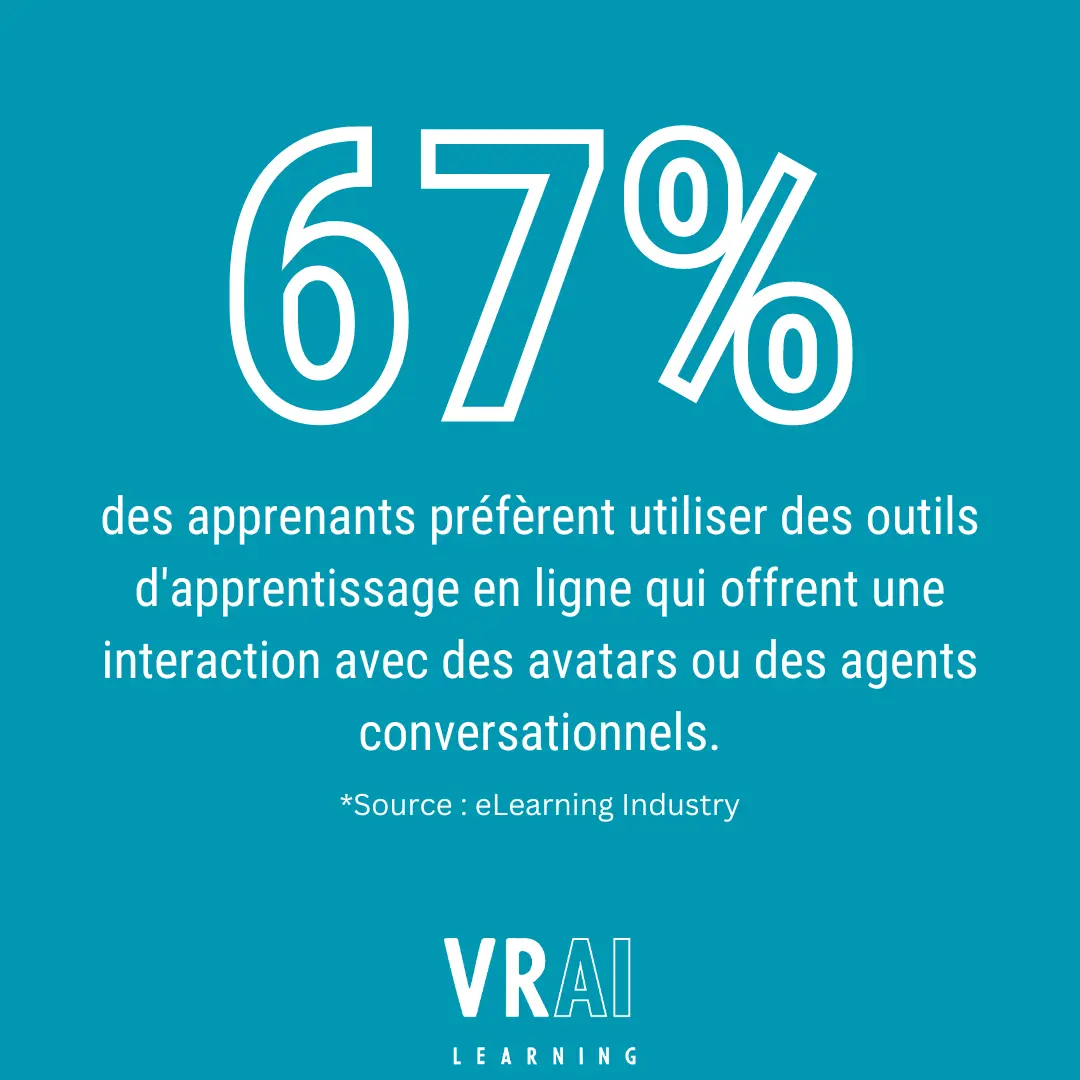
📌 Growing learner demand: According to a survey by eLearning Industry, 67% of learners prefer to use online learning tools that offer interaction with avatars or conversational agents.
📌 Increased knowledge retention: A study by Stanford University showed that learners are up to 40% more likely to retain information when it is presented through interactions with interactive avatars.
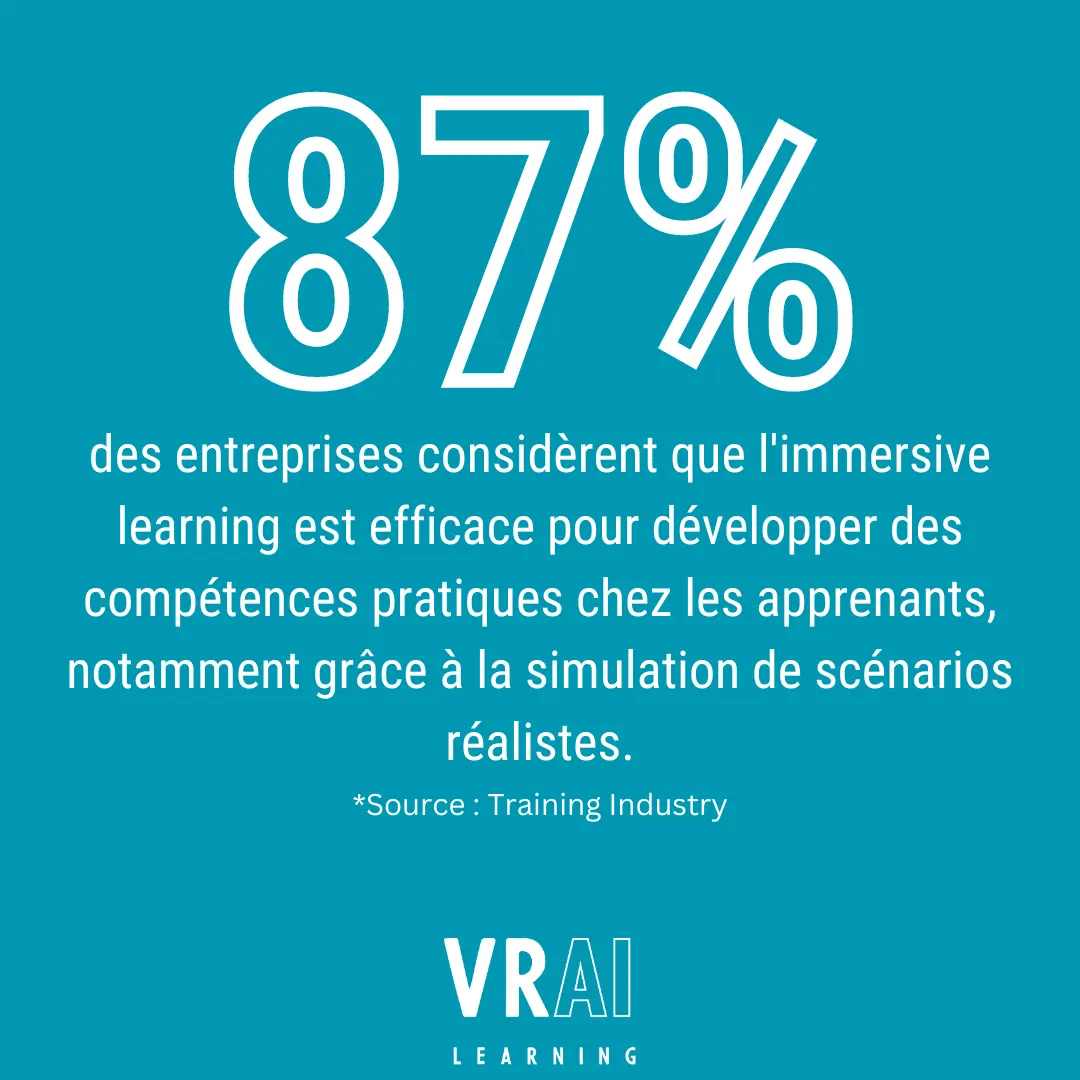
📌 Improved practical skills: A survey by Training Industry revealed that 87% of companies consider immersive learning effective for developing practical skills in learners, particularly through the simulation of realistic scenarios.
Frequently Asked Questions
Can an AI conversational avatar replace a human trainer in a training session?
No, an AI conversational avatar does not replace a human trainer, but it plays an essential complementary role. The human trainer retains mastery over instructional design, group facilitation, and emotional support. The AI avatar, on the other hand, intervenes during phases of individual practice, simulation, and consolidation of learning — available 24/7 with no scheduling constraints. This complementarity is particularly valuable in corporate training where learners have varying availability. The avatar can handle repetitive practical exercises — role plays, customer interaction simulations, technical procedures — freeing the trainer for higher-value tasks: debriefing, analysing collective results, and adjusting the programme. It is an intelligent distribution of roles, not a substitution.
On which devices can an AI conversational avatar be used for training?
An AI conversational avatar like CHARLIE from VRAI Learning is multiplatform: it works on virtual reality (VR) headsets, PC, tablet, smartphone, and digital kiosk. This flexibility makes it possible to integrate it into blended learning journeys where the learner starts a session on a VR headset in the training room, then continues consolidation exercises on their phone or tablet from home. Each device offers a tailored experience: maximum immersion in VR for complex simulations, and the convenience of mobile for daily micro-training sessions. Companies therefore do not have to choose between accessibility and pedagogical quality. The avatar adapts to the context of use, ensuring continuity of learning regardless of the equipment available.
How does AI personalise the learning journey via a conversational avatar?
The artificial intelligence connected to the avatar analyses in real time each response, each hesitation, and each choice made by the learner in order to dynamically adjust the level of difficulty, the type of question asked, and the feedback provided. Concretely, if a learner quickly masters a concept, the AI advances the scenario towards more complex situations. Conversely, if a notion proves difficult, the avatar rephrases, offers additional examples, and slows the pace. This mechanism of permanent adaptation, known as adaptive learning, is far more effective than linear e-learning where all learners follow the same path. According to Gartner, more than 50% of online learning systems will integrate this AI-driven personalisation by 2025. At VRAI, this logic is already operational in our modules featuring CHARLIE.
What types of skills are best developed with AI conversational avatars?
AI conversational avatars excel at developing behavioural and interpersonal skills: sales techniques, conflict management, customer service, team management, interview practice. These soft skills require repetition in realistic contexts, something that traditional methods struggle to deliver at scale. The avatar creates a safe space where learners can practise, fail, and start over without professional consequences. Training Industry confirms that 87% of companies consider immersive learning effective for developing practical skills through realistic simulations. Procedural technical skills — protocol compliance, safety gestures, diagnostics — also benefit from this repeated training with immediate feedback. In short, anything that demands practice rather than reading is an ideal domain for AI avatars.

Christèle Simeoni
Co-founder VRAI Learning (2023) · CMO
Co-fondatrice de VRAI Learning, spécialiste de la formation immersive VR et des avatars IA conversationnels.
See immersive training in action
Personalised demo, no commitment. We show you what it looks like for your context.
Book a demoExplore our solutions