CS
Christèle Simeoni
Co-founder & CMO, VRAI Learning
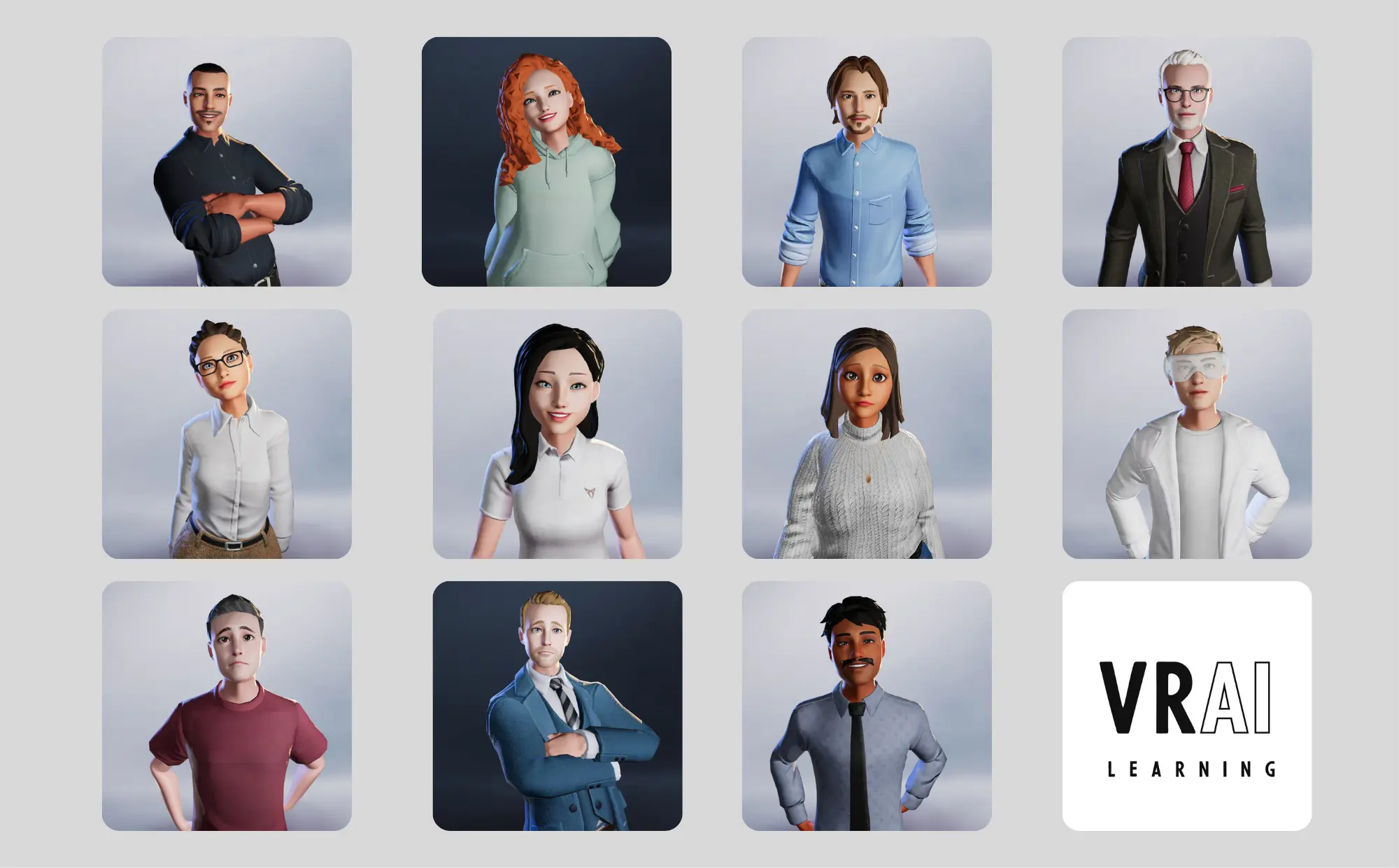
AI Avatars: a new human interface for natural interactions
In a world where artificial intelligences are everywhere, the user experience is the key to creating a real connection between technology and humans. This is where AI avatars come in — a new dimension for human-machine interaction that makes all the difference.
- But why an avatar? How does it work?
- What advantages for you? Let's go!
Why adopt an AI avatar in your organisation?
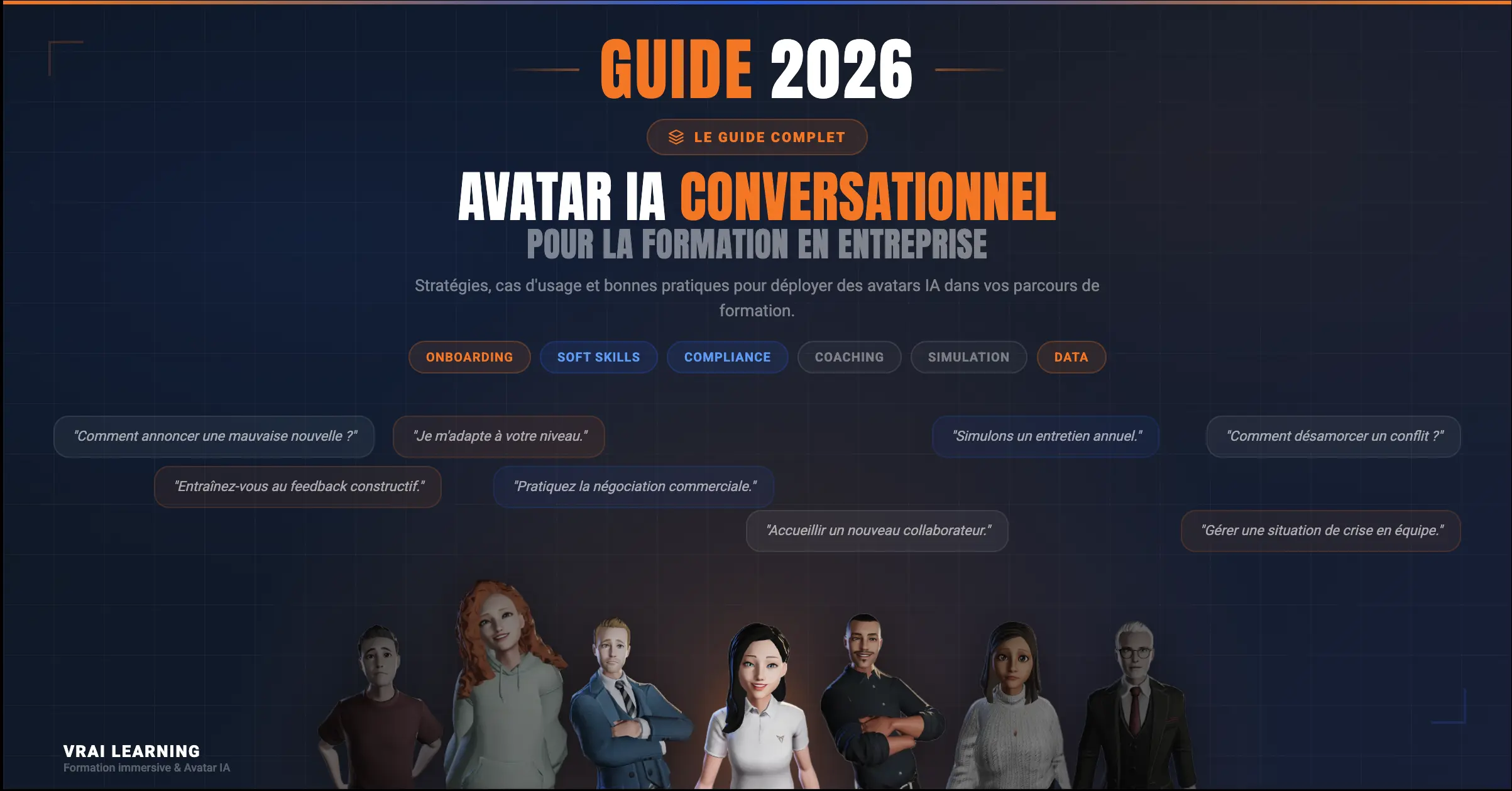
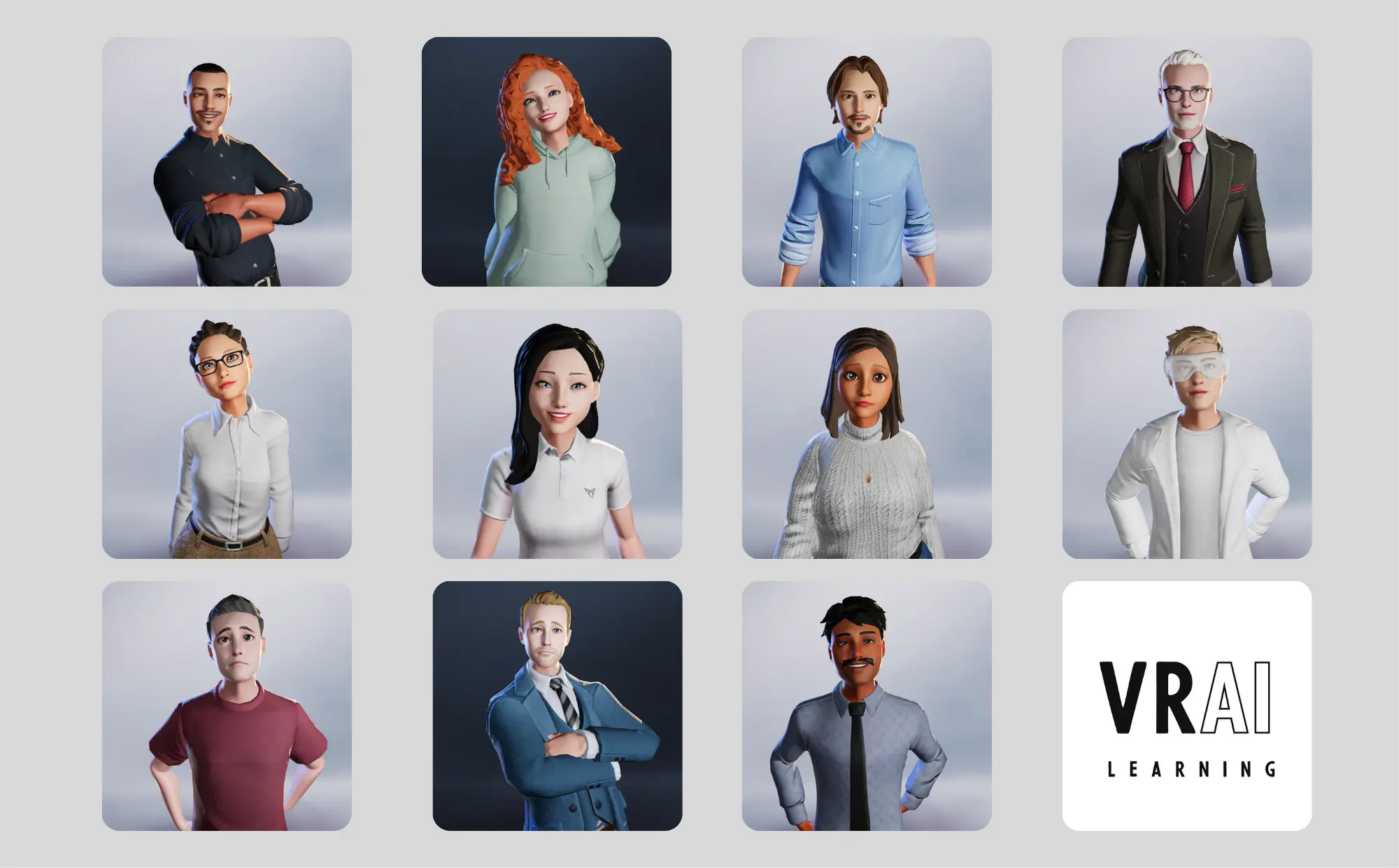
Adopting an AI avatar means choosing the most human and natural way to make AI accessible to all your collaborators. AI avatars are Natural User Interfaces (NUI) that give AI a human form. By adding a visual and expressive presence, we move from a simple line of text to a full interlocutor who speaks, listens, reacts and expresses emotions.
The human face is our primary communication vector: seeing a face, we interpret expressions, understand emotions and create connection. With an AI avatar, even users least comfortable with technology interact easily — it's more fluid, more natural.
For organisations, this translates into faster adoption of AI tools, a better user experience and significantly higher engagement than classic text chatbots.
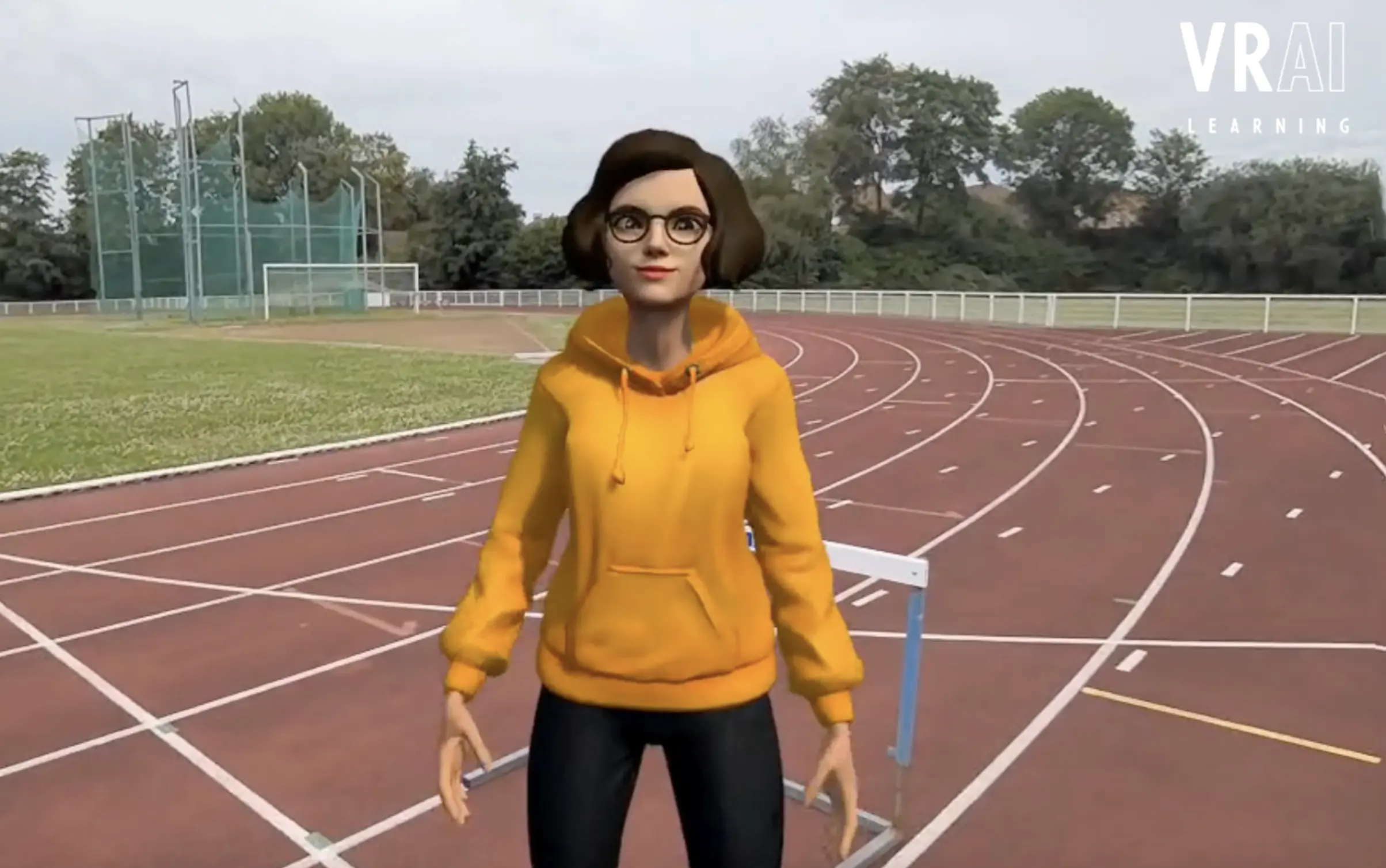
How does an AI avatar work in practice?
An AI avatar works through a combination of voice synthesis, real-time generation and expression recognition to produce rich interactions close to reality. Everything is generated on the fly: you ask a question, the avatar analyses the request, formulates an adapted response and expresses it with coherent body movements.
VRAI Learning avatars are flexible and work on a wide variety of devices: mixed reality (Meta Quest 3) for total immersion, "flat" version on desktop computer (PC/Mac), and browser for mobiles, tablets, connected screens or public totems. The avatar's personality is fully configurable — supportive and encouraging, or direct and challenging — according to user needs. The avatar can also be enriched with specific knowledge to adapt to precise professional or educational contexts.
Training & soft skills: the AI avatar, your best ally!
AI avatars are game-changers in training, especially for developing soft skills. Interaction with an avatar creates immersive scenarios where users must communicate, negotiate, make decisions or manage conflicts — all in a safe environment. The avatar can simulate different personalities, replicating a wide variety of situations.
Moreover, all interactions can be collected and analysed. This enables performance evaluation, targeting improvement areas and refining competencies precisely — a real advantage for rapid progress.
What are the concrete benefits of AI avatars for business training?
AI avatars concretely transform business training by offering safe training environments, personalised feedback and increased learning memorisation. Unlike static e-learning modules, the avatar creates a conversational dynamic that maintains attention and promotes memory anchoring.
For soft skills — negotiation, conflict management, public speaking — the avatar simulates different personalities and replicates a wide variety of real situations. All interactions are collected and analysed to evaluate performance, target improvement areas and refine competencies precisely. HR and L&D teams thus benefit from concrete data to drive development plans.
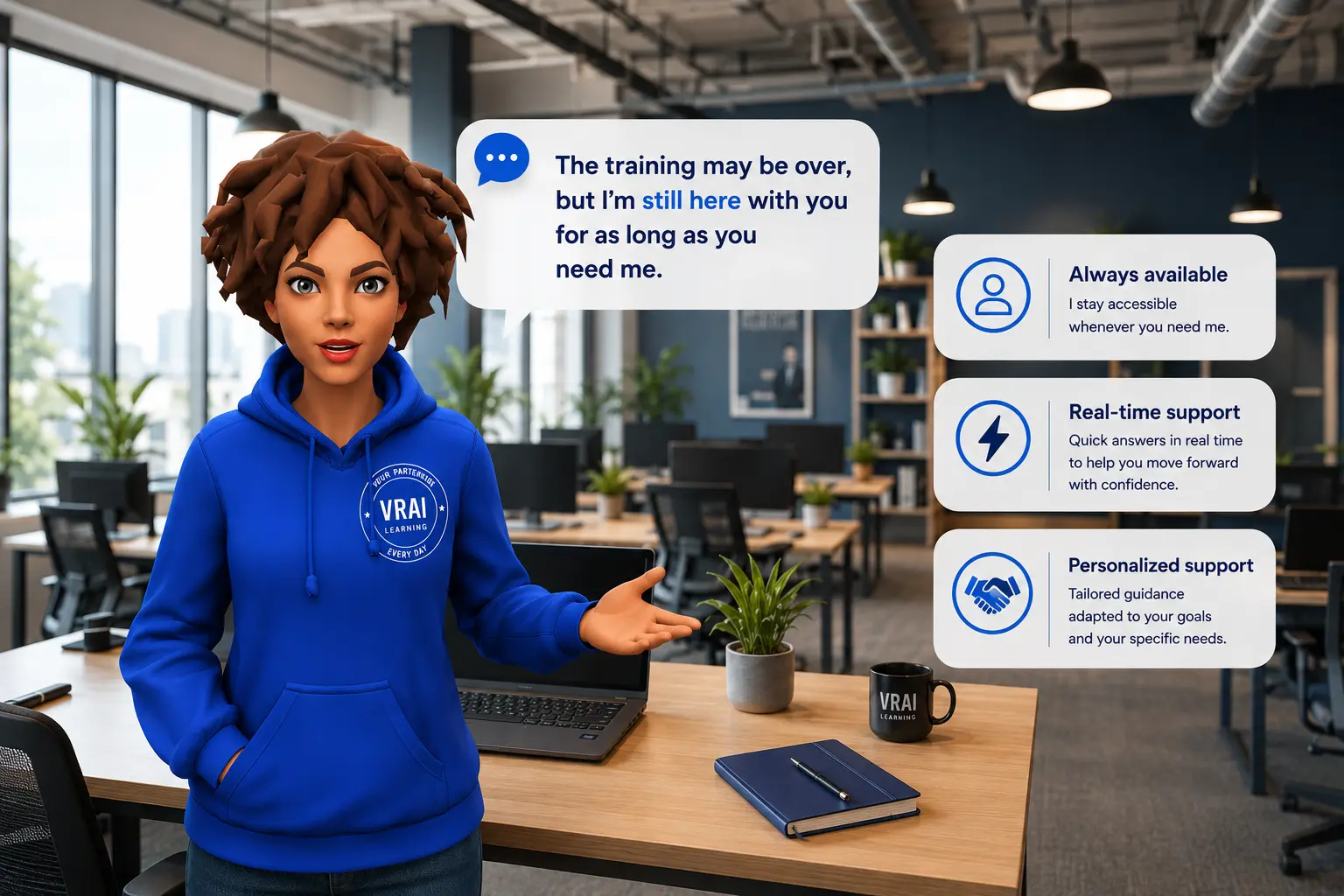
The avatar can also play an onboarding welcome role, guiding new collaborators autonomously and available 24/7, reducing team workload while maintaining a warm, personalised experience.
Human-machine interaction reinvented
AI avatars are not just gadgets. They are a step further towards more human, engaging and intuitive human-machine interaction. Whether to make AI more accessible, improve training effectiveness, or simply create a more natural interaction, AI avatars are interfaces that revolutionise how we use artificial intelligence.
With their personalisation and ability to be enriched with knowledge, these avatars become genuine learning partners, advisors, even companions — capable of adapting to each user's unique needs. And with interaction analysis, they offer valuable feedback for continuous improvement.
The AI avatar is an interface that brings artificial intelligence to life. It's a way for us, as humans, to face a familiar face and reinvent a direct, natural, human interaction with technology. Whether for training scenarios or simple daily interaction, AI avatars are the future of user interface: an interface that speaks, listens, and resembles us.
So, ready to give your AI a face?
Frequently asked questions
What is an AI avatar and how does it differ from a classic chatbot?
An AI avatar is a conversational interface with a human appearance, capable of speaking, listening and expressing emotions in real time, whereas a classic chatbot is limited to text. The fundamental difference lies in visual and expressive presence: the avatar activates natural human perception mechanisms — face reading, expression interpretation — making interaction far more engaging and intuitive.
Technically, an AI avatar combines voice synthesis, real-time animation and natural language processing to generate coherent responses with adapted body movements. This combination reduces cognitive friction for the user, who doesn't need to learn a new interface: they simply speak, as with a person. For organisations, this translates into higher adoption rates and a user experience perceived as more human and less cold than a simple text bot.
On which devices can an AI avatar be deployed?
Modern AI avatars are designed to work on a wide variety of devices to integrate into all work environments. At VRAI Learning, avatars are available in mixed reality on Meta Quest 3 for maximum immersion, in "flat" version on desktop computer (PC and Mac) for daily use, and in web browser for mobiles, tablets, connected screens and public totems in physical spaces.
This flexibility allows deploying the same avatar in very different contexts: training room, individual workstation, reception kiosk in business or retail. The choice of device depends on pedagogical or usage objectives: a negotiation simulation benefits from VR immersion, while an onboarding can comfortably happen on a browser, requiring no specific hardware.
Can AI avatars adapt to specific sectors or contexts?
Yes, AI avatars are fully customisable to adapt to specific professional sectors and contexts. Their knowledge base can be enriched with business content — internal protocols, sector vocabulary, industry-specific scenarios — so interactions are relevant and credible. The avatar's personality is also configurable: supportive tone for onboarding or training, more direct and challenging tone for interview simulations or commercial negotiation.
In the industrial sector, the avatar can guide safety procedures; in banking, simulate client interviews; in healthcare, train for difficult announcements. This adaptability makes AI avatars a transversal tool applicable to professional training, internal customer support, new employee onboarding or supporting organisational change.
How is the effectiveness of an AI avatar in training measured?
The effectiveness of an AI avatar in training is measured through analysis of interactions collected during each session. Unlike classic training, every exchange with the avatar is recorded and analysable: interaction duration, quality of learner responses, hesitations, words used, session-to-session progression. These data enable L&D teams to precisely identify acquired competencies and improvement areas for each individual.
Indicators like completion rate, performance score on simulated scenarios or behavioural evolution between sessions give a concrete view of progress. Coupled with an LMS, VRAI Learning avatars transmit these data to trainers' dashboards, facilitating development plan management. It's a data-driven approach to training that makes every pedagogical investment traceable and measurable.

Christèle Simeoni
Co-founder VRAI Learning (2023) · CMO
Co-fondatrice de VRAI Learning, spécialiste de la formation immersive VR et des avatars IA conversationnels.
See immersive training in action
Personalised demo, no commitment. We show you what it looks like for your context.
Book a demoExplore our solutions