CS
Christèle Simeoni
Co-founder & CMO, VRAI Learning
How Does Adaptive Learning Support Teaching?
Adaptive learning is an innovative educational approach that uses artificial intelligence to dynamically personalise content and teaching methodology, maximising learning effectiveness by adapting to each learner's individual needs. In practice, the system continuously analyses each learner's performance, errors, and acquisition pace in order to adjust the learning path in real time. Unlike traditional training programmes where all learners follow the same curriculum at the same pace, adaptive learning offers a unique learning path for each individual. It takes into account cognitive profile, learning style, and identified knowledge gaps to reinforce weak areas and accelerate through mastered ones. This personalised pedagogical approach improves both engagement and knowledge retention, while reducing the training time required to achieve defined objectives.
How Does Adaptive Learning Work?
Adaptive learning operates through artificial intelligence and data analytics algorithms that evaluate learner responses and behaviours in real time. The process is structured around three key stages: an initial assessment that measures starting level and identifies knowledge gaps, continuous adaptation of content and teaching method based on results obtained, and instant feedback that reinforces understanding at every step. The system automatically adjusts exercise difficulty, content formats, and module sequencing to optimise progression. The more a learner interacts with the platform, the more precise and personalised the recommendations become, creating a virtuous cycle of continuous improvement.
Initial assessment: Each learner begins with an initial assessment to evaluate their competency level and identify their knowledge gaps.
Continuous adaptation: Based on assessment results, the system constantly adapts content and teaching method, providing additional exercises on weak areas and accelerating through strong ones.
Instant feedback: Learners receive immediate feedback, reinforcing their understanding and confidence.
What Is the Link Between Adaptive Learning and Immersive Learning?
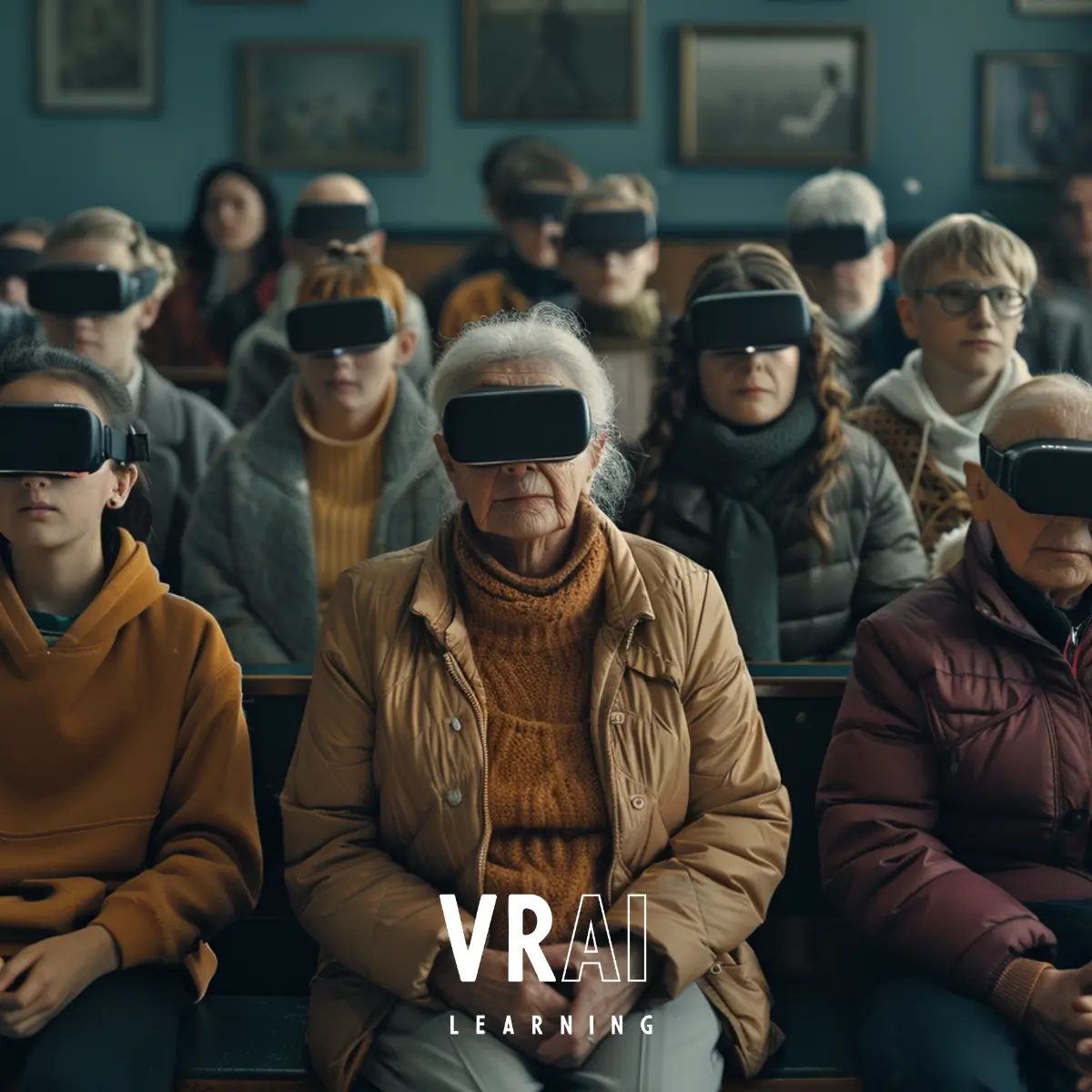
Adaptive learning and immersive learning complement each other to create an educational experience that is both personalised and engaging. Adaptive learning adjusts content and methodology in real time based on individual progress, while immersive learning immerses learners in virtual or real environments for a more engaging learning experience. Together, these two approaches form a powerful pedagogical framework: immersion stimulates memorisation and emotional engagement, while adaptation ensures that each learner receives exactly the level of challenge they need. In the context of professional training, for example, an employee can practise in a realistic work situation simulation, with content that automatically adjusts according to their errors and progress. This combination reduces learning time, improves skills transfer in real-world situations, and significantly increases training completion rates.
Examples
Duolingo: The well-known language learning app uses adaptive learning to personalise lessons based on each user's progress. Exercises adjust based on previous errors, maximising the effectiveness of language learning.
In the context of professional training, adaptive learning can personalise modules based on the specific competencies required by each employee. Immersive learning can then simulate realistic work situations to allow employees to directly apply their knowledge in a professional context.
In science, adaptive learning can adjust the curriculum based on each student's understanding, while immersive learning can offer virtual reality experiences to explore biological, chemical, or physical environments to accelerate or revisit content.
For subjects such as history and geography, adaptive learning can personalise lessons based on each student's level of knowledge. Immersive learning could allow students to virtually travel to past eras or geographical locations, reinforcing their contextual understanding.
Khan Academy: This platform offers adaptive mathematics lessons, where each student progresses at their own pace. Exercises become more complex as the student's understanding improves.
Key Figures
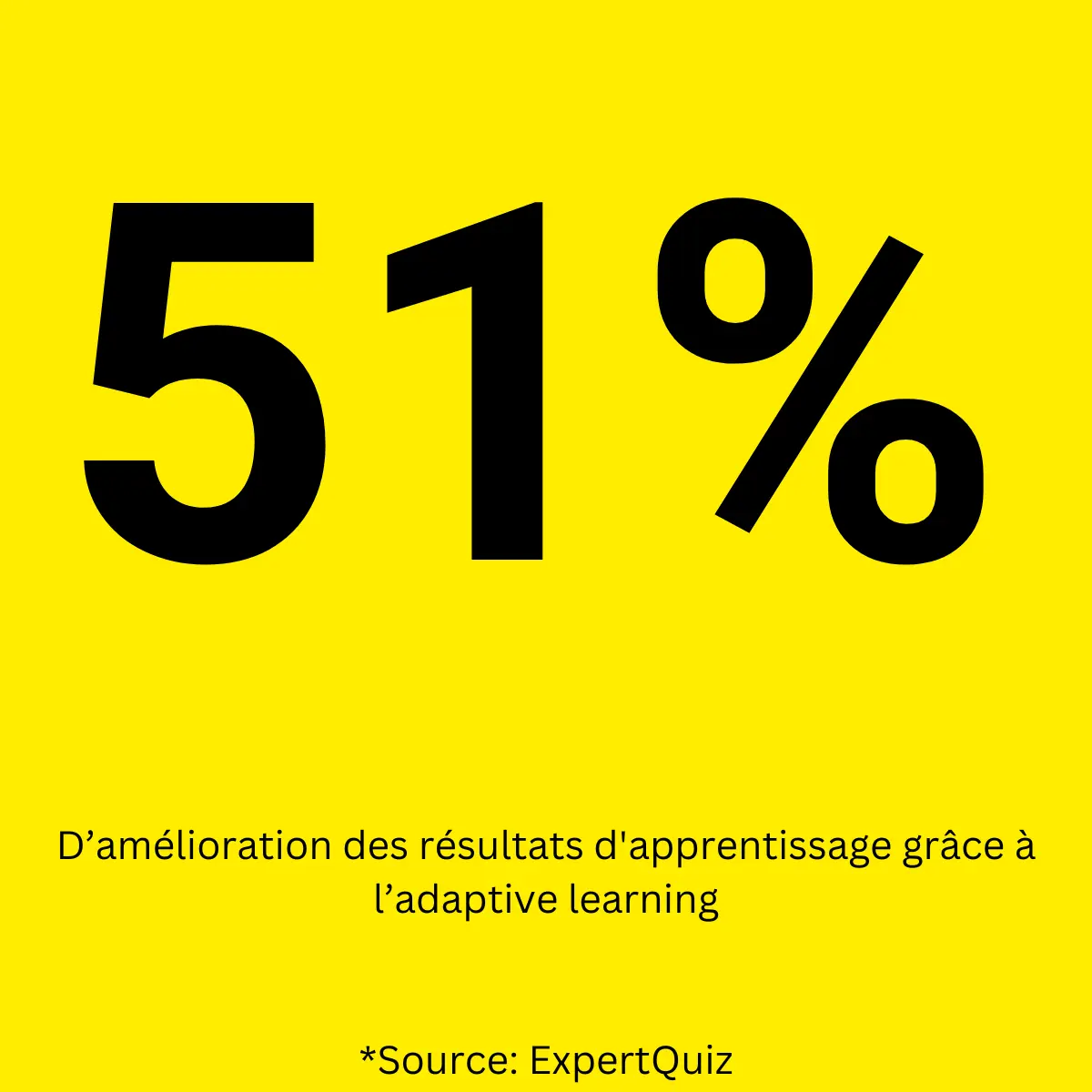
According to a study by the Gates Foundation, students using adaptive learning systems can achieve progress twice as fast as with traditional teaching methods.
A survey conducted by Learning House revealed that 60% of online students consider adaptive learning an essential component for improving their learning experience.
The adaptive learning market is expected to reach $3.74 billion by 2024, according to a report by MarketsandMarkets.
Adaptive learning is not merely a trend — thanks to new technologies, it brings genuine complementarity to the diverse needs of learners by creating a tailored experience, maximising the chances of success for everyone.
Frequently Asked Questions
What is the difference between adaptive learning and traditional e-learning?
Traditional e-learning offers the same path and the same content to all learners, regardless of their level or needs. Adaptive learning, by contrast, personalises each learner's pedagogical journey in real time through artificial intelligence. The system continuously analyses responses, errors, and progression pace to dynamically adjust exercises, difficulty, and module sequencing. The result: each learner follows a unique path, optimised for their knowledge gaps and strengths. This approach reduces training time by an average of 20 to 40%, improves completion rates, and strengthens long-term knowledge retention. Adaptive learning therefore represents a major evolution over standardised e-learning formats, shifting from a one-size-fits-all content logic to an individualised learning path logic.
Is adaptive learning suited to professional corporate training?
Yes, adaptive learning is particularly relevant for professional corporate training. In this context, employees have widely varying competency levels and different upskilling needs depending on their roles. Adaptive learning makes it possible to precisely target each employee's knowledge gaps, avoid repeating content they have already mastered, and accelerate the acquisition of critical competencies. Managers also benefit from detailed dashboards to track individual and collective progress. Combined with immersive learning, it enables realistic situational practice adapted to each learner's level, which significantly improves skills transfer in real work situations. Many companies report reduced training costs and better operational performance as a result of this personalised approach.
What tools and platforms use adaptive learning?
Several platforms now integrate adaptive learning features at varying levels of sophistication. Duolingo is the best-known example for the general public, with language exercises that adjust based on user errors. Khan Academy offers adaptive mathematics pathways where each student progresses at their own pace. In the professional training sector, LMS (Learning Management Systems) platforms integrate adaptive modules to personalise learning paths according to learner profiles. VRAI Learning combines adaptive learning and immersive learning within virtual reality training and AI avatar-based scenarios, enabling continuous adaptation of the pedagogical scenario for each learner. The choice of platform depends on training objectives, industry sector, and the desired level of integration with existing HR tools.
Does adaptive learning genuinely improve learning outcomes?
Available data shows concrete and measurable results. According to a Gates Foundation study, learners using adaptive systems progress twice as fast as those following traditional teaching methods. Learning House indicates that 60% of online students consider adaptive learning essential to their experience. In terms of retention, personalisation of pace and instant feedback significantly improve long-term knowledge retention. In professional training, companies adopting adaptive solutions report a reduction in training time of 20 to 40% and better employee performance post-training. These results are explained by the fact that the learner is always challenged at the right level: neither too easy (leading to boredom) nor too difficult (leading to discouragement), which maintains an optimal state of engagement throughout the learning journey.

Christèle Simeoni
Co-founder VRAI Learning (2023) · CMO
Co-fondatrice de VRAI Learning, spécialiste de la formation immersive VR et des avatars IA conversationnels.
See immersive training in action
Personalised demo, no commitment. We show you what it looks like for your context.
Book a demoExplore our solutions